Mowers
Gas vs Battery Mower Cost Calculator: 5-Year Cost of Ownership
Quick answer
On a quarter acre a battery walk-behind usually costs a little more than a budget gas mower over five years, because its price outweighs about $20 a year in fuel savings. On 1 to 2 acres the gap closes: a battery rider uses under $15 of electricity a year where a gas rider burns roughly $70 to $140 of fuel.
Battery mowers cost more up front and far less to run. Whether that trade pays off depends on how many hours you mow, local fuel and electricity prices, and whether you will need a replacement battery within the time you own the mower. Enter your lawn and prices, choose walk-behind or rider, and the calculator totals purchase price, fuel or electricity, routine maintenance and an optional battery replacement over the years you set, then shows the break-even year. Purchase prices default to current catalog prices for a representative gas and battery model, and you can type your own. Runtime per charge is covered by the battery mower runtime calculator.
Gas vs battery cost calculator
Lower total cost
Gas and battery mowers to compare
Top matches update when you calculate.

SENIX 22 in. 3-in-1 Variable Speed Self-Propelled Gas Mower, 201cc
$399.00Rear-wheel drive with 11-inch rear wheels and a 22-inch steel deck covers more ground per pass than a 20-inch mower and grips better on slopes.
Best for: Medium to large lawns with gentle slopes
Check price on Amazon
PowerSmart 21 in. 3-in-1 Self-Propelled Gas Mower, 170cc
$319.99Rear-wheel drive, a 170cc OHV engine with auto choke and bag, mulch or side-discharge modes cover the basics, and the handle folds for storage.
Best for: First self-propelled mower for a medium yard
Check price on Amazon
EGO POWER+ LM2135SP 21 in. Select Cut Self-Propelled Mower Kit
$749.00Select Cut ships with mulching, high-lift bagging and extended-runtime lower blades, and Touch Drive varies speed from 0.9 to 3.1 mph on a 7.5Ah battery rated for up to 60 minutes.
Best for: Mid-size lawns, especially for existing EGO 56V owners
Check price on Amazon
Greenworks 80V 21 in. Self-Propelled Mower Kit
$479.99Rear-wheel drive with variable speed and an 80V brushless motor, rated to cut up to half an acre on the included 4.0Ah battery with a 4-year tool and battery warranty.
Best for: Half-acre lawns with some slope
Check price on Amazon
Honda HRX-BE 21 in. Battery Self-Propelled Mower
$999.00Honda pairs its twin-blade MicroCut deck and 4-in-1 Versamow with two battery bays (one 12Ah pack included, about 0.37 acre per charge) and a 5-year residential warranty backed by its dealer network.
Best for: Buyers who value dealer service and bagging quality
Check price on Amazon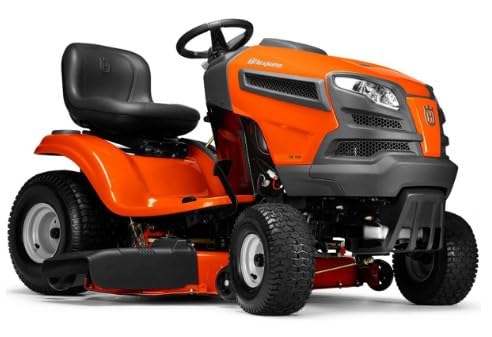
Husqvarna TS 120 42 in. Lawn Tractor
$2,799.00A 19 HP, 540cc Briggs & Stratton engine, 42-inch twin-blade stamped deck and pedal-operated transmission, the lowest-cost way onto a seat in this list.
Best for: Smaller, fairly flat properties
Check price on Amazon
Husqvarna Z242F Special Edition 42 in. Zero Turn Mower
$3,870.00A 21.5 HP Kawasaki V-twin, welded 42-inch 2-blade deck and Hydro-Gear EZT transmission with a 3-year consumer warranty.
Best for: Smaller lawns and narrow gates
Check price on Amazon
EGO POWER+ Z6 ZT4204L 42 in. Electric Zero Turn Mower
$3,599.00Four included 10.0Ah batteries are rated for 2 acres at up to 8 mph and recharge in about two hours, and the 42-inch deck mulches, bags or side discharges.
Best for: Up to 2 acres at the lowest EGO rider price
Check price on Amazon
Greenworks 60V CrossoverZ 42 in. Electric Zero Turn Mower
$2,999.99Six 8.0Ah batteries are rated for up to 2.5 acres at an 8 mph mowing speed, and the same batteries run 75+ other Greenworks 60V tools.
Best for: Up to 2.5 acres at the lowest zero-turn price here
Check price on Amazon
EGO POWER+ T6 TR4204 42 in. Electric Lawn Tractor
$4,399.00Six included 6.0Ah batteries power a 42-inch tractor rated for up to 1.5 acres per charge, with cruise control, a rear tow hitch and belt-free dual blade motors.
Best for: Up to 1.5 acres for buyers who want a steering wheel and a hitch
Check price on Amazon
EGO Power+ BA4200T 56V 7.5Ah Battery
$439.00EGO quotes a 60 minute charge on the rapid charger and 145 minutes on the standard charger, with an upgraded fuel gauge and 3-year warranty.
Best for: longer blower and trimmer sessions on the EGO platform
Check price on AmazonIs a battery lawn mower cheaper than gas over time?
| Lawn and mower | 5-yr gas fuel | 5-yr electricity | 5-yr total, gas | 5-yr total, battery | Lower cost |
|---|---|---|---|---|---|
| 0.25 acres, 21 in walk-behind | $85 | $6 | $659 | $805 | Gas |
| 0.5 acres, 21 in walk-behind | $170 | $12 | $744 | $811 | Gas |
| 1 acre, 42 in rider | $340 | $34 | $3,589 | $3,758 | Gas |
| 2 acres, 42 in rider | $679 | $67 | $3,928 | $3,791 | Battery |
How is the cost of ownership calculated?
- Mowing hours come from the site's mowing time formula: a 21 inch deck at 3 mph, a 42 inch lawn tractor at 4.5 mph and a 42 inch electric zero-turn at 6.5 mph, with a 15 percent overlap and 80 percent efficiency.
- Gas fuel = hours x about 0.3 gallons an hour for a walk-behind or 0.9 for a 20 to 26 hp rider x your fuel price.
- Electricity = about 20 watt-hours per 1,000 square feet for a walk-behind or about 1.2 kWh per acre for an electric rider, divided by 85 percent charger efficiency, x your electricity rate.
- Maintenance per year: about $35 for a gas walk-behind (oil, spark plug, air filter, blade sharpening), $10 for a battery walk-behind (blade), $90 for a gas rider and $25 for an electric rider. Add a battery replacement if you expect one within the period.
All consumption and maintenance figures are planning estimates, not measurements of any specific model. Engine size, grass conditions and how hard you run the mower all move fuel use, and battery replacement timing varies widely with use and storage.
When does a gas mower still make more sense?
Gas still wins on large, thick or wet lawns mowed in long sessions, where battery runtime means buying extra batteries, and on properties far from an outlet. It also wins on purchase price in the budget class: a value gas self-propelled mower such as the SENIX 22 in. 3-in-1 Variable Speed Self-Propelled Gas Mower, 201cc costs roughly half as much as a premium battery self-propelled mower like the EGO POWER+ LM2135SP 21 in. Select Cut Self-Propelled Mower Kit, and on a small lawn the fuel savings take many years to close that gap. For riders, the Husqvarna TS 120 42 in. Lawn Tractor lawn tractor costs less up front than the EGO POWER+ Z6 ZT4204L 42 in. Electric Zero Turn Mower, but the electric rider avoids oil changes, fuel storage and belt-driven engine maintenance. Compare in gas vs battery lawn mowers and gas vs electric riding mowers.
How much do replacement mower batteries cost?
Replacement batteries are the wild card. A large 56V pack such as the EGO Power+ BA4200T 56V 7.5Ah Battery ($439.00) can cost more than half the price of a budget gas mower, while a 60V 5 Ah pack like the Greenworks 60V 5.0Ah Ultra Power Battery costs less. Warranties on mower batteries commonly run several years, and many owners get longer life by storing batteries partly charged in a cool, dry place and avoiding charging them hot. The upside is that one platform's batteries also run your trimmer, blower and hedge trimmer, which spreads the cost across tools. See cordless outdoor tool systems.
Frequently asked questions
How much does it cost to charge a battery lawn mower?
Very little. A 56V 7.5 Ah battery holds about 0.42 kWh, so a full charge at 85 percent charger efficiency uses about half a kilowatt-hour, roughly 8 to 10 cents at typical US electricity rates. Mowing a quarter acre every week of a 28 mow season costs only a few dollars in electricity for the whole year.
How much gas does a push mower use per year?
A typical walk-behind gas mower uses roughly 0.25 to 0.35 gallons an hour. A quarter acre takes about 35 minutes with a 21 inch self-propelled mower, so 28 mows use around 5 gallons a year, about $15 to $20 at typical prices. Add oil, a spark plug, an air filter and blade sharpening, and yearly running costs are roughly $50 to $60.
Do battery mowers last as long as gas mowers?
The mower bodies and brushless motors in battery mowers have few wearing parts and can last many years with blade care. The battery is the component that wears, losing capacity over hundreds of charge cycles. Gas mowers can also last many years with regular oil changes, fresh fuel and carburetor care, but neglected fuel systems are a common cause of early failure.
Is an electric riding mower cheaper to run than gas?
Yes, by a wide margin. A gas lawn tractor mowing an acre weekly can burn roughly 15 to 30 gallons a season depending on engine size and speed, while an electric rider uses a little over a kilowatt-hour per acre, a few dollars a season in electricity. Electric riders also skip oil changes and spark plugs. Their higher purchase price is what decides the overall comparison.
How many years until a battery mower pays for itself?
It depends on the price gap and how much you mow. With a $350 price gap and about $40 a year in fuel and maintenance savings, the break-even is roughly eight to nine years for a walk-behind. With a larger lawn, higher fuel prices or a smaller price gap, it can be under five years. The calculator shows the break-even year for your own numbers.
Researched, not professional advice. This page is compiled from published specifications, manuals, labels and owner-review consensus, not hands-on testing. Follow the manufacturer's instructions and product label, and consult a qualified professional where safety, chemicals, fuel or structures are involved. As an Amazon Associate we earn from qualifying purchases.