Snow Removal
How to Store a Snow Blower for Summer: Fuel, Batteries and Covers
Quick answer
To store a gas snow blower, follow your manual on fuel (stabilize a full tank and run it through, or drain and run dry), change the oil, clean off salt, coat bare metal and cover it in a dry, ventilated spot. For a battery snow blower, remove the batteries and store them indoors at room temperature.
A snow blower sits unused for most of the year, and that long idle stretch does more damage than any storm. Untreated gasoline goes stale and varnishes the carburetor, ethanol pulls water into the tank, road salt eats bare steel, and a battery left in a hot or freezing garage loses capacity. Every one of those problems is prevented in about an hour at the end of the season.
This guide covers gas and battery machines, the stabilizer versus run-dry decision, rust prevention, covers such as the EGO Power+ CB004 Snow Blower Cover and Tough Cover Premium 600D Snow Blower Cover, and how much garage or shed space a snow blower actually takes. If you are planning a shed for it, run the numbers in the shed size calculator first.
On this page
- What is the right way to store a snow blower for the off season?
- How do you prepare each type of snow blower for storage?
- Should I use fuel stabilizer or run my snow blower dry?
- How do I prepare a gas snow blower for summer storage?
- How do you store a battery snow blower and its batteries?
- Do I need a snow blower cover?
- How much space does a snow blower need in a garage or shed?
- Where should I store a snow blower: garage, shed or outside?
- How do I prevent rust on a snow blower?
- Which covers and storage gear should I buy?
- How do I store a snow blower step by step?
What is the right way to store a snow blower for the off season?
Off-season storage means preparing the fuel system, engine, batteries and metal parts to sit unused for six to eight months without degrading. The order matters: deal with fuel and oil while the machine is outside and ventilated, then clean and protect it, then put it away covered.
The one step that varies by manufacturer is fuel. Some operator manuals direct you to fill the tank with stabilized fuel and run the engine so treated fuel reaches the carburetor. Others direct you to drain the tank and run the engine until it stops so no fuel sits in the carburetor at all. Read your manual and do what it says, because the manufacturer knows whether its carburetor and fuel system are better protected wet or dry.
How do you prepare each type of snow blower for storage?
| Machine type | Fuel or power | Engine or motor | Moving parts and metal | Where to store |
|---|---|---|---|---|
| Gas two-stage | Stabilize and run through, or drain and run dry, per manual | Change oil; inspect plug; fog cylinder only if the manual says to | Clean salt, touch up paint, oil bare steel, grease fittings | Dry garage or shed, away from pilot lights, under a vented cover |
| Gas single-stage | Same as two-stage, per manual | Change oil; inspect plug | Check rubber paddles and scraper; clean chute | Same; many fold the handle to save space |
| Battery two-stage (EGO SNT2405, SNT2807) | Remove batteries; store indoors at the charge level the manual gives | No engine work | Dry the housing and chute; check scraper bar and auger | Garage or shed; batteries inside the house |
| Battery single-stage (EGO SNT2122, Greenworks, RYOBI) | Remove batteries and store indoors | No engine work | Dry and inspect paddles and scraper | Hang or fold per manual; batteries indoors |
| Corded electric (Snow Joe SJ627E) | Unplug; coil and inspect the extension cord | No engine work | Dry, inspect paddles and switch | Dry shelf or corner |
| Electric snow shovel | Remove battery and store indoors | No engine work | Dry the paddle and housing | Wall hook; folds on some models |
Summarized from manufacturer storage instructions. Model manuals take priority, especially on fuel handling and battery charge level.
Should I use fuel stabilizer or run my snow blower dry?
Do what your operator manual specifies. Both methods exist because both work when done correctly, and the manufacturer chooses based on its carburetor design.
Stabilizer method: add stabilizer such as STA-BIL Storage fuel stabilizer to fresh gasoline at the label rate, fill the tank nearly full to leave little air space for condensation, and run the engine for several minutes outdoors so treated fuel reaches the carburetor. This is the simpler method and avoids dry gaskets.
Run-dry method: drain the tank outdoors into an approved container, then run the engine until it stalls from lack of fuel. Some manuals also have you drain the carburetor bowl. This leaves nothing to go stale, but a machine that only "sputters out" can still hold a little fuel in the bowl.
Either way, start with the right fuel. Use regular unleaded with no more than 10 percent ethanol (E10). The EPA prohibits E15 in outdoor power equipment such as snow blowers and mowers, and higher ethanol blends can damage small engines. Many owners use canned ethanol-free fuel such as TruFuel 4-cycle for the final fill before storage.
How do I prepare a gas snow blower for summer storage?
- Handle the fuel first, outdoors with the engine cold, using the method in your manual.
- Change the oil. Used oil contains acids and moisture from combustion that sit on engine parts all summer. Fresh oil protects them.
- Inspect the spark plug. Replace it now or note it for the fall tune-up. Some manuals call for a teaspoon of oil in the cylinder (fogging) before long storage; do it only if yours does.
- Clean the machine. Knock off packed snow and salt residue, wipe it down and let it dry completely. Do not pressure wash; water forced into bearings, the gearbox and the electric start does more harm than the grime.
- Protect bare metal (see the rust section below) and grease the fittings the manual lists.
- Relieve tension on the controls, and if the manual suggests it, loosen the belt tension or disengage the drive.
- Cover and park it on a dry floor, away from furnaces and water heaters.
How do you store a battery snow blower and its batteries?
The machine itself is easy: wipe it dry, check the scraper bar and auger, and store it covered. The batteries need more care, because they are the most expensive part of the kit. Two 7.5Ah EGO packs alone cost about as much as a mid-range gas two-stage, at $439.00 each for the EGO Power+ BA4200T 56V 7.5Ah Battery.
- Take the batteries out of the machine for storage.
- Store them indoors in a dry spot at room temperature, away from direct sun, furnaces and freezing temperatures. An unheated garage that bakes in summer is a poor place for lithium-ion packs.
- Store at the charge level the manual recommends. Many lithium-ion makers advise a partial charge rather than full or empty for long storage.
- Check them before the season, then charge indoors at room temperature on the manufacturer's charger.
- Never charge, use or store a pack that is swollen, cracked, leaking or badly dropped. Take it to a battery recycling drop-off.
If the same batteries run your mower and blower, they will not sit idle anyway, which is one of the quiet advantages of a shared platform. The battery snow blower buying guide covers platform sharing.
Do I need a snow blower cover?
If the machine lives in a shed, carport, dusty garage or outdoors under an overhang, yes. A cover keeps dust, sawdust, bird and rodent droppings, and sun off the machine, and outdoors it keeps rain out of the chute and controls. The key is ventilation: a cover that traps moisture against steel causes rust, so avoid wrapping a snow blower in a plastic tarp.
- The EGO Power+ CB004 Snow Blower Cover ($93.99) is the genuine cover for EGO 24 and 28-inch two-stage machines, with vents to cut condensation.
- The Ariens Heavy Duty Snow Blower Cover (24 to 36 in.) fits Ariens two-stage machines from 24 to 36 inches and measures 60 by 38 by 46.5 inches, a useful benchmark for how big a two-stage really is.
- The Tough Cover Premium 600D Snow Blower Cover ($38.66) is a universal 600D cover with a tightening cord for most two-stage and three-stage machines.
Never cover a machine with a hot engine or muffler. Let it cool completely first.
How much space does a snow blower need in a garage or shed?
Plan a floor space of roughly 3 by 5 feet for a 24 to 28-inch two-stage, plus about 2 feet in front to roll it out. The Ariens cover dimensions above (60 inches long, 38 wide, 46.5 tall) show the envelope of a typical 24 to 36-inch machine with the handles up. Single-stage and battery single-stage machines are smaller, and many fold their handles to stand in a corner.
A snow blower rarely lives alone. Put it next to a lawn mower and you need a shed or garage bay sized for both, with a door wide enough for the widest machine. The shed size for a snow blower and mower page works through the layout, and the shed size calculator adds your own equipment. An 8 by 10 foot resin shed such as the Lifetime 8 x 10 ft. Outdoor Storage Shed, which includes its own floor, holds a two-stage snow blower, a walk-behind mower and hand tools. A riding mower plus a snow blower points toward the Suncast Tremont 8 x 13 ft. Resin Storage Shed or the Arrow Shed Elite 10 x 12 ft. Steel Storage Shed, which offers 117 square feet of floor. Compare options in the best storage sheds.
Where should I store a snow blower: garage, shed or outside?
- Attached garage: convenient, but keep a gas machine well away from a furnace or water heater with a pilot light, since fuel vapors can ignite. Never store extra gasoline beyond what you need, and keep it in an approved container.
- Shed: good if it is dry and ventilated. Put the machine on a pallet or rubber mat rather than a dirt or damp concrete floor, and make sure the door and ramp can handle a heavy two-stage.
- Outdoors: the last resort. Use a vented, fitted cover, keep it off bare ground, and expect more rust and more UV wear on plastic chutes and tires.
Store the machine level. Tipping a gas snow blower on its end to save space can push oil into the air filter or cylinder and fuel out of the vent, so do it only if the manual shows that storage position and the fuel and oil have been handled as it directs.
How do I prevent rust on a snow blower?
Road salt and melted snow are what rust a snow blower, and the damage happens during the summer when the machine sits with salt residue on bare metal. At season end:
- Wipe the housing, auger and chute clean with a damp cloth and let everything dry completely, ideally in the sun.
- Sand and touch up scratches and chips with a rust-preventive enamel. The auger housing interior and the edges of the scraper bar take the most abuse.
- Coat bare steel, the auger and exposed linkage with a light oil or a lanolin-based rust inhibitor such as Fluid Film.
- Grease the fittings and lubricate the chute rotation and control pivots per the manual.
- Store the machine under a vented cover so condensation can escape.
Worn steel skid shoes and scraper bars are also where rust starts. Replace them before they wear through into the housing.
Which covers and storage gear should I buy?
A vented cover is the one storage purchase every snow blower owner should make. If you are out of room, the bigger buy is a shed that fits the snow blower and the mower together.

EGO Power+ CB004 Snow Blower Cover
$93.99Genuine EGO fit for the SNT2400, SNT2405, SNT2410, SNT2807 and related 24 and 28-inch machines, with vents to reduce condensation and an elastic hem.
Best for: EGO two-stage owners
Check price on Amazon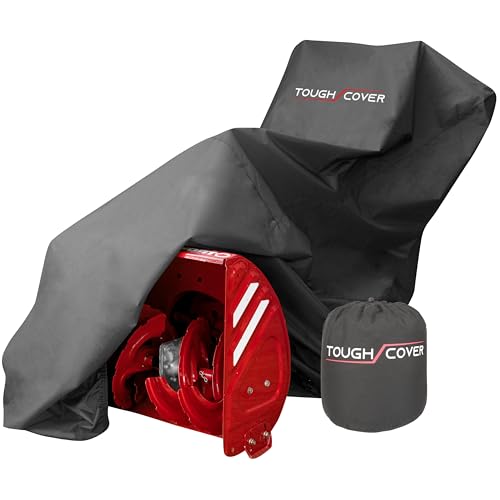
Tough Cover Premium 600D Snow Blower Cover
$38.66A 600D marine-grade fabric cover with UV protection and a built-in tightening cord, sized for most two-stage and three-stage machines.
Best for: any-brand two-stage stored outdoors or in a shed
Check price on Amazon
Lifetime 8 x 10 ft. Outdoor Storage Shed
$1,478.85An 8 by 10 foot dual-wall HDPE shed with steel reinforcement, a floor included and lockable doors, sized for a snow blower, a push mower and hand tools.
Best for: homes without garage space
Check price on Amazon
Arrow Shed Elite 10 x 12 ft. Steel Storage Shed
$1,580.10A Galvalume steel shed with 117 square feet of floor area and vented gables, enough for a snow blower plus a riding mower.
Best for: snow blower and riding mower owners
Check price on AmazonHow do I store a snow blower step by step?
- Handle the fuel. Outdoors with the engine cold, either stabilize a nearly full tank and run the engine a few minutes, or drain the tank and run it dry, exactly as the manual directs.
- Change the oil. Drain the used oil and refill with fresh oil so acidic residue does not sit in the engine all summer.
- Remove batteries. For battery machines, take out the packs and store them indoors at room temperature at the charge level the manual recommends.
- Clean and dry. Wipe off salt and grime without pressure washing, and let the machine dry completely.
- Protect the metal. Touch up chipped paint, coat bare steel with a rust inhibitor, and grease the fittings the manual lists.
- Inspect wear parts. Note worn shear pins, belts, scraper bar and skid shoes so replacement parts arrive before the first storm.
- Cover and park. Let the engine cool, fit a vented cover and park the machine level on a dry floor away from pilot lights.
How we chose
We did not test these products in person. Picks are researched from manufacturer specifications and owner manuals, engine and safety certifications where they apply, warranty terms, public recall records, and the recurring themes in verified owner reviews. We favor established brands with large review counts and parts support, match each pick to a real yard size or task, and place it in the tier where its price and capability actually belong.
Frequently asked questions
Is it better to drain the gas or add stabilizer to a snow blower?
Follow your operator manual, because manufacturers choose one method for their fuel system. Some want a nearly full tank of stabilized fuel run through the carburetor, which limits condensation and keeps gaskets wet. Others want the tank drained and the engine run until it stalls. Both prevent stale fuel from varnishing the carburetor. Use E10 or lower fuel either way; E15 is not allowed in snow blowers.
Can I store my snow blower outside?
You can, but it is the worst option. If the machine must stay outdoors, keep it off bare ground on a pallet, use a fitted and vented cover such as a 600D fabric snow blower cover, and expect more rust and UV damage to plastic chutes and tires. Remove batteries from cordless models and bring them indoors, since heat and freezing both shorten lithium-ion battery life.
Should I change the oil before storing a snow blower?
Yes. Used oil carries acids and moisture from combustion, and letting it sit on engine parts for six to eight months promotes corrosion. Change it at the end of the season, when the engine is still warm enough to drain well but cool enough to handle, and the machine starts the next winter with clean oil. Check the level again before the first storm.
Where should I store snow blower batteries in the summer?
Store them indoors in a dry place at room temperature, out of direct sun and away from furnaces, water heaters and flammable materials. Avoid an unheated garage or shed, where summer heat and winter cold both reduce lithium-ion capacity over time. Store them at the charge level the manual recommends, which is often a partial charge, and never keep a swollen or cracked pack.
Can you store a snow blower standing on its end?
Only if the manual shows that storage position. Tipping a gas snow blower on its handle can push oil into the air filter or cylinder and let fuel escape through the tank vent, which causes hard starting, smoke and a fire risk. Some single-stage and battery machines have folding handles designed for upright storage, and a few manufacturers describe how to prepare a machine for it.
Researched, not professional advice. This page is compiled from published specifications, manuals, labels and owner-review consensus, not hands-on testing. Follow the manufacturer's instructions and product label, and consult a qualified professional where safety, chemicals, fuel or structures are involved. As an Amazon Associate we earn from qualifying purchases.