Chainsaws and Wood
Best Chainsaw Safety Gear (2026): Chaps, Helmets, Eye and Ear PPE
Quick answer
The essential chainsaw safety gear is chaps, an ANSI Z89.1 helmet with a face screen, safety glasses and hearing protection. Start with Husqvarna apron chaps (ASTM F1897) and a Husqvarna forestry helmet with mesh visor and 24 dB muffs. Add sturdy boots and gloves, and wear it all on gas and battery saws.
Chainsaw protective gear works in layers: chaps protect the legs, where most homeowner chainsaw cuts land; a helmet with a face screen protects against falling limbs, kickback and flying chips; glasses under the screen stop fine debris; and hearing protection prevents permanent damage from sustained engine noise. None of it replaces safe technique, but all of it buys time and margin when something goes wrong.
Our top pick is Husqvarna apron chainsaw chaps at $89.97, because leg protection is the single piece most homeowners skip. Gear matters as much with a battery saw as with gas. If you are still choosing the saw itself, start with best chainsaws; for fuel, the two-cycle mix ratio calculator gets 50:1 right.
On this page
- What safety gear do I need to run a chainsaw?
- How loud is a chainsaw, and how long can I run one without ear protection?
- Beginner picks: the essential kit for your first saw
- Intermediate picks: better helmets, better hearing protection, sharp chains
- Expert picks: faster sharpening and better fuel and oil
- How do the picks compare?
- Also worth a look
- What file size do I need to sharpen my chain?
- How should chainsaw chaps fit, and when do I replace gear?
- Which chainsaw should this gear go with?
What safety gear do I need to run a chainsaw?
Every item below applies to gas and battery chainsaws and to pole saws where noted. Standards are what to look for on the label.
| Gear | Standard to look for | What it protects against | Example |
|---|---|---|---|
| Chainsaw chaps | ASTM F1897 (ANSI Z133 references chainsaw leg protection) | Chain contact with thighs and shins | Husqvarna apron chaps |
| Helmet | ANSI Z89.1 Type I (Class E adds electrical insulation) | Falling limbs, top impacts | Husqvarna forestry helmet |
| Face screen | Mesh visor, or clear visor to ANSI Z87.1 | Chips and sawdust to the face | NoCry 6-in-1 helmet |
| Safety glasses | ANSI Z87.1 | Fine debris past the mesh screen | NoCry clear safety glasses |
| Hearing protection | ANSI S3.19 with an NRR rating | Noise-induced hearing loss | Pro For Sho 34 dB NRR muffs |
| Boots | ASTM F2413 safety toe; ASTM F1818 for chainsaw-protective boots | Crushing, slips, chain contact at the foot | Search chainsaw boots |
| Gloves | Snug work gloves with good grip | Vibration, cuts from handling wood | Search chainsaw gloves |
Check labels on any gear you buy. The Husqvarna helmet lists ANSI Z89.1-2014 Type I, Class E; the NoCry helmet lists Z89.1 with Z87.1 visors and S3.19 ear muffs.
How loud is a chainsaw, and how long can I run one without ear protection?
Chainsaws commonly measure around 100 to 110 dBA at the operator's ear. The CDC's NIOSH recommended exposure limit is 85 dBA for 8 hours, and every 3 dB increase halves the safe time. That math explains why hearing protection belongs on every cut.
| Noise level | Recommended maximum unprotected exposure | Typical source |
|---|---|---|
| 85 dBA | 8 hours | Loud lawn equipment at a distance |
| 91 dBA | 2 hours | Many gas mowers at the operator |
| 94 dBA | 1 hour | Gas string trimmers and blowers |
| 100 dBA | 15 minutes | Chainsaws at the low end |
| 103 dBA | About 7.5 minutes | Gas chainsaws and chippers |
| 106 dBA | About 3.75 minutes | Gas chainsaws at full throttle |
| 110 dBA | Under 2 minutes | Chainsaws at the high end |
Source for limits: NIOSH criteria for occupational noise exposure (cdc.gov/niosh). Equipment levels vary by model and distance; treat sources as typical examples.
Beginner picks: the essential kit for your first saw
For anyone about to run a chainsaw, gas or battery, for the first time. This set covers legs, head, face, eyes and ears for less than the price of most saws.

Husqvarna 587160702 Apron Chainsaw Chaps, 38 in.
$89.97Pull-apart Tek Warp protective layers under 600 denier PVC-coated polyester are designed to clog the sprocket and slow or stop the chain. They meet ASTM F1897, ANSI Z133.1 and OSHA 1910.266, are UL certified and include a gear pocket.
Best for: anyone running a chainsaw, gas or battery
Check price on Amazon
NoCry 6-in-1 Chainsaw Helmet with Face Shield and Ear Muffs
$42.99An ANSI Z89.1 hard hat with an adjustable metal mesh visor, a clear polycarbonate Z87.1 face shield and ANSI S3.19 ear muffs that swing back when not needed, configurable six ways for sawing, trimming or mowing.
Best for: budget head, face and ear protection
Check price on Amazon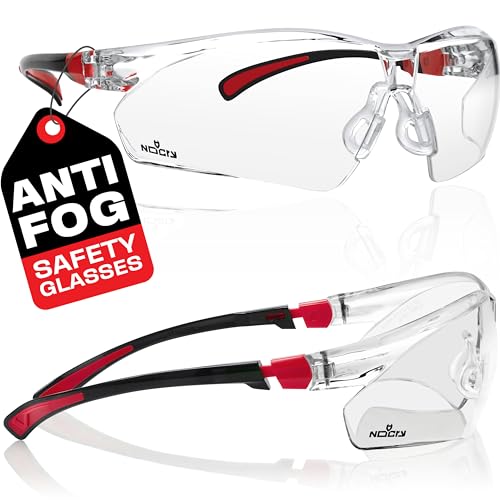
NoCry Clear Anti-Fog Safety Glasses
$13.99ANSI Z87.1 polycarbonate wraparound glasses with anti-fog and scratch-resistant coatings, extendable arms and an adjustable nose pad. A mesh screen stops chips but not fine sawdust, so glasses belong underneath.
Best for: every saw, trimmer, edger and blower job
Check price on AmazonIntermediate picks: better helmets, better hearing protection, sharp chains
For owners who cut firewood every season and want gear that is comfortable enough to wear for hours, plus the tools to keep a chain sharp.

Husqvarna 592752602 Forestry Helmet with Mesh Face Shield and Ear Muffs
$59.98Meets ANSI Z89.1-2014 Type I and is rated Class E for electrical insulation, with a metal mesh face shield, 24 dB NRR ear muffs that adjust vertically and sideways, 6-point textile suspension and a ratchet with 3 depth settings. A neck guard is sold separately.
Best for: felling, limbing and overhead cutting
Check price on Amazon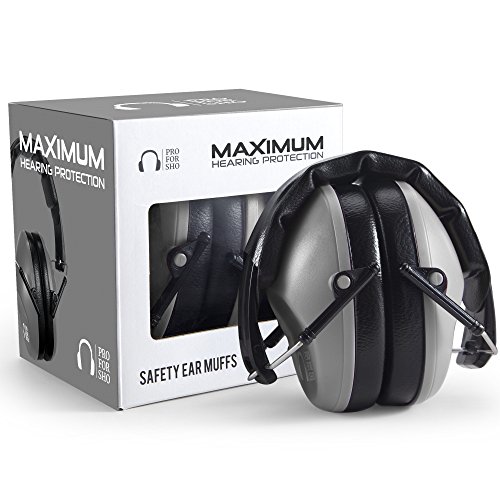
Pro For Sho 34dB NRR Ear Muffs
$19.99Slim folding muffs certified at 34 dB NRR under ANSI S3.19, compact enough for a tool bag. Wear them over a forestry helmet setup with integrated muffs removed, or with a hard hat, for extra protection on long cutting days.
Best for: gas chainsaws, blowers and chippers
Check price on Amazon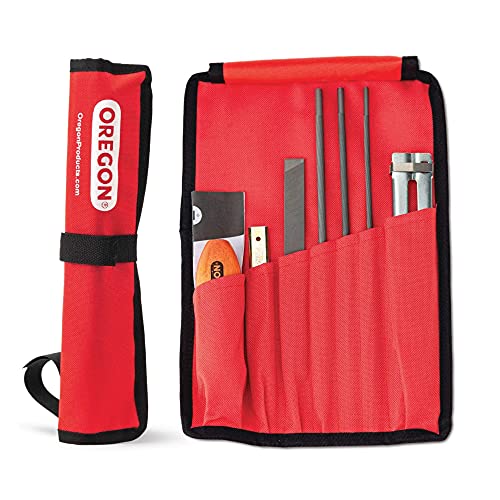
Oregon Universal Chainsaw Field Sharpening Kit, 7 Piece
$18.88Three round files in 5/32, 3/16 and 7/32 in., a 6 in. flat file for depth gauges, a file guide and a handle in a canvas pouch, with a filing chart to match file size to chain.
Best for: hand-filing chainsaw and pole saw chains
Check price on AmazonExpert picks: faster sharpening and better fuel and oil
For heavy firewood seasons, woodlot work and owners who run more than one saw and want less downtime.
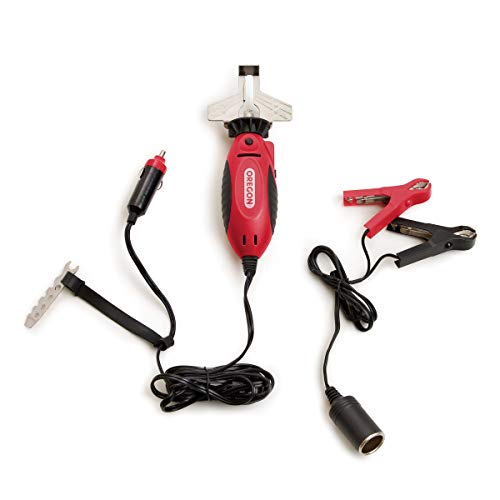
Oregon 12V Sure Sharp Electric Chain Sharpener
$38.74A 12V electric sharpener with a car adapter and battery clips for round-ground 1/4, 3/8 low profile, .325, 3/8 and .404 in. chains, with an angle guide and 5/32, 3/16 and 7/32 in. stones. It touches up chains at the woodpile.
Best for: touching up chains during long cutting days
Check price on Amazon
VP Racing SEF 50:1 Ethanol-Free Premix Fuel, Quart 3 Pack
$29.82Ready-to-pour 94 octane, ethanol-free 50:1 premix rated stable for 2 years in the tank and 5 years sealed, meeting JASO FD, ISO-L-EGD and API TC. It prevents ethanol-related fuel system problems in saws that sit between seasons.
Best for: saws and 2-stroke gear that sit between uses
Check price on Amazon
Husqvarna X-Guard All Season Bar and Chain Oil, 1 Gallon
$24.95All-season, high-tack bar and chain oil in a 1 gallon jug that reduces sling, friction and wear on the bar, chain and sprocket. It works in any chainsaw or pole saw, gas or battery.
Best for: keeping any chainsaw or pole saw lubricated
Check price on AmazonWho should not buy this tier: Skip an electric sharpener if you cut a few times a year: a file kit and a few minutes per tank do the job, and a badly set electric grinder can overheat or reshape cutters. Skip quart premix if you burn several gallons of fuel a season; mixing your own 50:1 with fresh gas and quality oil costs far less per gallon.
How do the picks compare?
| Model | Price | Type | Fits |
|---|---|---|---|
| Husqvarna 587160702 Apron Chainsaw Chaps, 38 in. | $89.97 | chainsaw chaps | adjustable waist up to 38 in., 32 in. inseam |
| Husqvarna 592752602 Forestry Helmet with Mesh Face Shield and Ear Muffs | $59.98 | forestry helmet with face screen and ear muffs | - |
| NoCry 6-in-1 Chainsaw Helmet with Face Shield and Ear Muffs | $42.99 | forestry helmet with face screen and ear muffs | - |
| NoCry Clear Anti-Fog Safety Glasses | $13.99 | safety glasses | - |
| Pro For Sho 34dB NRR Ear Muffs | $19.99 | ear muffs | - |
| Oregon 12V Sure Sharp Electric Chain Sharpener | $38.74 | electric chain sharpener | round ground 1/4, 3/8 LP, .325, 3/8 and .404 in. chains |
| Oregon Universal Chainsaw Field Sharpening Kit, 7 Piece | $18.88 | chainsaw file kit | chains using 5/32, 3/16 or 7/32 in. files |
Also worth a look
A lower-cost way to fuel 2-stroke saws, and the saws this gear goes with.

ECHO Power Blend Gold 50:1 2-Stroke Oil, 6 Pack
$16.99Six 2.6 oz bottles of semi-synthetic 50:1 oil, each sized for one gallon of fuel, with stabilizers rated for one month in a sealed container. It suits owners who burn fuel steadily through the season.
Best for: mixing your own fuel for 2-stroke saws
Check price on Amazon
Husqvarna 450 Rancher 20 in. Gas Chainsaw
$354.99A 50.2cc, 3.2 HP X-Torq saw with a 20 in. bar, Smart Start, an inertia-activated chain brake and LowVib, rated for 13 to 20 in. bars. It is the kind of saw this gear is built to protect you from.
Best for: firewood cutting and storm cleanup
Check price on Amazon
EGO Power+ CS1815 18 in. Chainsaw Kit with 6.0Ah Battery
$399.00An 18 in. battery saw rated as a 50cc gas equivalent with up to 330 cuts on a 4x4 per 6.0Ah charge. It still needs chaps, a helmet with a face screen, eye protection and hearing protection.
Best for: battery users bucking firewood
Check price on AmazonWhat file size do I need to sharpen my chain?
File size follows chain pitch. These are typical pairings from chain maker filing charts; confirm against the markings on your chain or its manual.
| Chain pitch | Typical round file | Common on |
|---|---|---|
| 1/4 in | 5/32 in | Some pole saws and small battery saws |
| 3/8 in low profile | 5/32 in | Small homeowner saws and many battery saws |
| .325 in | 3/16 in | Mid-size gas saws |
| 3/8 in (standard) | 7/32 in | Larger gas saws |
| .404 in | 7/32 in | Large professional saws |
Narrow-kerf chains of the same pitch may call for a smaller file. Lower depth gauges with a flat file every few sharpenings.
How should chainsaw chaps fit, and when do I replace gear?
- Chaps length: chaps should cover from the waist to below the top of your boots so there is no gap at the shin when you bend. The Husqvarna apron chaps fit waists up to 38 in. with a 32 in. inseam; taller or larger users should size up.
- Replace chaps after a cut: once the protective fibers have been pulled, that area no longer protects you. Also replace chaps that are torn, soaked with oil or fuel, or have exposed fibers.
- Helmets: replace after any significant impact and follow the maker's service life guidance for the shell and suspension.
- Ear muffs: replace cushions that are cracked or flattened, since a poor seal lowers real-world protection.
- Bar oil and fuel: refill bar oil every tank, use 50:1 mix where your manual calls for it, and see the two-cycle fuel mix chart.
For technique, read the chainsaw safety guide before cutting.
Which chainsaw should this gear go with?
Pick the lightest saw that handles your usual wood, since control is itself a safety feature. For firewood, a 16 to 20 inch bar about 2 inches longer than the wood you cut most is typical; the chainsaw bar length calculator sizes it. Full shortlists are on best chainsaws for firewood and best battery chainsaws, with in-depth looks at the Husqvarna 455 Rancher in the 455 Rancher review. For overhead limbs, a pole saw keeps you off ladders: best pole saws.
How we chose
We did not test these products in person. Picks are researched from manufacturer specifications and owner manuals, engine and safety certifications where they apply, warranty terms, public recall records, and the recurring themes in verified owner reviews. We favor established brands with large review counts and parts support, match each pick to a real yard size or task, and place it in the tier where its price and capability actually belong.
Frequently asked questions
Do I really need chainsaw chaps?
Yes. Leg injuries are among the most common chainsaw injuries because the saw naturally swings toward the thighs when it kicks back or slips through a cut. Chaps certified to ASTM F1897 use layers of long fibers that pull out and clog the drive sprocket, slowing or stopping the chain. They are inexpensive compared with the saw and worth wearing on every cut, gas or battery.
Do battery chainsaws need the same safety gear?
Yes. A battery chainsaw has the same sharp chain moving at similar speeds, so it can cause the same kickback and leg injuries as a gas saw. Wear chaps, an ANSI Z89.1 helmet with a face screen, eye protection and hearing protection. Battery saws are quieter, but hearing protection is still wise for long sessions, and falling limbs do not care what powers the saw.
What NRR hearing protection do I need for a chainsaw?
Chainsaws commonly produce around 100 to 110 dBA at the operator, and NIOSH recommends limiting unprotected exposure at 100 dBA to about 15 minutes. Ear muffs rated 24 to 34 dB NRR, such as those on the Husqvarna forestry helmet or the Pro For Sho 34 dB muffs, bring exposure down substantially when worn with a good seal. Doubling muffs with foam plugs adds more.
Is a mesh face screen enough eye protection?
A mesh face screen stops chips and larger debris but lets fine sawdust through, so wear ANSI Z87.1 safety glasses underneath. Many owners prefer mesh for sawing because it does not fog, and use a clear visor for trimming. The NoCry 6-in-1 helmet includes both mesh and clear Z87.1 visors so you can switch by task.
How often should I replace chainsaw chaps?
Replace chainsaw chaps immediately after any cut that reaches the protective layers, even a small one, because pulled fibers no longer protect that area. Also replace them if they are torn, heavily soaked with oil or fuel, or show exposed filling. With careful storage and no cuts, chaps last many seasons; inspect them before each cutting day.
What bar oil should I use in my chainsaw?
Use a tacky bar and chain oil made for chainsaws, such as Husqvarna X-Guard, which is formulated to cling to the chain and reduce sling. Do not substitute motor oil, which flings off quickly and may not protect the bar as well. Refill the bar oil reservoir every time you refuel or swap batteries, and check that oil is reaching the chain before cutting.
Researched, not professional advice. This page is compiled from published specifications, manuals, labels and owner-review consensus, not hands-on testing. Follow the manufacturer's instructions and product label, and consult a qualified professional where safety, chemicals, fuel or structures are involved. As an Amazon Associate we earn from qualifying purchases.