Landscaping
Best Garden Fencing (2026): Welded Wire, No-Dig Panels, T-Posts
Quick answer
The best garden fencing for most beds is YARDGARD 14-gauge welded wire: a 48 in. x 50 ft. galvanized roll with 2 x 4 in. welded mesh that resists sagging, set on T-posts about every 8 ft. Add 1 in. mesh along the bottom for rabbits. For no-tool borders, AMAGABELI 44 in. no-dig panels push into soil.
Garden fencing has one job: keep the right animals out, or in, without costing more than the plants it protects. Welded wire is the workhorse. The YARDGARD 14-gauge welded wire ($74.68 per 50 ft) is heavier gauge than most garden rolls, so it sags less between posts, and a T-post driver ($48.99) makes setting posts a quick job. For decorative borders that keep dogs out of beds, no-dig panels like the AMAGABELI 44 in. need no tools at all.
Match the fence to the animal: 2 x 4 in. mesh stops dogs and most adult animals but not young rabbits, and a 4 ft fence will not stop deer. The tables below cover fence types, materials for common garden sizes, and what each animal requires. For a full property fence, use the fence calculator to count posts, panels and rolls. Picks are based on published gauge, mesh and coating specs and owner-review themes.
On this page
- What is the best garden fencing to keep animals out?
- What kind of fence keeps which animals out of a garden?
- How much fence and how many T-posts does a garden need?
- Beginner pick: no-dig fences and a privacy screen
- Intermediate pick: welded wire on T-posts
- Expert pick: wood post fences and finishing sprayers
- How do the garden fencing picks compare on specs?
- Welded wire vs chicken wire: which is better for a garden?
- Do I need a permit or property survey for a garden fence?
What is the best garden fencing to keep animals out?
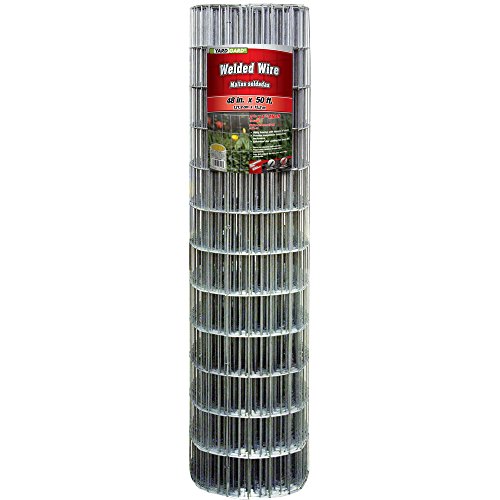
- Best overall: YARDGARD 14-Gauge Welded Wire. Galvanized 2 x 4 in. mesh, 48 in. x 50 ft., welded joints that resist sagging.
- Best looking wire: FOREHOGAR Green PVC Coated Welded Wire. Galvanized 16-gauge wire with a green vinyl coat and a smaller 2 x 3 in. mesh that blends into plantings.
- Best no-dig fence: AMAGABELI 44 in. No-Dig Panels. Four single-piece 44 x 36 in. powder-coated iron panels with dense wire gaps, pushed straight into soil.
- Best border: AMAGABELI 32 in. No-Dig Border. 14 pre-linked arched panels that unfold into 20 ft of curves or corners.
- Best privacy add-on: Windscreen4less 6 x 50 ft. Privacy Screen. Breathable polyethylene mesh with about 90 percent visibility blocking and brass grommets for chain link.
- Best post tool: Yellow Paw 18.5 lb T-Post Driver. 2-3/4 in. inside diameter, 24 in. long, with extra-wide handles.
What kind of fence keeps which animals out of a garden?
Height, mesh size and whether the bottom is secured matter more than the brand. These requirements reflect common university extension guidance.
| Animal | Minimum height | Mesh or opening | Bottom edge | Good choice |
|---|---|---|---|---|
| Dogs (medium to large) | 4 ft | 2 x 4 in. welded wire or dense panels | Secure to prevent pushing under | YARDGARD 14-gauge or AMAGABELI 44 in. |
| Rabbits | 2 ft | 1 in. or smaller | Bury 3 to 6 in. or bend outward | Poultry netting or hardware cloth along the bottom of welded wire |
| Chickens (keeping in or out) | 4 ft | 2 x 3 or 2 x 4 in. for adults | Close gaps at the ground | FOREHOGAR 2 x 3 in. or YARDGARD |
| Groundhogs | 3 to 4 ft | 2 in. or smaller | Bury 10 to 12 in. or bend outward | Welded wire with a buried apron |
| Deer | 7 to 8 ft | Polypropylene deer mesh or woven wire | Stake tightly | Dedicated deer fencing |
| Cats and small dogs in flower beds | 2 to 3 ft | Dense decorative panels | Push panels fully into soil | AMAGABELI 32 or 44 in. |
Animal behavior varies by region. Check your state extension service for local recommendations on burying depth and deer fence height.
How much fence and how many T-posts does a garden need?
Measure the perimeter, subtract gate openings, and space T-posts no more than about 8 ft apart, with a post at every corner. Corners and gate posts take the most strain, so brace them or use wood posts. Use 6 ft T-posts for a 4 ft fence so about 2 ft goes into the ground.
| Garden size | Perimeter | 50 ft rolls of 48 in. wire | T-posts at 8 ft spacing | Notes |
|---|---|---|---|---|
| 10 x 10 ft | 40 ft | 1 | 8 | Add 2 gate posts; subtract gate width from wire |
| 12 x 20 ft | 64 ft | 2 | 10 | Brace the 4 corners |
| 16 x 24 ft | 80 ft | 2 | 10 | A 4 ft gate leaves 76 ft of wire |
| 20 x 30 ft | 100 ft | 2 to 3 | 14 | Buy a third roll for overlaps and tie-ins |
| 25 x 40 ft | 130 ft | 3 | 18 | Consider wood corner posts set in concrete |
Post counts assume a closed loop with posts at every corner and no more than 8 ft between posts. Add rabbit netting along the bottom separately. Run your exact layout through the fence calculator.
Beginner pick: no-dig fences and a privacy screen
For renters, flower beds and anyone who wants a barrier today without posts, these install by hand.

AMAGABELI 44 in. No Dig Metal Garden Fence (4 Panels, 12 ft.)
$119.99Four single-piece 44 x 36 in. panels of thickened, baked-paint iron with dense wire gaps that stop dogs and small animals from getting into beds. No assembly or tools; the stakes push straight into soil. At 12 ft per pack, it suits beds, not whole yards.
Best for: keeping dogs out of a flower or vegetable bed
Check price on Amazon
AMAGABELI 32 in. No Dig Garden Border Fence (14 Panels, 20 ft.)
$44.98Fourteen pre-linked 32 x 10 in. arched panels in vinyl powder-coated iron that unfold into 20 ft of straight lines, curves, L or O shapes, adapting to slopes and uneven ground.
Best for: decorative bed borders that deter small animals
Check price on Amazon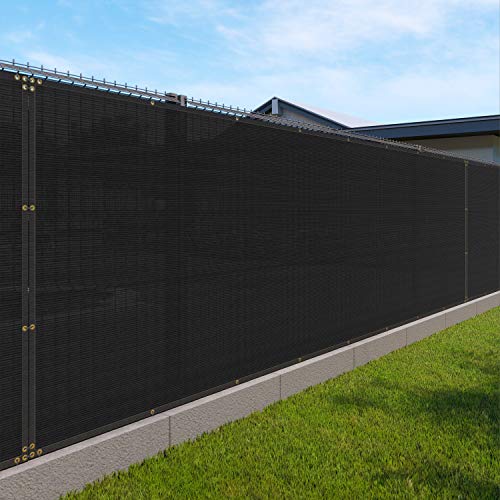
Windscreen4less Privacy Fence Screen (6 x 50 ft.)
$39.98A 6 x 50 ft breathable polyethylene screen with stitched edges, reinforced brass grommets, zip ties included and about 90 percent visibility blocking, backed by a 3-year limited warranty.
Best for: adding privacy to a chain link fence
Check price on AmazonIntermediate pick: welded wire on T-posts
For vegetable gardens, dog runs and chicken areas, welded wire on steel T-posts is the best balance of cost, strength and install time. Add 6 ft steel T-posts and T-post clips to the cart, plus 24 in. poultry netting along the bottom if rabbits are the problem.
YARDGARD 14-Gauge Welded Wire Fence (48 in. x 50 ft.)
$74.68Heavy 14-gauge galvanized wire in 2 x 4 in. mesh with welded joints that keep spacing and resist sagging, cut to length with bolt cutters and attached to wood or T-posts.
Best for: garden and pet fencing on wood or T-posts
Check price on Amazon
FOREHOGAR Green PVC Coated Welded Wire Fence (48 in. x 50 ft.)
$87.99Galvanized 16-gauge wire with a green vinyl coat, 1.9 mm thick after coating, in a smaller 2 x 3 in. mesh. Lighter than 14-gauge, so use closer post spacing on long runs.
Best for: vegetable garden borders where looks matter
Check price on Amazon
Yellow Paw Industrial T-Post Driver (18.5 lb)
$48.99An 18.5 lb powder-coated steel driver, 2-3/4 in. inside diameter and 24 in. long, that fits T-posts, U-posts, wood stakes and pipe, with extra-wide handles that keep fingers clear of pinch points.
Best for: setting a run of T-posts for garden or wire fence
Check price on AmazonExpert pick: wood post fences and finishing sprayers
For owners building or maintaining wood post-and-rail or board fences, the tools that matter are the post hole digger and a sprayer that stains a whole fence in an afternoon. Clean boards first at the right pressure: see pressure washer PSI for a wood fence.

AMES Post Hole Digger with Measuring Handle (58 in.)
$67.21Tempered steel clamshell blades on North American hardwood handles with a depth ruler printed on the handle, so every post hole ends up the same depth. Oversized cushion grips ease long sessions.
Best for: fence, deck footing and mailbox post holes
Check price on Amazon
Wagner FLEXiO 4000 Stationary HVLP Paint and Stain Sprayer
$240.99An X-Boost turbine that sprays most unthinned latex and oil-based paints, stains and sealers through a 15 ft air hose, with an iSpray nozzle for fence boards and a Detail Finish nozzle for trim. Less overspray than airless.
Best for: staining a wood fence or deck railing yourself
Check price on Amazon
Graco Magnum X5 Airless Paint Sprayer
$338.99An airless sprayer with fully adjustable pressure that draws unthinned stain straight from a 1 or 5 gallon bucket, supports up to 75 ft of hose and is sized by Graco for projects up to about 10 gallons.
Best for: long fence lines and full-house exterior projects
Check price on AmazonWho should not buy this tier: Skip airless sprayers for a short garden fence, where masking and cleanup take longer than brushing, and anywhere overspray could drift onto cars, siding or a neighbor's property on a breezy day. Skip digging wood post holes by hand in rocky or clay soil over long runs; renting a power auger, or hiring a fence contractor, is faster and easier on your back. And never start a boundary fence without knowing exactly where your property line is.
How do the garden fencing picks compare on specs?
| Model | Price | Type | Height | Length | Size |
|---|---|---|---|---|---|
| YARDGARD 14-Gauge Welded Wire Fence (48 in. x 50 ft.) | $74.68 | galvanized welded wire | 4 ft | 50 ft | - |
| FOREHOGAR Green PVC Coated Welded Wire Fence (48 in. x 50 ft.) | $87.99 | vinyl coated welded wire | 4 ft | 50 ft | - |
| AMAGABELI 44 in. No Dig Metal Garden Fence (4 Panels, 12 ft.) | $119.99 | no dig metal fence panels | 3.7 ft | 12 ft | - |
| AMAGABELI 32 in. No Dig Garden Border Fence (14 Panels, 20 ft.) | $44.98 | no dig metal border fence | 2.7 ft | 20 ft | - |
| Windscreen4less Privacy Fence Screen (6 x 50 ft.) | $39.98 | fence privacy screen | 6 ft | 50 ft | - |
| Yellow Paw Industrial T-Post Driver (18.5 lb) | $48.99 | manual T post driver | - | 2 ft | 18.5 lb |
Welded wire vs chicken wire: which is better for a garden?
Welded wire is better as the main fence. Its wires are welded at each crossing, so the mesh keeps its shape, resists sagging and stands up to a dog leaning on it. Chicken wire, or poultry netting, is twisted hexagonal wire that stretches and dents easily but has small openings, often 1 in., that stop rabbits and chicks.
The best garden fence often uses both: 14-gauge welded wire for height and strength, with a 2 ft strip of poultry netting zip-tied along the bottom and buried or bent outward at the soil line. Gauge matters too: lower numbers mean thicker wire, so the 14-gauge YARDGARD roll is sturdier than 16-gauge rolls, while the FOREHOGAR vinyl-coated roll trades some stiffness for a smaller mesh and a coating that hides it in green plantings.
Deer are the exception to everything above. A 4 ft fence will not stop them; plan on 7 to 8 ft deer fencing if deer are browsing your garden.
Do I need a permit or property survey for a garden fence?
Garden fences inside your yard rarely need a permit, but boundary fences often do, and many towns and HOAs limit fence height, especially in front yards, and regulate materials and which side faces out. Before building along a property line, confirm exactly where the line is. Your deed plat or an existing survey may show it; if markers are missing or neighbors disagree, a licensed land surveyor can stake the line. Many owners set a boundary fence a few inches inside their own line to avoid disputes.
Before any post goes in, call 811 so utilities mark buried lines. A T-post driven 2 ft deep can reach shallow electric, cable or irrigation lines. For a full perimeter fence with gates and concrete-set posts, the fence calculator estimates materials, and the new homeowner yard equipment checklist covers the tools you will reuse.
How we chose
We did not test these products in person. Picks are researched from manufacturer specifications and owner manuals, engine and safety certifications where they apply, warranty terms, public recall records, and the recurring themes in verified owner reviews. We favor established brands with large review counts and parts support, match each pick to a real yard size or task, and place it in the tier where its price and capability actually belong.
Frequently asked questions
What is the best fence to keep animals out of a vegetable garden?
For most gardens, 4 ft tall 14-gauge welded wire on steel T-posts is the best all-around fence, because it stops dogs and most larger animals and resists sagging. Add a 2 ft strip of 1 in. poultry netting along the bottom, buried or bent outward, to stop rabbits. Groundhogs need a buried apron, and deer require a 7 to 8 ft fence, which no standard garden roll provides.
How far apart should T-posts be for welded wire fence?
Space T-posts about 8 ft apart for welded wire garden fencing, closer for lighter 16-gauge wire or where dogs push on the fence, and put a post at every corner and on each side of a gate. Corners take the most tension, so brace them or use wood posts. For a 4 ft fence, 6 ft T-posts driven about 2 ft into the ground are standard.
Do no-dig garden fences work?
No-dig fences work well as barriers for dogs, cats and small animals around individual beds, and they install in minutes without tools. Panels like the AMAGABELI 44 in. push directly into soil and have dense wire gaps. They are not a substitute for a posted fence against determined diggers, jumpers or deer, and they can lean in soft or wet soil, so press stakes fully in and check them after storms.
How tall does a fence need to be to keep deer out?
A fence needs to be about 7 to 8 ft tall to reliably keep deer out of a garden, because deer can clear lower fences easily. Standard 4 ft welded wire will not stop them. Options include polypropylene deer mesh on tall posts, woven wire deer fence, or, for small beds, a lower fence combined with an inner fence a few feet away, since deer are reluctant to jump into narrow spaces.
Should I use an HVLP or airless sprayer to stain a fence?
An airless sprayer like the Graco Magnum X5 is faster for long fence lines because it pulls stain directly from a bucket and supports long hoses. An HVLP sprayer like the Wagner FLEXiO 4000 produces less overspray and gives more control near houses, plants and cars, at a slower pace. For a short garden fence, a brush or a 1 gallon pump sprayer for transparent stain may be quicker once cleanup is counted.
Researched, not professional advice. This page is compiled from published specifications, manuals, labels and owner-review consensus, not hands-on testing. Follow the manufacturer's instructions and product label, and consult a qualified professional where safety, chemicals, fuel or structures are involved. As an Amazon Associate we earn from qualifying purchases.