Landscaping
Best Landscape Edging (2026): No-Dig vs Steel, Barrier and Sand
Quick answer
The best landscape edging for a permanent, trimmer-proof border is Edge Right COR-TEN steel: 16-gauge hammer-in strips with a 6 in. depth and rounded top. For quick curved beds without trenching, EasyFlex No-Dig Edging gives 100 ft with 40 spikes. Steel costs more per foot but holds gravel and mulch lines far longer.
Landscape edging is the border that separates lawn from beds, gravel from grass, and pavers from soil. The right edging keeps mulch and stone where you put them and stops grass from creeping in. Two approaches cover most yards. No-dig plastic edging like EasyFlex ($44.37 for 100 ft) is fast and cheap, spiked into the ground with no trench. Hammer-in steel edging like Edge Right COR-TEN ($130.00 for 20 ft) costs far more per foot but goes 6 in. deep, survives string trimmers and weathers to a rust patina.
This roundup also covers the materials that make edging projects last: woven weed barrier under gravel, polymeric sand for paver joints, geocell grids and hand tampers. Quantities matter, so run the paver calculator, gravel calculator or mulch calculator before you buy.
On this page
- What is the best landscape edging?
- No-dig vs steel edging: which is better?
- How much landscape edging do I need?
- Beginner pick: no-dig edging and a gravel path grid
- Intermediate pick: compaction, joint sand and spreading tools
- Expert pick: permanent steel edging, commercial fabric and wide-joint sand
- How do the edging and hardscape picks compare on specs?
- Should I put landscape fabric under mulch or gravel?
- How do I install polymeric sand in paver joints?
What is the best landscape edging?
- Best permanent edging: Edge Right Hammer-In COR-TEN Steel. Five 48 in. strips of 16-gauge steel, 6 in. deep, with a patina that the maker says can be sealed if you prefer.
- Best no-dig edging: EasyFlex Heavy Duty No-Dig. A 100 ft coil of 1.7 in. tall recycled plastic edging with 40 8-in. anchoring spikes for curves, tree rings and straight runs.
- Best weed barrier: DeWitt Pro-5. A 5 oz commercial woven fabric, 6 x 250 ft for 1,500 sq. ft., that passes air and water and has alignment stripes every 12 in.
- Best gravel path stabilizer: Vodaland 2 in. GeoCell. A perforated polyethylene grid, 160 sq. ft. per 9 x 17 ft section, that stops gravel from migrating on foot paths.
- Best polymeric sand: Alliance Gator Supersand G2 for standard paver joints up to 2 in.; DOMINATOR for wide flagstone joints from 1/8 to 4 in.
- Best hand tamper: Bully Tools Steel Hand Tamper. A made-in-USA all-steel tool with a 3/8 in. plate and 49 in. handle.
No-dig vs steel edging: which is better?
No-dig edging wins on speed and cost. Steel wins on durability, depth and crisp lines. Brick or paver borders are a third option for a traditional look.
| Factor | No-dig plastic (EasyFlex) | Hammer-in steel (Edge Right COR-TEN) | Brick or paver border |
|---|---|---|---|
| Install | Spike in place; no trench | Hammer in; no trench in most soils | Trench, base and set each unit |
| Tools | Rubber mallet | Mallet or small sledge, board to protect the top | Spade, tamper, level |
| Depth into soil | Shallow edging, held by 8 in. spikes | 6 in. steel | Depends on base |
| Stops grass runners | Partly; runners can go under | Well | Partly; runners cross joints |
| Holds gravel | Fair on low-traffic beds | Very well | Well |
| String trimmer contact | Nicks and wears | Unharmed | Unharmed |
| Frost heave | Can lift in freeze-thaw soils | Resists better | Units can shift |
| Look | Low, mostly hidden | Thin, crisp line that weathers to rust | Traditional, visible |
| Relative cost per foot | Lowest | Highest of the three for DIY | Middle to high |
How much landscape edging do I need?
Measure the perimeter you will edge, not the whole bed. Skip sides that already meet a wall, driveway or patio. Round up and allow overlap at joints as the maker specifies.
| Project | Edged length | Edge Right 20 ft packs | EasyFlex 100 ft coils |
|---|---|---|---|
| Tree ring, 10 ft diameter | About 31 ft | 2 | 1 |
| Bed along house, 20 x 6 ft (3 open sides) | About 32 ft | 2 | 1 |
| Kidney-shaped bed, about 15 x 8 ft | About 40 ft | 2 to 3 | 1 |
| Gravel patio, 12 x 12 ft | 48 ft | 3 | 1 |
| Walkway, 50 ft long, both sides | 100 ft | 5 to 6 | 1 to 2 |
| Front yard beds, several shapes | About 150 ft | 8 | 2 |
Circle perimeter equals diameter times 3.14. Irregular beds are easiest to measure by laying a garden hose along the edge and measuring the hose.
Beginner pick: no-dig edging and a gravel path grid
For a first weekend project, these give clean borders and a stable gravel path with basic tools and no trenching.

EasyFlex Heavy Duty No-Dig Edging Kit (100 ft.)
$44.37A 100 ft coil of commercial-grade recycled plastic edging, 1.7 in. tall, with 40 8-in. spikes, that forms curves, straight lines and tree rings in soft or compacted soil without trenching or heavy tools.
Best for: quick curved bed borders without digging
Check price on Amazon
Vodaland 2 in. GeoCell Gravel Grid (9 x 17 ft.)
$29.99A 2 in. deep perforated polyethylene cell grid for pedestrian paths, 160 sq. ft. per section, that holds gravel in place so it does not scatter or rut. The maker recommends about 30 J-hooks per installed unit and pedestrian use only.
Best for: stable gravel walkways and patio bases
Check price on AmazonIntermediate pick: compaction, joint sand and spreading tools
For paver paths, small patios and gravel pads, the difference between a surface that stays flat and one that heaves is compaction and joint material.

Bully Tools Steel Hand Tamper
$71.99A 100 percent made-in-USA all-steel tamper with a 3/8 in. thick plate and 49 in. handle, covered by a limited lifetime warranty. Ideal for paths, edging trenches, post-hole backfill and small pads.
Best for: compacting paver base and post-hole backfill
Check price on Amazon
Alliance Gator Supersand G2 Polymeric Sand (50 lb)
$79.98Polymeric sand for joints up to 2 in. that the maker lists as rainfast in 15 minutes, with no dust, no haze and no blower needed. Pavers must be completely dry, and it should not be applied below 32 F.
Best for: standard concrete paver patios and walkways
Check price on Amazon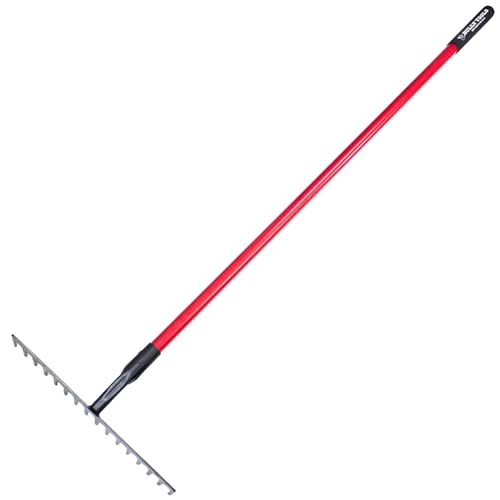
Bully Tools 7-Gauge 16-Tine Stone Rake
$69.29A made-in-USA 7-gauge steel head, thicker than standard 10-gauge rakes, on a 66 in. fiberglass handle for spreading and leveling gravel, stone and base material without bending tines.
Best for: leveling gravel pads and paver base
Check price on AmazonExpert pick: permanent steel edging, commercial fabric and wide-joint sand
For owners building gravel gardens, flagstone patios and modern beds meant to last decades, buy the materials contractors reach for.

Edge Right Hammer-In COR-TEN Steel Edging (5 x 48 in.)
$130.00Five 48 in. strips of 16-gauge COR-TEN steel with a rounded top and 6 in. depth. COR-TEN is weathering steel that forms a stable rust patina, and the malleable steel follows gentle curves.
Best for: crisp permanent edges between lawn and gravel
Check price on Amazon
DeWitt Pro-5 Weed Barrier Fabric (6 x 250 ft.)
$156.99A 5 oz woven commercial fabric that resists tears and punctures during installation, passes air and water, and covers 1,500 sq. ft. per 6 x 250 ft roll, with stripes every 12 in. for straight layout.
Best for: large gravel paths and stone beds that need long-term weed control
Check price on Amazon
DOMINATOR Polymeric Sand (40 lb)
$89.00Ceramic Flex polymeric sand rated for joint widths from 1/8 to 4 in. at a minimum 1 in. depth, suited to irregular flagstone. The maker publishes a coverage calculator and suggests buying a small amount first to check color.
Best for: wide-joint flagstone and paver patios
Check price on AmazonWho should not buy this tier: Skip steel edging in beds you plan to redesign within a few years, along light-colored concrete where rust runoff from new COR-TEN can stain the surface while the patina forms, and in very rocky soil where strips cannot be hammered to depth. Skip commercial fabric under organic mulch in planting beds; it is best under gravel and stone. And for patios larger than a small path, rent a plate compactor rather than relying on a hand tamper.
How do the edging and hardscape picks compare on specs?
| Model | Price | Type | Length | Coverage | Size |
|---|---|---|---|---|---|
| Edge Right Hammer-In COR-TEN Steel Edging (5 x 48 in.) | $130.00 | hammer in steel edging | 20 ft | - | - |
| EasyFlex Heavy Duty No-Dig Edging Kit (100 ft.) | $44.37 | no dig plastic edging | 100 ft | - | - |
| DeWitt Pro-5 Weed Barrier Fabric (6 x 250 ft.) | $156.99 | woven weed barrier | 250 ft | 1,500 sq ft | - |
| Vodaland 2 in. GeoCell Gravel Grid (9 x 17 ft.) | $29.99 | geocell gravel grid | 17 ft | 160 sq ft | - |
| Bully Tools Steel Hand Tamper | $71.99 | steel hand tamper | 4.1 ft | - | - |
| Bully Tools 7-Gauge 16-Tine Stone Rake | $69.29 | stone rake | 5.5 ft | - | - |
| Alliance Gator Supersand G2 Polymeric Sand (50 lb) | $79.98 | polymeric paver sand | - | - | 50 lb |
| DOMINATOR Polymeric Sand (40 lb) | $89.00 | polymeric paver sand | - | - | 40 lb |
Should I put landscape fabric under mulch or gravel?
Under gravel and stone: yes. A woven fabric like DeWitt Pro-5 keeps stone from sinking into soil and slows weeds coming up from below, and it lets water drain. Overlap seams by several inches and pin them.
Under wood mulch in planting beds: usually no. Many university extension services advise against it. Organic mulch breaks down into a layer of soil on top of the fabric, weeds root in that layer anyway, and the fabric blocks the mulch from improving the soil below. It also makes adding plants harder. In beds, a 2 to 3 in. layer of mulch alone suppresses most weeds. The guide to mulching landscape beds covers depth and timing, and the mulch coverage chart shows how many bags or yards you need.
How do I install polymeric sand in paver joints?
- Compact the base first. Pavers should sit on a compacted gravel base; compact in lifts with a hand tamper for small areas or a rented plate compactor for patios.
- Start completely dry. Pavers, joints and sand must be dry, with no rain forecast for the time the product label specifies and temperatures above the label minimum.
- Sweep sand into joints. Pour sand on the surface and sweep it into joints until they are full to the depth the label requires.
- Compact and top up. Vibrate or tamp the pavers to settle the sand, then sweep in more to refill joints to just below the paver edge.
- Clean the surface. Remove every bit of sand from paver tops with a soft broom, and a leaf blower on low if the label allows, to prevent haze.
- Activate with water. Mist the surface in stages exactly as the label directs, without washing sand out of the joints.
How we chose
We did not test these products in person. Picks are researched from manufacturer specifications and owner manuals, engine and safety certifications where they apply, warranty terms, public recall records, and the recurring themes in verified owner reviews. We favor established brands with large review counts and parts support, match each pick to a real yard size or task, and place it in the tier where its price and capability actually belong.
Frequently asked questions
What is the best landscape edging that lasts?
Steel edging lasts longest for most homeowners. Hammer-in COR-TEN weathering steel like Edge Right goes 6 in. into the soil, forms a stable rust patina, and is not damaged by string trimmers or mowers. Aluminum edging also lasts but is softer. Plastic no-dig edging is the cheapest and fastest to install but can heave in freeze-thaw soils and wears where trimmers hit it.
Does no-dig edging really work?
No-dig edging works well for defining mulch beds, tree rings and low-traffic borders, and it installs in a fraction of the time of trenched edging. EasyFlex, for example, is held by 40 8-in. spikes per 100 ft. It is less effective at stopping aggressive creeping grasses, which can run underneath shallow edging, and it can lift in soils that freeze and thaw, so check and reseat spikes each spring.
Will COR-TEN steel edging rust away?
COR-TEN is weathering steel designed to form a dense rust layer that slows further corrosion, so it is not expected to rust through the way ordinary steel does. The maker of Edge Right says it can last well over 100 years. Expect early rust runoff while the patina forms, which can stain light concrete or pavers nearby. You can seal it if you want to keep the fresh color.
Should I use landscape fabric under mulch?
In most planting beds, no. Organic mulch decomposes into soil on top of the fabric, weeds root in that layer anyway, and the fabric keeps the mulch from improving the soil underneath, which is why many extension services advise against it. A 2 to 3 in. layer of mulch alone suppresses most weeds. Fabric is worth using under gravel paths, stone beds and paver bases.
How long does polymeric sand last in paver joints?
Properly installed polymeric sand typically holds for several years before joints need touch-ups, but results depend heavily on installation. It fails early when applied to damp pavers, when joints are not filled to the required depth, when the base was not compacted, or when too much water washes the polymers out. Follow the label exactly, and top up worn joints rather than redoing the whole patio.
Do I need to call 811 before installing edging?
Call 811 before any project that digs or drives material more than a few inches into the ground, including hammer-in steel edging, trenched edging, fence posts and paver base excavation. Utility lines and irrigation pipes are sometimes buried shallower than expected. The service is free, and utilities mark lines within a few business days. Hand-pushed no-dig spikes are low risk, but calling is still the safe habit.
Researched, not professional advice. This page is compiled from published specifications, manuals, labels and owner-review consensus, not hands-on testing. Follow the manufacturer's instructions and product label, and consult a qualified professional where safety, chemicals, fuel or structures are involved. As an Amazon Associate we earn from qualifying purchases.