Landscaping
Gravel Weight Chart: Tons and Pounds per Cubic Yard
Quick answer
A cubic yard of typical gravel weighs about 1.4 tons, or 2,800 pounds. Pea gravel and river rock run about 1.35 tons per yard, crusher run about 1.5 tons and lava rock only 0.6 tons. A 10 by 20 foot path at 3 inches needs 1.85 yards, roughly 2.6 tons.
Gravel is quoted three ways: by the cubic yard, by the ton and by the half cubic foot bag. Because weight per yard varies with the stone, converting between volume and weight is where orders go wrong, and an over-order of stone is far harder to deal with than an over-order of mulch.
Use the weight table for your material, then the coverage table for your area. The gravel calculator adds compaction allowances and bag counts.
On this page
How much does a cubic yard of gravel weigh?
| Material | Tons per cubic yard | Pounds per cubic yard | Pounds per cubic foot | Half cubic foot bag |
|---|---|---|---|---|
| Pea gravel | 1.35 | 2,700 lb | 100 lb | 50 lb |
| Crushed stone, 3/4 in (#57) | 1.4 | 2,800 lb | 104 lb | 52 lb |
| Crusher run or road base | 1.5 | 3,000 lb | 111 lb | 56 lb |
| River rock | 1.35 | 2,700 lb | 100 lb | 50 lb |
| Decomposed granite | 1.3 | 2,600 lb | 96 lb | 48 lb |
| Lava rock | 0.6 | 1,200 lb | 44 lb | 22 lb |
Typical loose bulk densities. Wet material and larger stone weigh more, so ask your supplier for the figure for their specific product before ordering by the ton.
How much gravel do I need for my area?
| Area | 2 in deep | 3 in deep | 4 in deep | 6 in deep |
|---|---|---|---|---|
| 100 sq ft | 0.62 yd, 0.9 t | 0.93 yd, 1.3 t | 1.23 yd, 1.7 t | 1.85 yd, 2.6 t |
| 200 sq ft | 1.23 yd, 1.7 t | 1.85 yd, 2.6 t | 2.47 yd, 3.5 t | 3.70 yd, 5.2 t |
| 300 sq ft | 1.85 yd, 2.6 t | 2.78 yd, 3.9 t | 3.70 yd, 5.2 t | 5.56 yd, 7.8 t |
| 500 sq ft | 3.09 yd, 4.3 t | 4.63 yd, 6.5 t | 6.17 yd, 8.6 t | 9.26 yd, 13.0 t |
| 1,000 sq ft | 6.17 yd, 8.6 t | 9.26 yd, 13.0 t | 12.35 yd, 17.3 t | 18.52 yd, 25.9 t |
Add about 10 percent for crushed stone and 15 percent for road base and decomposed granite, which compact, plus about 5 percent for uneven ground.
How deep should gravel be?
| Project | Depth | Notes |
|---|---|---|
| Garden path or walkway | 2 to 3 in pea gravel or decomposed granite | Over compacted soil and landscape fabric, with edging |
| Patio or fire pit area | 2 in top layer | Over 4 in of compacted crushed base |
| Driveway, new | 4 to 6 in base plus 2 to 3 in top layer | Build in compacted lifts; a geotextile helps on soft soil |
| Driveway, refresh | 2 in top layer | Rake and regrade first |
| Drainage or French drain | Per drain design | Washed crushed stone wrapped in fabric |
| Decorative beds | 2 to 3 in | River rock or lava rock over woven fabric |
How is the gravel calculation done?
- Cubic yards = area in square feet x depth in inches / 324
- With compaction = cubic yards x (1 plus the allowance), about 10 percent for crushed stone and 15 percent for road base and decomposed granite
- Tons = cubic yards x density, about 1.3 to 1.5 tons per yard for most gravel
- Bags = cubic feet / 0.5 for common half cubic foot bags, so 54 bags per cubic yard
A circular area uses 3.1416 x radius x radius for square footage. For a driveway built in layers, run the numbers once for the base and once for the top, since they are usually different materials at different depths. Comparing against bed mulch instead? See the mulch coverage chart.
Can I haul gravel in a pickup truck?
Check the payload rating first. A cubic yard of gravel weighs about 2,700 to 3,000 pounds, which exceeds the payload of many half-ton pickups, so one yard is often a full load and a compact truck may only carry half a yard safely. For more than a couple of yards, delivery is usually cheaper than several trips and far easier on the truck.
On site, a 6 cubic foot wheelbarrow filled with gravel is extremely heavy, so fill it halfway. A two-wheel barrow such as the Jackson MP1010 is more stable, and a dump cart like the Gorilla Carts 1,500 lb at $389.99 is rated for heavier loads. A steel stone rake such as the Bully Tools 16 tine spreads gravel evenly, and a hand tamper compacts small base areas.
Do I need landscape fabric under gravel?
Under stone, yes. Unlike wood mulch, gravel sinks into bare soil and disappears within a couple of seasons, so a woven barrier such as DeWitt Pro-5 both keeps the stone where you put it and slows weeds. Thin spun fabric tears under stone and is a false economy.
For loose pea gravel paths, a cellular stabilizer grid like Vodaland GeoCell at $29.99 holds stones in place and stops ruts forming where people walk. Solid edging keeps gravel out of the lawn: steel edging such as Edge Right COR-TEN or no-dig plastic both work. See the best landscape edging.
What do I need to move and spread gravel?
Gravel punishes undersized equipment. Everything here is rated for the weight. Full picks are in the best yard carts and wheelbarrows.
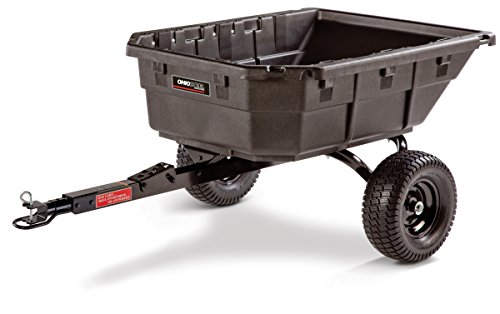
Ohio Steel 4048P-HYB 15 cu ft Poly Swivel Hybrid Dump Cart
$558.13Fifteen cubic feet on a swivel dump cart behind a tractor moves a delivered pile in a handful of trips instead of dozens.
Best for: driveways and large paths
Check price on Amazon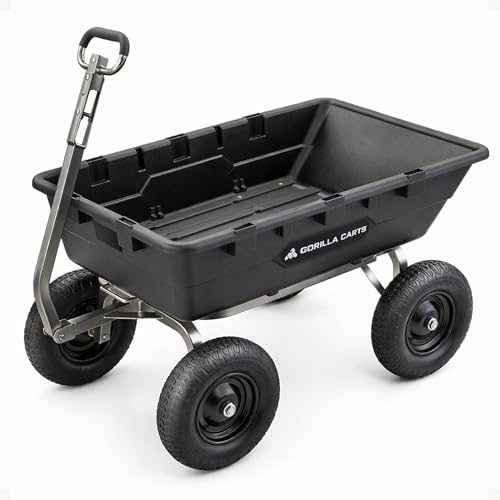
Gorilla Carts Poly Dump Cart, 1,500 lb, 10 cu ft
$389.99A 1,500 pound rating and a dump lever handle gravel loads that would strain a standard wheelbarrow frame.
Best for: patios and beds
Check price on Amazon
Jackson MP1010 10 cu ft Poly 2-Wheel Wheelbarrow
$689.94Two wheels make a heavy gravel load far harder to tip on a slope or a soft edge than a single-wheel barrow.
Best for: narrow access and slopes
Check price on Amazon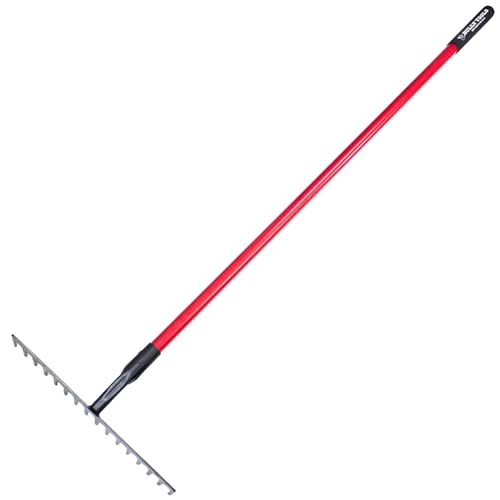
Bully Tools 7-Gauge 16-Tine Stone Rake
$69.29A 7 gauge steel stone rake levels gravel to an even depth and survives contact with crushed rock, which plastic rakes do not.
Best for: grading paths and drives
Check price on Amazon
Bully Tools Steel Hand Tamper
$71.99A steel hand tamper compacts base material in small areas, which is what stops pavers and paths from settling unevenly.
Best for: patio and paver bases
Check price on Amazon
Vodaland 2 in. GeoCell Gravel Grid (9 x 17 ft.)
$29.99A 2 inch cellular grid holds loose stone in place on paths and parking areas, covering about 160 square feet.
Best for: pea gravel paths and parking pads
Check price on AmazonHow we chose
We did not test these products in person. Picks are researched from manufacturer specifications and owner manuals, engine and safety certifications where they apply, warranty terms, public recall records, and the recurring themes in verified owner reviews. We favor established brands with large review counts and parts support, match each pick to a real yard size or task, and place it in the tier where its price and capability actually belong.
Frequently asked questions
How many tons of gravel do I need for a driveway?
For a 12 by 50 foot driveway refreshed with 2 inches of gravel, you need about 2.2 cubic yards, roughly 3 tons. Building new with 4 inches of compacted base plus 2 inches of top stone takes about 5 to 5.5 cubic yards, around 7 to 8 tons. Order base and top layers separately and add 10 to 15 percent for compaction.
How much area does a ton of gravel cover?
A ton of typical gravel at about 1.4 tons per cubic yard is roughly 0.71 cubic yards. At 2 inches deep that covers about 115 square feet, at 3 inches about 77 square feet and at 4 inches about 58 square feet. Lighter materials such as lava rock cover far more area per ton, so always check the weight of the specific product.
How many bags of gravel equal a yard?
A cubic yard is 27 cubic feet, so it takes 54 half cubic foot bags to equal one yard, which is typically well over a ton of bagged stone. For anything more than about a quarter to half a yard, bulk delivery is usually far cheaper per yard than bags even after the delivery fee, and it is much less carrying.
What is the best gravel for a walkway?
Pea gravel is comfortable underfoot and drains well but shifts, so it works best with edging and a stabilizer grid. Decomposed granite or fine crushed stone with dust compacts into a firmer surface that is easier for wheelbarrows, walkers and canes. Angular crushed stone locks together better than rounded stone. Use 2 to 3 inches over compacted soil and fabric.
Should gravel be compacted?
Base layers for driveways, patios and paver bases should be compacted in lifts of about 2 to 4 inches with a plate compactor or hand tamper. Angular crushed stone and road base compact well. Rounded pea gravel and river rock do not compact meaningfully and are used as loose top layers, so plan the extra material allowance only on the base.
Researched, not professional advice. This page is compiled from published specifications, manuals, labels and owner-review consensus, not hands-on testing. Follow the manufacturer's instructions and product label, and consult a qualified professional where safety, chemicals, fuel or structures are involved. As an Amazon Associate we earn from qualifying purchases.