Landscaping
Topsoil Calculator: How Much Topsoil or Topdressing You Need
Quick answer
Multiply area in square feet by depth in inches and divide by 324 for cubic yards. A new 1,000 square foot lawn at 4 inches needs about 12.3 cubic yards of topsoil, while topdressing the same lawn at a quarter inch needs only about 0.77 cubic yards. A cubic yard of dry topsoil weighs roughly a ton.
Topsoil jobs range from a thin quarter inch of topdressing over an existing lawn to six inches for a new lawn, and the difference is more than twentyfold in material. Enter the area, the job and the bag size you would buy, and the calculator returns cubic yards, approximate tons, bags and cart loads. If you are seeding at the same time, the grass seed calculator gives the seed to go with it.
Topsoil calculator
Topsoil needed
Move and spread it faster
Top matches update when you calculate.
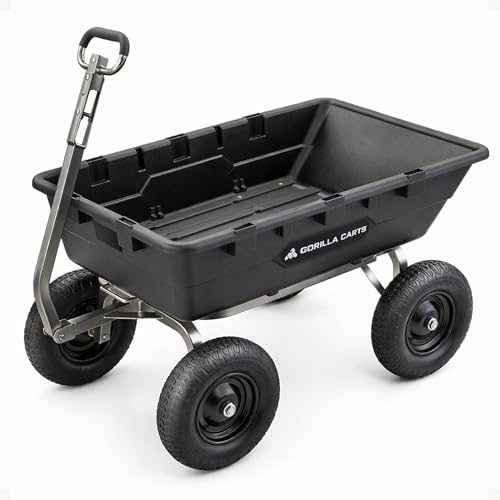
Gorilla Carts Poly Dump Cart, 1,500 lb, 10 cu ft
$389.99A 10 cu ft, 1,500 lb poly cart whose handle converts to a hitch for a lawn tractor or ATV, with 16 inch pneumatic tires and quick-release dump.
Best for: hand-pull or tow hauling on mid-size properties
Check price on Amazon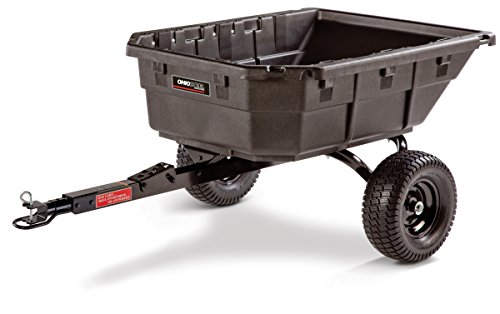
Ohio Steel 4048P-HYB 15 cu ft Poly Swivel Hybrid Dump Cart
$558.13A 15 cu ft structural-foam bed rated to 1,250 lb with a foot-pedal swivel dump across 100 degrees, rotating hitch and 16 inch commercial tires.
Best for: heavy hauling on acreage
Check price on Amazon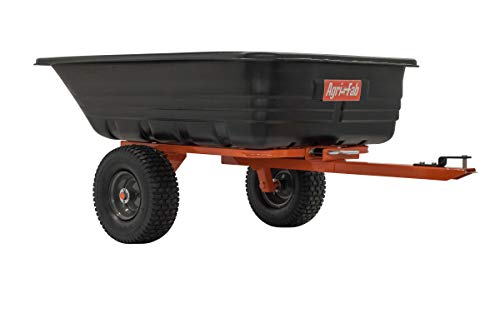
Agri-Fab 12 cu ft Tow-Behind Poly Swivel Dump Cart, 700 lb
$312.00A made-in-Illinois tow cart with an 80 degree swivel and 52 degree dump angle, 700 lb capacity and 12 inch ground clearance on pneumatic turf tires.
Best for: dumping mulch exactly where it goes
Check price on Amazon
Jackson MP1010 10 cu ft Poly 2-Wheel Wheelbarrow
$689.94A contractor-size 10 cu ft poly tray on an all-steel undercarriage with two 16 inch pneumatic wheels, stable enough for big loads of mulch or leaves.
Best for: heavy, frequent loads
Check price on Amazon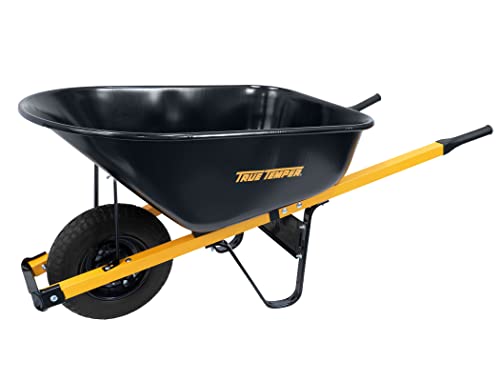
True Temper 6 cu ft Steel Wheelbarrow with Never Flat Tire
$229.00A seamless steel tray with a sloped front for dumping, steel handles and a flat-free tire, shipped in one box for mulch, soil and stone.
Best for: general yard hauling
Check price on Amazon
Brinly 485 lb Tow-Behind Poly Lawn Roller, 18 x 48 in
$299.00A 54 gallon water or sand drum weighing up to 485 lb with rounded ends and a scraper bar, for seating new seed or sod and smoothing mole or frost heave.
Best for: firming seed and sod on large areas
Check price on Amazon
Bully Tools 16 in. Bow Rake
$37.99A 16 in. head of 10-gauge USA steel with robotically overwelded tines on a fiberglass handle for breaking up soil and spreading mulch.
Best for: grading topsoil and spreading mulch in beds
Check price on Amazon
Black Gold Canadian Sphagnum Peat Moss, 2.2 cu ft
$37.74A large compressed bag of Canadian sphagnum peat that holds moisture, useful as a thin cover over fresh seed or mixed into topdressing to keep the seedbed damp.
Best for: covering new seed so it stays moist
Check price on Amazon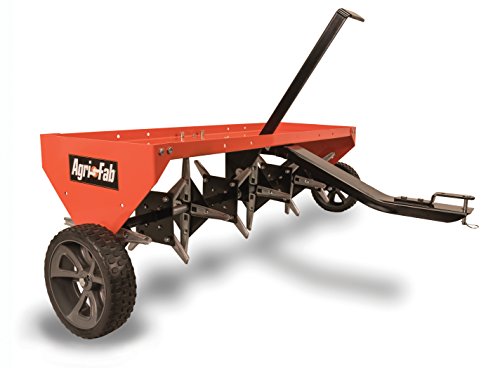
Agri-Fab 48 in Tow-Behind Plug Aerator
$319.98Thirty-two galvanized self-sharpening knives pull plugs up to 3 inches deep, with a 175 lb weight tray, flat-free tires and a seat-reachable transport handle.
Best for: core-aerating an acre with a lawn tractor
Check price on Amazon
Yard Butler ID-6C Manual Lawn Coring Aerator
$48.95A long-handled powder-coated steel step aerator that pulls two cores per push, the right tool for compacted paths and small patches.
Best for: spot-aerating small, compacted areas
Check price on AmazonOn this page
How much topsoil do I need?
| Area | 1/4 in topdressing | 1/2 in | 4 in new lawn | 6 in new bed |
|---|---|---|---|---|
| 500 sq ft | 0.39 yd | 0.77 yd | 6.17 yd | 9.26 yd |
| 1,000 sq ft | 0.77 yd | 1.54 yd | 12.35 yd | 18.52 yd |
| 2,500 sq ft | 1.93 yd | 3.86 yd | 30.86 yd | 46.3 yd |
| 5,000 sq ft | 3.86 yd | 7.72 yd | 61.73 yd | 92.59 yd |
| 10,000 sq ft | 7.72 yd | 15.43 yd | 123.46 yd | 185.19 yd |
How deep should topsoil be?
| Job | Depth | Notes |
|---|---|---|
| Topdressing an existing lawn | 1/8 to 1/4 in | Thin enough that grass blades still show; repeat rather than bury |
| Filling low spots in a lawn | Up to 1/2 in per pass | Let grass grow through, then add more |
| Overseeding bare patches | 1/4 in over seed | Keeps seed moist without smothering it |
| New lawn from seed or sod | 4 to 6 in | Mix into loosened subsoil; do not layer over hardpan |
| New landscape bed | 6 to 8 in | Blend with compost for planting beds |
| Grading around a foundation | As needed to slope away | Slope soil away from the house; keep below siding |
How is topsoil calculated?
- Cubic yards = area in square feet x depth in inches / 324
- Settling: loose screened topsoil settles as it is watered, so the calculator adds 15 percent for depths of 2 inches or more
- Weight: dry topsoil weighs roughly 2,000 to 2,200 pounds per cubic yard, and wet soil noticeably more
- Bags = cubic feet / bag size; common bags are 0.75 and 1 cubic foot
Topdressing is the one job where bags can make sense, because the volumes are small. For anything over about 2 cubic yards, bulk delivery is usually much cheaper and far less lifting. Ask the supplier whether their topsoil is screened, what it is blended with, and whether it has been tested for weed seed and debris.
How do I topdress a lawn?
- Mow and aerate. Mow a little lower than usual and core aerate if the soil is compacted, so topdressing works into the holes.
- Spread in piles. Dump small piles across the lawn from a cart rather than one large pile, so you are not dragging soil over long distances.
- Level with a rake. Spread to about a quarter inch with the back of a bow rake or a leveling rake until grass blades show through.
- Seed if thin. Overseed thin areas now, since topdressing keeps seed in contact with soil and moist.
- Water in. Water lightly to settle the soil and wash it off the grass blades, then keep seeded areas moist until germination.
Topsoil, fill dirt or compost: which do I need?
Fill dirt is subsoil with little organic matter, used to raise grades and fill holes before topsoil goes on top. Topsoil is the upper, more fertile layer and is what grass roots grow in. Compost is decomposed organic matter used in thin layers to improve soil, often blended with topsoil or used on its own for topdressing. For lawn topdressing, many owners use a screened topsoil and compost blend, or a fine peat product such as Black Gold Canadian Sphagnum Peat Moss, 2.2 cu ft over new seed. Moving soil in bulk goes much faster with a large cart like the Gorilla Carts Poly Dump Cart, 1,500 lb, 10 cu ft or, behind a lawn tractor, the Ohio Steel 4048P-HYB 15 cu ft Poly Swivel Hybrid Dump Cart, and a lawn roller such as the Brinly 485 lb Tow-Behind Poly Lawn Roller, 18 x 48 in firms a new seedbed. Carts are compared in the best yard carts and wheelbarrows.
Frequently asked questions
How much topsoil do I need for 1,000 square feet?
At 4 inches deep for a new lawn, 1,000 square feet needs about 12.3 cubic yards of topsoil before settling, or around 14 cubic yards with a settling allowance. At 6 inches it needs about 18.5 cubic yards. For topdressing an existing lawn at a quarter inch, the same area needs only about 0.77 cubic yards, roughly 21 one cubic foot bags.
How many bags of topsoil are in a yard?
A cubic yard is 27 cubic feet, so it takes 27 one cubic foot bags or 36 bags of 0.75 cubic feet to equal a yard of topsoil. Bags are practical for topdressing and small repairs. For new lawns and beds that need several yards, bulk delivery is typically much cheaper and saves carrying dozens of heavy bags.
How much does a yard of topsoil weigh?
A cubic yard of dry topsoil weighs roughly 2,000 to 2,200 pounds, about a ton. Moist topsoil can weigh considerably more. That matters for pickup payloads, since one yard can be a full load for many half-ton trucks, and for how full you load a wheelbarrow, especially after rain.
Can I put topsoil over existing grass?
In thin layers, yes. A topdressing of about an eighth to a quarter inch lets grass grow through and can level minor bumps and improve soil. More than about half an inch at once can smother the lawn. To raise a low area further, add soil in several thin passes, letting the grass grow through each one, or remove the sod, fill and relay it.
How deep should topsoil be for a new lawn?
Aim for about 4 to 6 inches of good topsoil for a new lawn. Loosen or till the existing subsoil first so the layers blend rather than forming a hard boundary that roots and water struggle to cross. Firm the seedbed with a light roller, rake it level, and then seed or lay sod.
Researched, not professional advice. This page is compiled from published specifications, manuals, labels and owner-review consensus, not hands-on testing. Follow the manufacturer's instructions and product label, and consult a qualified professional where safety, chemicals, fuel or structures are involved. As an Amazon Associate we earn from qualifying purchases.