Weed Control
Best Weed Killers for Lawns That Will Not Kill Grass (2026)
Quick answer
The best weed killer for lawns without killing grass is a selective broadleaf concentrate such as Ortho WeedClear, labeled for over 250 weeds on most turf types (not Floratam St. Augustine) and treating up to 64,000 sq ft. Use quinclorac for emerged crabgrass and a nutsedge product for nutsedge. Glyphosate kills grass.
A selective weed killer is an herbicide that controls listed weeds while leaving listed lawn grasses unharmed when used exactly as the label directs. A non-selective weed killer, such as glyphosate, kills any green plant it touches, lawn grass included. Almost every "I killed my lawn" story starts with using the wrong category or ignoring the grass-type list on the label.
For dandelion, clover and most broadleaf weeds, our top pick is Ortho WeedClear Weed Killer for Lawns Concentrate ($36.29). Crabgrass that already came up needs a grassy-weed product like BASF Drive XLR8, and nutsedge needs Sedgehammer Plus. Identify the weed first with our dandelion, crabgrass and yellow nutsedge guides, and read the weed killer safety guide before you mix anything.
On this page
- Selective vs non-selective weed killer: what is the difference?
- Which weed killer will not hurt my type of grass?
- Beginner picks: low-cost broadleaf control and one-pass weed and feed
- Intermediate picks: broad-label broadleaf control and nutsedge specialists
- Expert picks: professional crabgrass, mesotrione and farm-strength 2,4-D
- How do the weed killer picks compare?
- What weed killer should I use for each common lawn weed?
- What is the best natural weed killer for lawns?
- When should I use a non-selective weed killer like Roundup or RM43?
- What sprayer should I use to apply lawn weed killer?
Selective vs non-selective weed killer: what is the difference?
Selective herbicides exploit differences between weeds and grass. Broadleaf products (often combinations of 2,4-D, dicamba, MCPP, triclopyr or similar actives) disrupt growth in broadleaf plants such as dandelion and clover but are tolerated by listed turfgrasses. Grassy-weed products such as quinclorac target crabgrass and foxtail while sparing listed turf. Non-selective products such as glyphosate have no such filter.
"Selective" always comes with conditions: the right grass type, the label rate, and temperature limits. Ortho's label, for example, says to apply to actively growing weeds when daytime temperatures are below 90 F. Heat, drought-stressed turf, or doubling the rate can injure even tolerant grasses. The pre-emergent vs post-emergent comparison covers the other axis: preventing seeds versus killing plants you can see.
| Type | Kills | Spares lawn grass? | Catalog examples |
|---|---|---|---|
| Selective broadleaf | Dandelion, clover, plantain, chickweed | Yes, on labeled grasses | Ortho WeedClear, Spectracide Weed Stop, Southern Ag 2,4-D |
| Weed and feed | Listed broadleaf weeds plus fertilizer | Yes, on labeled grasses only | Scotts Turf Builder Weed and Feed5 |
| Grassy weed post-emergent | Emerged crabgrass, foxtail | Yes, on labeled grasses | BASF Drive XLR8, Tenacity |
| Sedge control | Yellow and purple nutsedge, kyllinga | Yes, on labeled grasses | Sedgehammer Plus, Ortho Nutsedge Killer |
| Pre-emergent | Seeds as they germinate | Yes, but also stops grass seed | Scotts Halts, Lesco Stonewall, prodiamine |
| Non-selective | Everything green | No, kills grass | Roundup Weed and Grass Killer4 |
| Bare ground | Everything, and prevents regrowth up to a year | No, never on lawns | RM43 |
Which weed killer will not hurt my type of grass?
Read the "use on" and "do not use on" lists before buying. St. Augustinegrass and centipedegrass are the most common casualties: many 2,4-D products, including many weed and feeds, can injure them. Scotts Weed and Feed5 excludes St. Augustine (including Floratam), carpetgrass, bentgrass, dichondra and lippia. Ortho WeedClear lists St. Augustine but not the Floratam variety. When a label says a grass is not listed, treat that as a no.
| Product | Labeled grasses (per listing) | Excluded or caution |
|---|---|---|
| Ortho WeedClear Concentrate | St. Augustine, bermuda, centipede, zoysia, buffalo, bahia, KBG, rye, tall and fine fescue | Floratam St. Augustine; apply below 90 F |
| Scotts Weed and Feed5 | Bahia, bermuda, bluegrass, centipede, fescue, rye, zoysia | St. Augustine incl. Floratam, carpetgrass, bentgrass, dichondra, lippia; 60 F to 90 F; max 2x a year |
| Spectracide Weed Stop | Northern and southern grasses per label | Read the label grass list before use |
| Southern Ag Amine 2,4-D | Turf, pastures, ditch banks | 2,4-D can injure St. Augustine and centipede; mix carefully at the label rate |
| BASF Drive XLR8 | Warm and cool-season turf per label | State restrictions; NY spot application only; label PPE required |
| Tenacity (mesotrione) | Listed cool-season and some warm-season turf | Can injure some warm-season grasses; check the label list |
| Ortho Nutsedge Killer | Well-established cool and warm-season turf | Not for newly seeded lawns |
Summarized from Amazon listing features. The printed label on the container you buy is the final authority.
Beginner picks: low-cost broadleaf control and one-pass weed and feed
For dandelions and clover on a lawn that is otherwise healthy. Both are simple to apply, but the label limits still apply.

Spectracide Large Plot Weed Stop for Lawns Concentrate, 1 gal
$27.19Kills over 200 listed broadleaf weeds including dandelion, chickweed and clover, is rainproof 6 hours after application, and treats up to 32,000 sq ft of northern or 42,500 sq ft of southern grass per gallon. It needs a tank or hose-end sprayer.
Best for: budget whole-lawn broadleaf control
Check price on Amazon
Scotts Turf Builder Weed and Feed5, 33.95 lb
$65.00Granular fertilizer plus control of over 50 listed broadleaf weeds, applied to a wet lawn so granules stick to leaves when weeds are actively growing and daytime temperatures hold between 60 F and 90 F. Never on St. Augustine, and no more than twice a year.
Best for: northern lawns with scattered dandelions
Check price on AmazonIntermediate picks: broad-label broadleaf control and nutsedge specialists
For lawns with mixed weed pressure where one product will not cover everything.

Ortho WeedClear Weed Killer for Lawns Concentrate, 1 gal
$36.29Over 250 listed weeds, rainproof in 1 hour, visible results in hours, and the widest labeled grass list here. A gallon of concentrate treats up to 64,000 sq ft through a tank sprayer or Ortho Dial N Spray.
Best for: dandelion and clover across a whole lawn
Check price on Amazon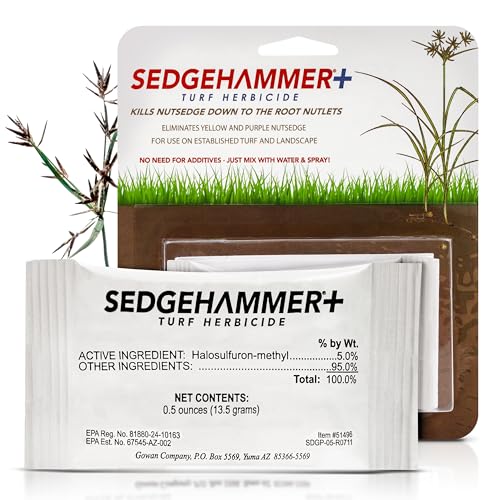
Sedgehammer Plus Turf Herbicide, 13.5 g Packet
$13.99A pre-measured 13.5 g packet with built-in surfactant that treats purple and yellow nutsedge over 1,000 sq ft without harming listed turf. Broadleaf products do not control sedges, so this fills a real gap.
Best for: spot-treating nutsedge patches
Check price on Amazon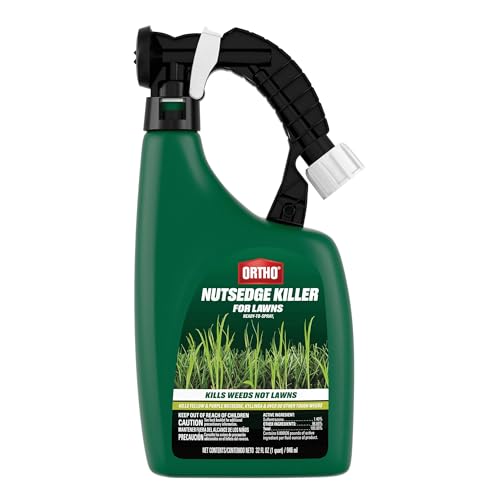
Ortho Nutsedge Killer for Lawns Ready-to-Spray, 32 oz
$21.99A hose-end bottle for nutsedge, kyllinga, wild violet and dollarweed on well-established turf, covering 5,000 sq ft. Wild violet shrugs off many broadleaf mixes, so this label is useful beyond sedges.
Best for: homeowners who do not want to measure concentrate
Check price on AmazonExpert picks: professional crabgrass, mesotrione and farm-strength 2,4-D
Concentrates that reward careful measuring, a calibrated sprayer and full label reading.

BASF Drive XLR8 Crabgrass Killer Concentrate, 64 oz
$55.45A water-based quinclorac post-emergent labeled for crabgrass, foxtail and key broadleaves such as clover and dandelion on warm and cool-season turf, rainfast in under an hour with up to 30 days of residual. The label requires long sleeves, long pants, socks, shoes and chemical-resistant gloves.
Best for: crabgrass that got past the pre-emergent
Check price on Amazon
Syngenta Tenacity Turf Herbicide, 8 oz
$63.99Mesotrione with both pre-emergent and post-emergent activity on listed weeds including crabgrass, clover, dandelion and yellow nutsedge. Treated weeds turn white before dying, and a small bottle goes a long way at label rates.
Best for: cool-season lawns with crabgrass and nutsedge
Check price on Amazon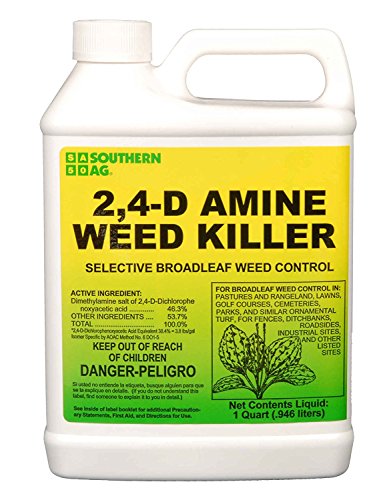
Southern Ag Amine 2,4-D Weed Killer, 32 oz
$21.99A farm-strength 2,4-D amine concentrate labeled for broadleaf weeds and woody plants in turf, pastures and ditch banks. Its rates are written per acre, so home-lawn users must convert carefully and never guess.
Best for: large properties and fence rows
Check price on AmazonWho should not buy this tier: Skip this tier if you have never calibrated a sprayer, if you are not willing to read and follow a multi-page label, or if your lawn is St. Augustine or centipede and the product label does not list it. Skip 2,4-D concentrates near valuable ornamentals, trees and shrubs on windy or hot days, since drift and vapor can injure them. A ready-to-spray product is a better fit for a few weeds.
How do the weed killer picks compare?
| Model | Price | Type | Active ingredient | Coverage | Concentrate |
|---|---|---|---|---|---|
| Ortho WeedClear Weed Killer for Lawns Concentrate, 1 gal | $36.29 | selective broadleaf | - | 64,000 sq ft | Yes |
| Spectracide Large Plot Weed Stop for Lawns Concentrate, 1 gal | $27.19 | selective broadleaf | - | 32,000 sq ft | Yes |
| Scotts Turf Builder Weed and Feed5, 33.95 lb | $65.00 | weed and feed | - | 12,000 sq ft | - |
| Sedgehammer Plus Turf Herbicide, 13.5 g Packet | $13.99 | nutsedge | - | 1,000 sq ft | - |
| Ortho Nutsedge Killer for Lawns Ready-to-Spray, 32 oz | $21.99 | nutsedge | - | 5,000 sq ft | - |
| BASF Drive XLR8 Crabgrass Killer Concentrate, 64 oz | $55.45 | crabgrass | quinclorac | - | Yes |
| Syngenta Tenacity Turf Herbicide, 8 oz | $63.99 | crabgrass | mesotrione 40% | - | Yes |
| Southern Ag Amine 2,4-D Weed Killer, 32 oz | $21.99 | selective broadleaf | 2,4 D amine | - | Yes |
What weed killer should I use for each common lawn weed?
Perennial broadleaf weeds are easiest to kill in fall, when they move sugars down to their roots and carry herbicide with them. Annual weeds are easiest to kill young. See creeping Charlie and white clover for weed-specific plans.
| Weed | Weed type | Product type | Best timing |
|---|---|---|---|
| Dandelion | Perennial broadleaf | Selective broadleaf (Ortho WeedClear, Spectracide) | Fall, or spring when actively growing |
| White clover | Perennial broadleaf | Broadleaf product listing clover; Tenacity | Fall or spring |
| Crabgrass (up) | Annual grass | Quinclorac (Drive XLR8) or mesotrione | Young plants, early summer |
| Crabgrass (prevent) | Annual grass | Pre-emergent | Before soil holds 55 F |
| Yellow nutsedge | Sedge | Sedgehammer Plus or Ortho Nutsedge Killer | Late spring to early summer, before tubers form |
| Wild violet | Perennial broadleaf | Product that lists wild violet (Ortho Nutsedge Killer) | Fall, repeat as label allows |
| Creeping Charlie | Perennial broadleaf | Broadleaf product listing ground ivy | Fall |
| Quackgrass | Perennial grass | No selective home-lawn option; spot glyphosate and reseed | Actively growing, then reseed |
Always confirm the weed is on the label of the product you buy.
What is the best natural weed killer for lawns?
Honest answer: there is no natural spray that reliably kills weeds in a lawn without also damaging the grass. Vinegar-based products, including 20 percent horticultural vinegar such as Green Gobbler 20 percent vinegar, are non-selective contact burners. They brown whatever leaf they touch, grass included, and perennial weeds like dandelion usually regrow from the root. Concentrated acetic acid can also burn skin and eyes, so it needs gloves and eye protection. Salt and boiling water are also non-selective, and salt can sterilize soil.
The closest thing to a gentler selective option is chelated iron (FeHEDTA) broadleaf products, sold as iron-based lawn weed killers, which extension trials show can suppress some broadleaf weeds such as clover and dandelion but usually need repeat applications. Corn gluten meal is sold as a natural pre-emergent, but university research results have been inconsistent. The most reliable "natural" control is a thick lawn: mow at the high end of your grass's range (see the mowing height chart), feed at the right time, and overseed thin areas so weeds have no room.
When should I use a non-selective weed killer like Roundup or RM43?
Only where you want every plant gone. Both of these kill lawn grass.

Roundup Weed and Grass Killer4 Concentrate, 1 gal
$84.97A non-selective concentrate that kills weeds and grass to the root, rainproof in about 30 minutes, with replanting allowed 1 to 30 days after application depending on the label section. Use it to kill off a weedy lawn before reseeding, or along fence lines and bed edges.
Best for: starting a lawn over
Check price on Amazon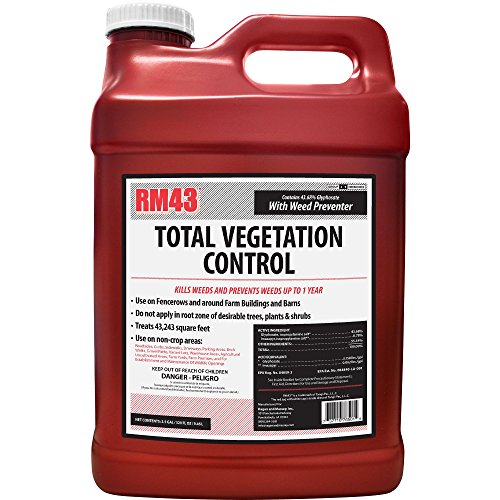
RM43 Glyphosate Plus Weed Preventer Total Vegetation Control, 2.5 gal
$159.99Glyphosate plus a residual weed preventer that keeps ground bare for up to a year across 43,243 sq ft. It is only for gravel drives, fence rows and similar sites; applied near a lawn, it kills grass and the residual can stop anything from growing there.
Best for: gravel drives and fence lines
Check price on AmazonWhat sprayer should I use to apply lawn weed killer?
For spot treatments, a 2 gallon handheld such as the Chapin 16200 is enough. For whole-lawn broadleaf treatments on a quarter to half acre, a 4 gallon backpack or the battery-powered M4 backpack ($249.99) keeps pressure steady. On an acre or more, a tow-behind boom sprayer such as the Agri-Fab 15 gallon pulled by a lawn tractor applies an even rate far faster than walking. Keep a dedicated sprayer for herbicides and never use it for anything else. The best lawn sprayers roundup covers calibration, and the expert 1 acre lawn setup shows how a tow sprayer fits alongside the mower and spreader.
How we chose
We did not test these products in person. Picks are researched from manufacturer specifications and owner manuals, engine and safety certifications where they apply, warranty terms, public recall records, and the recurring themes in verified owner reviews. We favor established brands with large review counts and parts support, match each pick to a real yard size or task, and place it in the tier where its price and capability actually belong.
Frequently asked questions
What is the best weed killer for lawns without killing grass?
A selective broadleaf herbicide labeled for your grass type is the best choice. Ortho WeedClear Weed Killer for Lawns Concentrate controls over 250 listed weeds on most turf types except Floratam St. Augustine and treats up to 64,000 sq ft. Use quinclorac, as in BASF Drive XLR8, for emerged crabgrass, and a sedge product for nutsedge. Always apply at the label rate and temperature.
What is the best natural weed killer for lawns?
No natural spray reliably kills lawn weeds while sparing grass. Vinegar-based products burn every leaf they touch, including turf, and perennial weeds often regrow. Chelated iron (FeHEDTA) products can suppress some broadleaf weeds with repeat applications, and corn gluten meal has shown inconsistent results as a pre-emergent. The dependable natural approach is a dense lawn: higher mowing, correct feeding and overseeding thin spots.
Will Roundup kill my lawn?
Yes. Roundup Weed and Grass Killer and other glyphosate products are non-selective and kill lawn grass along with weeds. Use them only where you want all vegetation gone, such as bed edges or a full lawn renovation before reseeding. RM43 is even more aggressive: it adds a residual preventer that keeps ground bare for up to a year and should never be used on or near lawns.
What weed killer is safe for St. Augustine grass?
Only products that list St. Augustinegrass on the label. Many 2,4-D products and some weed and feeds injure it; Scotts Weed and Feed5 excludes all St. Augustine including Floratam. Ortho WeedClear lists St. Augustine except Floratam. Apply to actively growing weeds when temperatures are below the label limit, and avoid treating St. Augustine during heat or drought stress.
When is the best time to spray weeds in the lawn?
Spray broadleaf weeds when they are actively growing, ideally on a calm day when no rain is expected for at least the label rainproof time and temperatures are within the label limits, often below 85 F to 90 F. Fall is the most effective time for perennial weeds like dandelion and creeping Charlie. Young annual weeds are easiest to kill in late spring and early summer.
How long after spraying weed killer can kids and pets go on the lawn?
Follow the specific product label. Many lawn weed killer labels say people and pets can return once the spray has completely dried, often an hour or two in good drying weather, while others list longer intervals. Granular weed and feed products may need to be watered in first. Keep toys, pet bowls and furniture off the lawn during application, and store the container out of reach.
Researched, not professional advice. This page is compiled from published specifications, manuals, labels and owner-review consensus, not hands-on testing. Follow the manufacturer's instructions and product label, and consult a qualified professional where safety, chemicals, fuel or structures are involved. As an Amazon Associate we earn from qualifying purchases.