Mowers
Mower Type Calculator: Push, Riding, Zero-Turn or Robot Mower?
Quick answer
Lawn size narrows it first: under about a quarter acre, a push or battery walk-behind; up to half an acre, a self-propelled walk-behind; 3/4 to 3 acres, a lawn tractor or electric rider; 1.5 acres and up with few slopes, a zero-turn. Steep slopes favor walk-behinds, tractors or AWD robots, and a robot mower suits owners short on time.
Deck size is a second question. The first is what kind of mower fits the way your yard and your week actually work: how big the lawn is, how steep, how cluttered with trees and beds, what you want to spend, whether you can or want to walk it, and how much time you have. Answer those below and the calculator scores seven mower types and explains the top matches, then filters mowers of that type. Once you know the type, size it with the mower deck size calculator.
Mower type calculator
Best fit
Mowers of the types that fit
Top matches update when you calculate.

PowerSmart 21 in. 2-in-1 Gas Push Mower, 144cc
$249.99A 21-inch mulching and side-discharge steel deck with single-lever height adjustment and a fold-flat handle keeps both cost and storage space low.
Best for: Budget buyers with a small flat lawn and a tight garage
Check price on Amazon
SENIX 22 in. Variable Speed RWD Self-Propelled Gas Mower, 201cc
$509.99Variable-speed rear-wheel drive and a single-handle, four-wheel synchronized height adjuster sit on a 201cc, 22-inch 3-in-1 platform with a 2-year warranty.
Best for: Larger yards where you want to set your own pace
Check price on Amazon
EGO POWER+ LM2135SP 21 in. Select Cut Self-Propelled Mower Kit
$749.00Select Cut ships with mulching, high-lift bagging and extended-runtime lower blades, and Touch Drive varies speed from 0.9 to 3.1 mph on a 7.5Ah battery rated for up to 60 minutes.
Best for: Mid-size lawns, especially for existing EGO 56V owners
Check price on Amazon
Honda HRX-BE 21 in. Battery Self-Propelled Mower
$999.00Honda pairs its twin-blade MicroCut deck and 4-in-1 Versamow with two battery bays (one 12Ah pack included, about 0.37 acre per charge) and a 5-year residential warranty backed by its dealer network.
Best for: Buyers who value dealer service and bagging quality
Check price on Amazon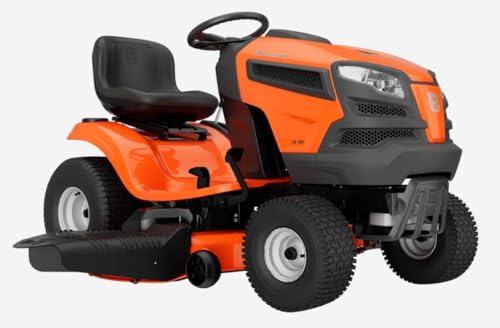
Husqvarna TS 120 46 in. Lawn Tractor
$3,185.00A 22 HP Briggs PXi engine with a Tuff Torq hydrostatic transmission and a 46-inch 2-blade deck, rated at 5 mph forward.
Best for: Mid-size lawns with some obstacles
Check price on Amazon
Husqvarna TS 140X 54 in. Lawn Tractor
$3,780.00Steps up to a 24 HP Briggs PXi engine, a 3-blade 54-inch deck and a 3-gallon tank on a Tuff Torq hydrostatic transmission.
Best for: Larger open lawns
Check price on Amazon
Husqvarna Z248F 48 in. Zero Turn Mower
$3,899.00A 23 HP Kawasaki FR651V engine, fabricated 48-inch 3-blade deck and Hydro-Gear ZT-2200 transmission, with a headlight and armrests.
Best for: Mid-size lawns with trees and beds
Check price on Amazon
Husqvarna Z254F 54 in. Zero Turn Mower
$3,985.00A 24 HP, 726cc FR730 engine on a 54-inch fabricated deck gives the widest cut of the Z200 models for a small step up in price over the 48-inch.
Best for: Large, fairly open lawns
Check price on Amazon
EGO POWER+ Z6 ZT4204L 42 in. Electric Zero Turn Mower
$3,599.00Four included 10.0Ah batteries are rated for 2 acres at up to 8 mph and recharge in about two hours, and the 42-inch deck mulches, bags or side discharges.
Best for: Up to 2 acres at the lowest EGO rider price
Check price on Amazon
EGO POWER+ T6 TR4204 42 in. Electric Lawn Tractor
$4,399.00Six included 6.0Ah batteries power a 42-inch tractor rated for up to 1.5 acres per charge, with cruise control, a rear tow hitch and belt-free dual blade motors.
Best for: Up to 1.5 acres for buyers who want a steering wheel and a hitch
Check price on Amazon
Segway Navimow i210 AWD Robot Mower
$1,299.00All-wheel drive with electronic stability control climbs 45% slopes, and network RTK with vision needs no wire, rated for up to 1/4 acre.
Best for: Sloped quarter-acre yards
Check price on Amazon
Husqvarna Automower 430X Robot Mower
$2,167.79A buried boundary wire gives a steady signal under heavy shade where satellite models can struggle, rated for 0.8 acre with a 9.45-inch cut width.
Best for: Heavily shaded lawns
Check price on Amazon
Mammotion LUBA 3 AWD 5000 Robot Mower
$3,299.00360-degree LiDAR, network RTK and dual-camera vision combine for navigation, with four-motor drive for 80% slopes and a rated 1.25 acres.
Best for: Steep or complex lawns up to 1.25 acres
Check price on AmazonOn this page
Which type of lawn mower is right for my yard?
| Type | Best lawn size | Slopes | Time per 1/4 acre or 1 acre | Catalog price range | Trade-off |
|---|---|---|---|---|---|
| Gas push mower | Up to about 1/4 acre | Mow across slopes; tiring on hills | 42 min | $180 to $370 | Lowest cost, but you push every inch |
| Gas self-propelled | Up to about 1/2 acre | Rear-wheel drive climbs best | 35 min | $320 to $510 | Easier on hills and for longer mows |
| Battery walk-behind | Up to about 1/2 acre | Good; runtime drops on hills | 35 min | $390 to $1,499 | Quiet, no fuel, pricier batteries |
| Lawn tractor | About 3/4 to 3 acres | Best rider for moderate slopes, up and down | 46 min | $2,799 to $5,199 | Tows carts, sweepers and aerators |
| Zero-turn | About 1.5 acres and up | Poor on slopes; follow manual limits | 25 min | $3,000 to $6,999 | Fastest, best around trees and beds |
| Electric rider | About 3/4 to 2.5 acres | Per manual; similar limits to gas riders | 32 min | $3,599 to $6,999 | Quiet, low upkeep, higher price |
| Robot mower | Up to rated area, commonly 1/10 to 2 acres | AWD models rated for steep grades | Mows daily on its own | $799 to $3,299 | Frees your time; needs setup and security |
How does the mower type calculator score my answers?
Each mower type starts at zero and gains or loses points for each answer. Lawn size carries the most weight: walk-behinds score highest under half an acre, lawn tractors and electric riders from about three quarters of an acre to three acres, and zero-turns from about one and a half acres up. Slopes push points toward walk-behinds, lawn tractors and all-wheel-drive robot mowers and away from zero-turns, whose manuals set low slope limits. Many trees and beds favor zero-turns and walk-behinds. Budget removes types that cost far more than you plan to spend, and if walking a lawn is not practical, push and self-propelled mowers drop out entirely. Wanting quiet or no fuel adds points to battery and robot mowers, and having little time adds points to robots and faster riders.
Riding mower or zero-turn?
A lawn tractor steers with its front wheels and brakes through its transmission, which keeps control on moderate slopes, and it pulls carts, sweepers, spreaders and aerators. A zero-turn steers and brakes with its rear wheels, turns in place around trees and cuts about a third faster at the same deck width, but loses traction and steering on wet or steep ground. The Husqvarna TS 120 46 in. Lawn Tractor is a common 46 inch tractor, and the Husqvarna Z254F 54 in. Zero Turn Mower a common 54 inch zero-turn; the full comparison is in zero-turn vs lawn tractor.
Is a robot mower a good choice instead of a riding mower?
For lawns up to about an acre with simple layouts, often yes, if the upfront price and setup are acceptable. Robot mowers cut a little every day, keep the lawn consistently short, and are quiet enough to run while you are away. Wire-free models such as the Segway Navimow i210 AWD Robot Mower and the Mammotion LUBA 2 AWD 3000X Robot Mower skip the boundary wire. They struggle with very large or fragmented lawns, tall overgrown grass, and busy yards where children play during mowing hours. Compare in robot mower vs zero-turn and robot mower vs push mower.
Push, self-propelled or battery walk-behind?
A push mower is fine on small, flat lawns if you do not mind the effort. Self-propelled drive helps on anything larger or sloped, and rear-wheel drive holds traction best uphill. Battery walk-behinds such as the EGO POWER+ LM2135SP 21 in. Select Cut Self-Propelled Mower Kit match gas performance on most suburban lawns, start instantly and need no oil or fuel storage, and a 7.5 Ah battery covers about half an acre per charge in normal grass. See push vs self-propelled mowers and gas vs battery lawn mowers.
Frequently asked questions
What kind of mower do I need for 1 acre?
For one acre, a riding mower is the practical choice: a 42 inch lawn tractor mows open ground in about 45 minutes, and a 42 inch zero-turn in about 32. Choose the tractor if the acre has moderate slopes or you want to tow attachments, and the zero-turn if it is mostly flat with many trees. A walk-behind would take well over two hours.
Is a zero-turn mower worth it for a small yard?
Usually not under about an acre. A zero-turn saves the most time on large, open lawns, and on small yards the time saved is minutes while the purchase price, storage footprint and gate width requirements stay large. Under an acre, a small lawn tractor, a battery walk-behind or a robot mower is usually a better fit.
Should I get a gas or electric riding mower?
Electric riders are quiet, start instantly and skip oil changes and fuel storage, and they cost only a few dollars a season to charge. Gas riders cost less to buy, run as long as there is fuel and are widely serviced. If your lawn fits within an electric rider's rated acreage per charge and the higher price works, electric is the lower-maintenance choice.
What is the best mower for hills?
For steep banks, a rear-wheel-drive self-propelled walk-behind mowed across the slope is the safest cutting option, and an all-wheel-drive robot mower rated for the grade is an alternative. For moderate slopes on larger lawns, a lawn tractor driven up and down within its manual limit is better than a zero-turn. Very steep areas are best planted with groundcover or trimmed with a string trimmer.
Can a robot mower replace a riding mower?
On lawns within its rated area, often yes. A robot mower rated for about a third more area than the lawn keeps grass cut daily without your time. It cannot tow carts or sweepers, handle overgrown grass after a long break, or mow very fragmented properties easily. Many acreage owners keep a rider for rough areas and let a robot handle the main lawn.
Researched, not professional advice. This page is compiled from published specifications, manuals, labels and owner-review consensus, not hands-on testing. Follow the manufacturer's instructions and product label, and consult a qualified professional where safety, chemicals, fuel or structures are involved. As an Amazon Associate we earn from qualifying purchases.