Weed Control
Canada Thistle: Identification and Control in Lawns
Quick answer
Canada thistle is a perennial that spreads by creeping horizontal roots, so mowing or pulling the tops only stimulates it. Repeated fall applications of a systemic broadleaf herbicide over more than one season are what works. It is a listed noxious weed in many states.
Canada thistle is not a thistle you dig out. Its horizontal roots run laterally through the soil and send up new shoots along their length, so what looks like a group of separate plants is usually one organism. Cut, pull or mow the tops and the root system responds by pushing more shoots.
It is also legally significant. Canada thistle appears on noxious weed lists in many states, which in some places creates an obligation to control it. That is worth checking locally before deciding to ignore a patch. Measure the area you are treating with the lawn size calculator.
On this page
How do I identify Canada thistle?
| Trait | Canada thistle |
|---|---|
| Weed type | Broadleaf |
| Life cycle | Perennial; creeping roots survive winter and expand yearly |
| Season | Cool season growth in spring and fall, flowering through summer |
| How it spreads | Horizontal creeping roots that send up shoots along their length, plus wind-blown seed |
| Stem | Smooth and spineless, which separates it from bull thistle and its spiny winged stems |
| Leaf | Lance-shaped with wavy, deeply lobed edges and spiny margins |
| Flower | Small purple to pink heads, roughly half to three quarters of an inch, in clusters rather than one large head |
| Roots | Extensive horizontal root system, the reason shoots reappear far from where you cut |
| What it says about the lawn | Neglected or disturbed ground, field edges, and thin turf at property boundaries |
Bull thistle is a biennial with one large flower head and spiny winged stems, and it does not spread by creeping roots. It is far easier to remove, so identify before planning a multi-season campaign.
Why does Canada thistle keep coming back?
Because the root system is the plant. Shoots are expendable, and removing them triggers new ones from buds along the horizontal roots. Hand pulling breaks roots into fragments that can each start a new shoot, and tilling does the same thing on a larger scale. This is a weed where physical removal reliably backfires.
Repeated mowing is the one mechanical approach with logic behind it. Cutting shoots before they flower, consistently through a season, forces the roots to spend stored energy regrowing leaves, and over time that depletes them. It is slow, it requires discipline, and it works best combined with herbicide rather than instead of it.
In a lawn setting, keeping turf thick and fed limits how easily new shoots establish. Feeding guidance is in how to read a fertilizer label, product options are in the best lawn fertilizers, and the label discipline that repeat applications demand is covered in the weed killer safety guide.
How do I kill Canada thistle?
Systemic herbicide applied in fall, repeated across seasons, is the core of any realistic plan. The goal is to get the product into the root system rather than to make the tops look dead quickly.
| Method | When | What it involves |
|---|---|---|
| Systemic broadleaf herbicide | Fall, while shoots are green and growing | Products with 2,4-D, dicamba, triclopyr or clopyralid move into the roots as the plant stores energy for winter. |
| Repeat applications | Across two or more seasons | Expected, not optional. Root systems survive single applications and push new shoots the following year. |
| Mow before flowering | Repeatedly through the season | Depletes root reserves and prevents seed. Effective only if done consistently, and best paired with herbicide. |
| Do not pull or dig | Any time | Root fragments sprout. Pulling converts one patch into several and is the most common way people spread it. |
| Do not till | Any time | Tilling cuts roots into hundreds of pieces, each able to start a shoot. |
| Thicken surrounding turf | Late summer to early fall | Dense fed turf slows new shoots establishing from seed, though it does not stop root spread. |
| Non-selective treatment plus renovation | Late summer to early fall, heavy infestations | Kills the lawn along with the thistle, so it suits boundary areas and full renovations rather than spot work in turf. |
| Check state requirements | Before deciding to ignore it | Canada thistle is a listed noxious weed in many states, and some jurisdictions require control. |
Fall applications outperform spring ones consistently, because the plant is moving sugars downward into the roots and carries the herbicide with them.
Which products apply to Canada thistle?
Southern Ag Amine 2,4-D Weed Killer, 32 oz is a farm-strength 2,4-D amine labeled for broadleaf weeds and woody plants in turf, pastures and ditch banks, which fits the boundary areas where thistle usually lives. For lawn-rate products, Ortho WeedClear Weed Killer for Lawns Concentrate, 1 gal covers up to 64,000 sq ft and Spectracide Large Plot Weed Stop for Lawns Concentrate, 1 gal up to 32,000 sq ft of northern turf. Look also for triclopyr, which performs well on tough perennials.
For a fence line or gravel area rather than turf, RM43 Glyphosate Plus Weed Preventer Total Vegetation Control, 2.5 gal prevents vegetation for up to a year across 43,243 sq ft, and it must never be used on a lawn or in a bed you intend to replant. Roundup Weed and Grass Killer4 Concentrate, 1 gal is non-selective and kills grass alongside the thistle.
What gear helps with Canada thistle?
A backpack sprayer for boundary work, a durable handheld for spot treatment, and fertilizer to keep the turf side dense. Sprayer options are in the best lawn sprayers.

Chapin 61800 ProSeries 4-Gallon Backpack Sprayer
$109.99A 4 gallon manual backpack with 3-stage filtration, three nozzles and padded straps, which suits the fence lines and field edges where thistle patches sit.
Best for: treating large patches away from the house
Check price on Amazon
Smith Performance Sprayers R200 2-Gallon Compression Sprayer
$55.97A 2 gallon compression sprayer with Viton seals and a stainless wand, built to survive years of repeat herbicide use.
Best for: multi-season spot treatment
Check price on Amazon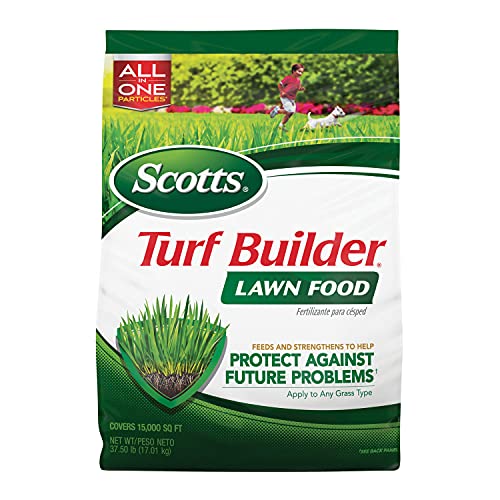
Scotts Turf Builder Lawn Food, 37.5 lb
$47.96A pesticide-free all-grass-type feeding covering 15,000 sq ft, for keeping the lawn side of a boundary thick enough to resist new seedlings.
Best for: general feeding on most lawns
Check price on AmazonHow we chose
We did not test these products in person. Picks are researched from manufacturer specifications and owner manuals, engine and safety certifications where they apply, warranty terms, public recall records, and the recurring themes in verified owner reviews. We favor established brands with large review counts and parts support, match each pick to a real yard size or task, and place it in the tier where its price and capability actually belong.
Frequently asked questions
Why does pulling Canada thistle make it worse?
Because the plant spreads by horizontal creeping roots, and pulling snaps them into fragments that each sprout a new shoot. What you remove is a stem, not the plant. The same applies to digging and tilling, which convert one patch into a wider colony. Repeated mowing before flowering is the mechanical approach that helps, since it drains root reserves rather than dividing them.
How long does it take to get rid of Canada thistle?
Plan on more than one season, and often two or three. The root system stores enough energy to regrow after a single herbicide application, so control comes from repeated fall treatments that progressively deplete it. Judge progress by fewer and weaker shoots each year rather than by a patch vanishing. Combining consistent mowing with fall applications shortens the timeline.
Is Canada thistle a noxious weed?
It is listed as a noxious weed in many states, and some jurisdictions place a legal obligation on landowners to control it. Rules vary widely, so check your state department of agriculture before deciding a patch is only a cosmetic issue. That listing also affects which herbicides are available locally, since some products are restricted in certain states and watersheds.
Researched, not professional advice. This page is compiled from published specifications, manuals, labels and owner-review consensus, not hands-on testing. Follow the manufacturer's instructions and product label, and consult a qualified professional where safety, chemicals, fuel or structures are involved. As an Amazon Associate we earn from qualifying purchases.