Outdoor Power Tools
Best Leaf Blowers (2026): CFM vs MPH and Picks by Yard Size
Quick answer
The best leaf blower for most homes is a 600 to 770 CFM battery handheld such as the EGO LB7654: 765 CFM, 200 MPH and up to 90 minutes on its 5.0Ah pack. CFM moves piles and MPH lifts wet leaves. A quarter-acre lot is fine at 400 to 500 CFM; an acre with trees needs 700+ CFM or a backpack.
Choose a leaf blower by airflow first. CFM decides how big a pile you can push, and yard size plus tree cover decides how much CFM you need. A quarter-acre suburban lot is well served at 400 to 500 CFM, a half-acre with several trees at 500 to 650 CFM, and an acre with mature trees at 700 CFM or more, where a backpack blower starts to make sense.
Our top pick is the EGO LB7654 at $299.00, because it reaches gas-class airflow in a handheld with a battery that also runs every other EGO tool. For a deck and a driveway, a WORX WG520 corded blower is enough. Enter your lot in the leaf blower CFM calculator to get your number.
On this page
- What CFM leaf blower do I need?
- Leaf blower CFM vs MPH: which matters more?
- Which EGO leaf blower is best?
- Beginner picks: light blowers for patios, decks and small lots
- Intermediate picks: 650 to 770 CFM battery handhelds
- Expert picks: backpack blowers for acreage and heavy leaf fall
- How do the picks compare on specs?
- Also worth a look
- Gas, battery or corded: which leaf blower type should I buy?
- What should I check before buying a leaf blower?
What CFM leaf blower do I need?
CFM (cubic feet per minute) is the volume of air a blower moves. The more leaves and the more ground, the more volume you need to move them in fewer passes. These ranges are general guidance; the leaf blower CFM chart adds wet-leaf and hardscape adjustments.
| Property | Leaf load | Suggested CFM | Blower style | Example |
|---|---|---|---|---|
| Deck, patio, driveway only | Light, dry | 300 to 450 | Corded or compact battery handheld | Milwaukee M18 FUEL 450 CFM |
| Quarter acre, few trees | Light to moderate | 400 to 500 | Battery or corded handheld | WORX WG520 (600 CFM corded) |
| Half acre, several trees | Moderate | 500 to 650 | High-output battery handheld | EGO LB6500 |
| Three-quarter to 1 acre with trees | Heavy, some wet | 650 to 770 | Top battery handheld or backpack | EGO LB7654 |
| 1 acre plus, wooded | Heavy and wet | 700 to 1,100 | Gas or battery backpack | Husqvarna 350BT |
| 2 acres plus, commercial-style cleanup | Very heavy | 900 to 1,110 | Commercial gas backpack | Echo PB-9010T |
Wet, matted leaves need higher MPH as well as CFM. Add one step up if your lot is mostly oaks or you clear once a season instead of weekly.
Leaf blower CFM vs MPH: which matters more?
CFM moves volume and MPH lifts. Air speed (MPH) is how fast air leaves the nozzle, which is what peels wet leaves, grass clippings and pine needles off the ground. Volume (CFM) is what carries a loosened pile across the lawn. A blower with high MPH and low CFM makes a sharp jet that moves little; high CFM and low MPH makes a broad breeze that slides over stuck leaves.
For dry leaves on open lawn, CFM matters more. For wet leaves, gutters of debris along curbs and gravel beds, MPH matters more, and a tapered nozzle trades volume for speed. The best blowers post strong numbers in both, which is why the EGO LB7654 (765 CFM, 200 MPH) and Greenworks 80V 770 CFM (770 CFM, 180 MPH) handle mixed conditions.
Two cautions. Brands measure differently, with or without nozzles, so compare within a brand when you can. And a few makers list blowing force in newtons, which combines both: Husqvarna lists 21 N for the 350BT and 22 N for the 150BT. More on this at leaf blower CFM vs MPH.
Which EGO leaf blower is best?
The best EGO leaf blower for most yards is the EGO LB7654, because it pairs the highest handheld airflow in the EGO lineup here with a 5.0Ah battery in the box. Choose the EGO LB6500 if you already own an EGO 5.0Ah pack, and the EGO LB6003 backpack for long sessions on large lots. Brand head-to-heads are on EGO vs Greenworks and EGO vs Ryobi.
| Model | Max CFM | Max MPH | Battery in box | Rated runtime | Best for |
|---|---|---|---|---|---|
| EGO LB6500 | 650 | 180 | None (tool only) | Up to 90 min avg on 5.0Ah | Owners who already have a 5.0Ah pack |
| EGO LB7654 | 765 | 200 | 5.0Ah | Up to 90 min | Wet leaves on half-acre to 1 acre lots |
| EGO LB6003 backpack | 600 | 145 | 7.5Ah | Up to 180 min | Long cleanups with less arm strain |
| EGO LV5005 vacuum | 500 (blower mode) | 210 | 6.0Ah | Up to 90 min on low | Blowing plus vacuum mulching |
EGO runtime figures are maximums at low or average settings. Turbo mode drains any pack much faster, so plan on a second battery for big leaf days.
Beginner picks: light blowers for patios, decks and small lots
For small lots, hardscapes and quick grass clipping cleanup after mowing. Low weight and zero fuel handling matter more than peak airflow here.

WORX WG520 Turbine 600 12 Amp Corded Blower
$75.27A 12 amp turbine blower moving 600 CFM at 110 MPH in a 6.5 lb body, with two speeds and a cord retainer that keeps the extension cord from pulling loose. No battery to buy and no engine to maintain, but you are tethered to cord reach.
Best for: small yards, decks and patios near an outlet
Check price on Amazon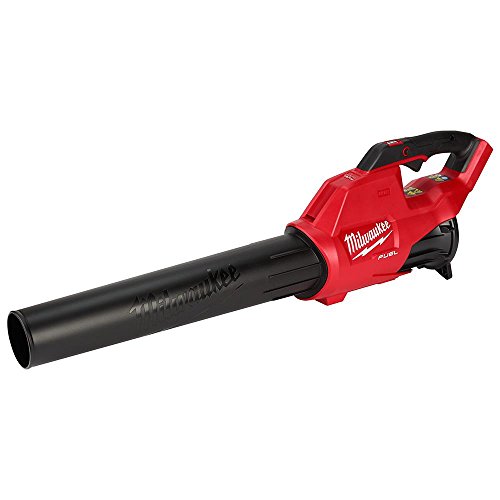
Milwaukee M18 FUEL 450 CFM Handheld Blower (tool only)
$185.98A brushless 18V blower rated at 450 CFM and 120 MPH, sold bare for owners already running M18 packs. It is sized for driveways, garage floors, patios and clippings rather than big leaf piles.
Best for: hardscapes and clippings on existing M18 batteries
Check price on AmazonIntermediate picks: 650 to 770 CFM battery handhelds
For quarter-acre to one-acre suburban lots with real trees. Pick the platform you already own or plan to own, since the battery is a large share of the cost.

EGO Power+ LB7654 765 CFM Blower Kit with 5.0Ah Battery
$299.00Turbo mode reaches 765 CFM and 200 MPH with a cruise dial from 260 to 580 CFM. The included 5.0Ah pack charges in 70 minutes on the included charger and runs every EGO 56V tool; tapered and spread nozzles are in the box.
Best for: wet leaves on half-acre and larger lots
Check price on Amazon
Greenworks 80V 770 CFM Blower Kit with 4.0Ah Battery
$248.49Greenworks rates it at 770 CFM and 180 MPH with about 80 minutes per charge at half load on the included 4.0Ah battery, plus cruise control and a 74 dB brushless motor.
Best for: large yards on the Greenworks 80V platform
Check price on Amazon
RYOBI 40V HP Brushless Whisper Series 650 CFM Blower (tool only)
$175.00A brushless Whisper Series blower rated at 650 CFM and 160 MPH, sold bare for RYOBI 40V battery owners. It suits neighborhoods where noise matters and yards that do not need the last 100 CFM.
Best for: RYOBI 40V households with close neighbors
Check price on AmazonExpert picks: backpack blowers for acreage and heavy leaf fall
For an acre or more with mature trees, long driveways and heavy wet leaf fall. Backpacks move the weight to your hips and shoulders, which is what makes a 1 to 2 hour cleanup bearable.
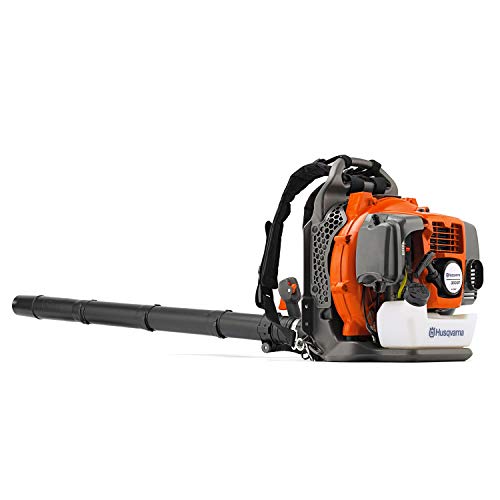
Husqvarna 350BT 50.2cc Backpack Blower
$429.99A 50.2cc X-Torq engine rated at 692 CFM, 180 MPH and 21 N of force, with an ergonomic harness, cruise control and an offset handle designed to keep the blowing force from pulling your arm down.
Best for: large wooded yards beyond handheld range
Check price on Amazon
EGO Power+ LB6003 600 CFM Backpack Blower Kit with 7.5Ah Battery
$550.80Up to 600 CFM and 145 MPH from a brushless motor, with EGO rating up to 180 minutes on the included 7.5Ah pack and a 64 dB noise rating. Handgrip speed control runs from 260 to 600 CFM.
Best for: long sessions where gas noise is unwelcome
Check price on AmazonWho should not buy this tier: Skip this tier if your lot is a half acre or less or your trees are small. A backpack blower costs more, takes longer to put on and store, and gas models add 2-cycle fuel mixing, noise and exhaust. Some towns restrict gas blower use, and California has phased out sales of most new small gas engines, so check local rules. A 650 to 770 CFM handheld does the job on most suburban lots.
How do the picks compare on specs?
| Model | Price | Airflow | Air speed | Voltage | Battery | Engine | Backpack |
|---|---|---|---|---|---|---|---|
| WORX WG520 Turbine 600 12 Amp Corded Blower | $75.27 | 600 CFM | 110 mph | - | - | - | No |
| Milwaukee M18 FUEL 450 CFM Handheld Blower (tool only) | $185.98 | 450 CFM | 120 mph | 18V | - | - | No |
| EGO Power+ LB7654 765 CFM Blower Kit with 5.0Ah Battery | $299.00 | 765 CFM | 200 mph | 56V | 5 Ah | - | No |
| Greenworks 80V 770 CFM Blower Kit with 4.0Ah Battery | $248.49 | 770 CFM | 180 mph | 80V | 4 Ah | - | No |
| RYOBI 40V HP Brushless Whisper Series 650 CFM Blower (tool only) | $175.00 | 650 CFM | 160 mph | 40V | - | - | No |
| Husqvarna 350BT 50.2cc Backpack Blower | $429.99 | 692 CFM | 180 mph | - | - | 50.2 cc | Yes |
| EGO Power+ LB6003 600 CFM Backpack Blower Kit with 7.5Ah Battery | $550.80 | 600 CFM | 145 mph | 56V | 7.5 Ah | - | Yes |
Also worth a look
Two more blowers that fit specific owners.
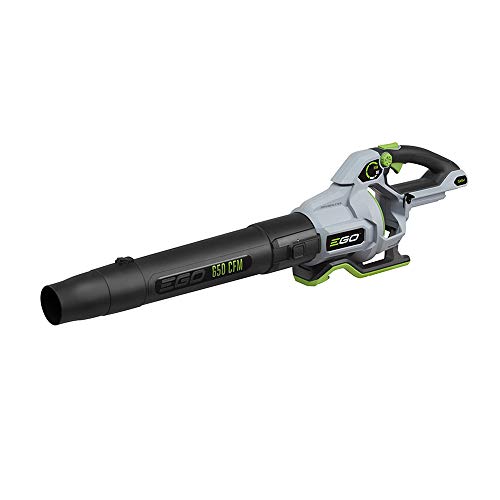
EGO Power+ LB6500 650 CFM Blower (tool only)
$240.99A 650 CFM turbo with a 225 to 470 CFM variable dial and a 64 dB rating, sold bare. If an EGO 5.0Ah battery already sits in your garage, this is the lowest-cost strong EGO blower.
Best for: existing EGO 56V owners
Check price on Amazon
DEWALT 60V MAX DCBL772X1 600 CFM Axial Blower Kit
$269.99A brushless axial blower rated at 600 CFM, sold as a kit with a FLEXVOLT battery. It fits owners who already use DEWALT 60V tools on a jobsite and at home.
Best for: DEWALT 60V households
Check price on AmazonGas, battery or corded: which leaf blower type should I buy?
Battery handhelds are the right choice for most suburban homeowners: they now reach 650 to 770 CFM, start instantly, and need no fuel or pull cords. Corded blowers are the cheapest and lightest option for small lots within about 100 feet of an outlet. Gas backpacks remain the tool for multiple acres, heavy wet leaves and all-day sessions without a charger.
- Weight on the arm: a handheld at 700+ CFM pulls against your wrist in turbo. If you have shoulder or grip issues, a backpack spreads the load; compare on backpack vs handheld leaf blower.
- Runtime: battery runtimes are quoted at low or average speed. Heavy turbo use can empty a 5.0Ah pack in a fraction of the rated time, so a second pack is common on leaf-heavy lots.
- Noise: EGO lists 64 dB for the LB6500 and LB6003 and Greenworks lists 74 dB for its 80V blower. Makers measure at different distances, so treat these as relative.
- Cost: the gas vs battery cost calculator estimates fuel against battery replacement over the life of the tool.
For a full breakdown of battery-only options, see best battery leaf blowers, and for acreage see best backpack leaf blowers.
What should I check before buying a leaf blower?
- CFM for your lot. Use the table above or the calculator; do not pay for 1,000 CFM on a quarter acre.
- Battery platform. If you own EGO, Greenworks, RYOBI, DEWALT or Milwaukee tools, a bare tool saves the price of a pack. Platform trade-offs are in choosing a battery tool platform.
- Variable speed and cruise control. Low settings stretch runtime and keep mulch in beds.
- Nozzles. A tapered nozzle adds MPH for wet leaves; a flat or spread nozzle clears wide paths.
- Warranty. EGO lists 5 years on its blowers and 3 years on batteries; Greenworks backs many tools for 4 years.
- Protective gear. Keep NoCry safety glasses and Pro For Sho 34 dB ear muffs with the blower.
How we chose
We did not test these products in person. Picks are researched from manufacturer specifications and owner manuals, engine and safety certifications where they apply, warranty terms, public recall records, and the recurring themes in verified owner reviews. We favor established brands with large review counts and parts support, match each pick to a real yard size or task, and place it in the tier where its price and capability actually belong.
Frequently asked questions
Is 500 CFM good for a leaf blower?
Yes, 500 CFM is good for a quarter-acre to half-acre suburban lot with a few trees and dry leaves. It clears driveways, patios and moderate leaf piles well. On an acre with mature trees, or when leaves are wet and matted, 500 CFM means more passes, and a 650 to 770 CFM handheld or a backpack blower will finish noticeably faster.
Is higher CFM or MPH better for wet leaves?
For wet leaves you need both, but MPH does the first job: high air speed peels matted leaves off the grass, then CFM carries them into a pile. A blower with 180 MPH or more and 600 CFM or more handles wet leaves well. Using a tapered nozzle increases MPH, and working along the leaf layer at a shallow angle helps lift the edge.
How long does a battery leaf blower run?
A battery leaf blower runs from about 15 minutes to 3 hours depending on pack size and speed. EGO rates the LB7654 at up to 90 minutes on a 5.0Ah battery and the LB6003 backpack at up to 180 minutes on 7.5Ah, but those figures assume low or average speed. Turbo mode empties packs much faster, so owners with big leaf loads often buy a second battery.
Are battery leaf blowers as strong as gas?
The strongest battery handhelds now match or beat many gas handhelds: the Greenworks 80V is rated at 770 CFM and the EGO LB7654 at 765 CFM. Commercial gas backpacks still lead on sustained airflow and runtime, with the Echo PB-9010T rated at 1,110 CFM. For suburban lots, battery is strong enough; for wooded acreage, gas backpacks still have the edge.
Which is quieter, a battery or gas leaf blower?
Battery leaf blowers are quieter than gas models of similar airflow. EGO lists 64 dB for its LB6500 handheld and LB6003 backpack and says the backpack is up to 30 times quieter than comparable gas blowers. Gas blowers also produce a low-frequency engine drone that carries farther. Wear hearing protection with any blower during long sessions, since running at turbo raises noise substantially.
Do I need a backpack blower for one acre?
Not always. A one-acre lot with open lawn and a few trees can be cleared with a 700 CFM plus battery handheld such as the EGO LB7654, especially if you blow weekly. A backpack blower becomes worth it on one acre with heavy tree cover, wet leaves or once-a-season cleanups, because it carries more airflow and puts the weight on your hips instead of your arm.
Researched, not professional advice. This page is compiled from published specifications, manuals, labels and owner-review consensus, not hands-on testing. Follow the manufacturer's instructions and product label, and consult a qualified professional where safety, chemicals, fuel or structures are involved. As an Amazon Associate we earn from qualifying purchases.