Outdoor Power Tools
Best Leaf Vacuums and Mulchers (2026): Mulch Ratio and Bag Size
Quick answer
The best leaf vacuum for most yards is the cordless EGO LV5005: a six-blade metal impeller with a 16:1 mulch ratio, a 40 liter bag and up to 90 minutes on its 6.0Ah battery. A 16:1 ratio turns 16 bags of leaves into one. Corded picks like the Toro Ultra cost less if an outlet is close.
A leaf vacuum mulcher sucks leaves through an impeller that chops them before they land in a bag, shrinking the pile so you empty less often. Most are blower vacs: the same tool blows leaves into a pile, then converts to vacuum mode to pick them up. They suit beds, patios, fence lines, window wells and small to mid-size lawns, where blowing alone just moves leaves somewhere else.
Our top pick is the EGO LV5005 at $409.00, because it frees you from the cord and uses a metal impeller. On a budget near an outlet, the WORX WG512 Trivac matches the 16:1 ratio for far less. For big leaf loads, blowing onto a tarp is still faster; check airflow needs with the leaf blower CFM calculator.
On this page
- What does mulch ratio mean on a leaf vacuum?
- How big is a leaf vacuum bag?
- Beginner picks: an affordable blower vac and a no-bag upgrade
- Intermediate picks: a metal-impeller vac and a stationary mulcher
- Expert pick: a cordless vacuum mulcher for the whole property
- How do the picks compare on specs?
- Leaf vacuum vs blower: which do I need?
- What can I do with mulched leaves?
- Corded or cordless leaf vacuum: which is better?
- How do I use a blower vac without clogging it?
- What should I check before buying a leaf vacuum?
What does mulch ratio mean on a leaf vacuum?
Mulch ratio is how much the machine reduces leaf volume. A 16:1 ratio means 16 bags of loose leaves shrink to about one bag of shredded mulch; 11:1 means 11 bags to one. Higher ratios mean fewer trips to empty the bag and a finer mulch that breaks down faster in compost or beds.
The ratio is a best-case figure for dry leaves. Wet or matted leaves compress less and clog impellers, and sticks, acorns and pine cones slow the machine and can crack plastic impellers, which is why metal impellers such as those on the Toro Ultra and EGO LV5005 matter for durability.
| Mulch ratio | Bags after mulching | Volume reduction | Example |
|---|---|---|---|
| 11:1 | About 1.8 | 91 percent | WORX WG430 |
| 16:1 | About 1.25 | 94 percent | WORX WG512 Trivac, EGO LV5005 |
Bags after mulching = 20 / ratio. Toro does not list a ratio for the Toro 51609 Ultra in its listing.
How big is a leaf vacuum bag?
Bag capacity decides how often you stop. Makers list it in different units, so here they are converted. The loose-leaf equivalent multiplies bag volume by the rated mulch ratio and is a theoretical maximum.
| Model or accessory | Listed capacity | Liters | Gallons | Loose leaves equivalent at rated ratio |
|---|---|---|---|---|
| EGO LV5005 | 40 L bag | 40 | About 10.6 | About 170 gal at 16:1 |
| WORX WG512 Trivac | 1.4 bushel bag | About 49 | About 13 | About 208 gal at 16:1 |
| WORX WA4058 into a trash can | 32 to 96 gal can | 121 to 363 | 32 to 96 | Up to about 1,500 gal at 16:1 |
| WORX WG430 | Bag sold separately | Depends on bag | Depends on bag | Mulches up to 53 gal of leaves per minute |
Conversions: 1 bushel = about 35.2 L; 1 US gallon = 3.785 L. Real fill depends on leaf moisture and debris.
Beginner picks: an affordable blower vac and a no-bag upgrade
For small lots, beds and patios where you want to pick up leaves without spending much, within cord reach of an outlet.

WORX WG512 Trivac 3-in-1 Blower Vacuum Mulcher
$117.32A 12 amp, 3-in-1 blower, vacuum and mulcher rated at 600 CFM in blower mode, with a 16:1 mulch ratio, two speeds and a quick-release 1.4 bushel bag that empties one-handed.
Best for: budget leaf pickup around beds and patios
Check price on Amazon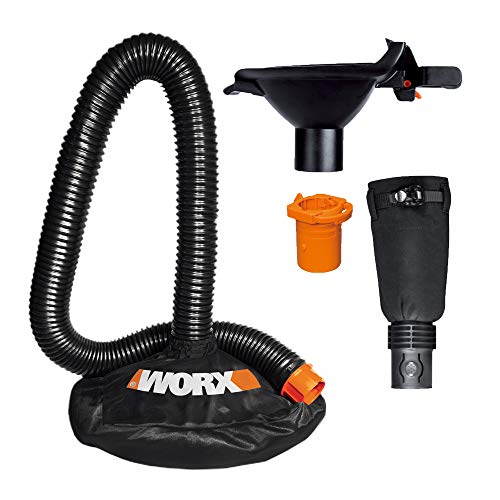
WORX WA4058 Leaf Collection System
$42.99A mesh hood that fits over most 32 to 96 gallon trash cans and a flexible 8 ft hose with dedicated adapters for select WORX blower vacs, so leaves go straight into the can instead of a shoulder bag.
Best for: WORX blower vac owners tired of emptying bags
Check price on AmazonIntermediate picks: a metal-impeller vac and a stationary mulcher
For owners with more leaves who want durability, or who rake piles and want to shred them for compost.

Toro 51609 Ultra 12 Amp Electric Blower Vacuum Mulcher
$229.95A 3-in-1 blower, vacuum and shredder with a rugged metal impeller, an infinitely variable speed motor up to 235 MPH and a cord-lock system that keeps the extension cord from pulling free. Blower tubes, vacuum tubes and a bag are included.
Best for: bagging and shredding leaves on small to mid-size lots
Check price on Amazon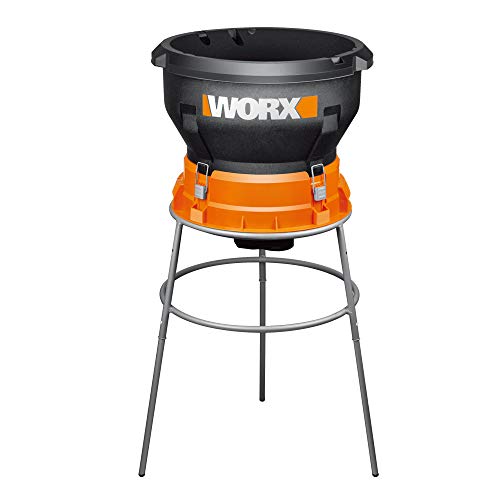
WORX WG430 13 Amp Electric Leaf Mulcher
$189.99A 13 amp stationary mulcher that WORX rates at up to 53 gallons of leaves per minute with an 11:1 reduction, using a bladeless line system. At 20 lbs it stays planted while you feed it, and it breaks down for storage.
Best for: turning raked leaf piles into compost or mulch
Check price on AmazonExpert pick: a cordless vacuum mulcher for the whole property
For owners who want leaf pickup anywhere on the property, without cords, and already use or plan to use a battery platform.

EGO Power+ LV5005 Leaf Vacuum Mulcher Kit with 6.0Ah Battery
$409.00A six-blade metal impeller mulches at 16:1 into a 40 L bag, a blower mode reaches 500 CFM and 210 MPH, tool-free conversion switches tubes, and the metal-tipped vacuum tube resists clogs. The included 6.0Ah battery runs up to 90 minutes on low.
Best for: cordless leaf pickup across a whole property
Check price on AmazonWho should not buy this tier: Skip this tier if you have a small patio and a few beds within 100 feet of an outlet: a corded blower vac does the same pickup for a fraction of the price. Skip leaf vacuums altogether on an acre of trees, where even a 40 L bag fills too often; a backpack blower and a tarp, a lawn sweeper, or mulching leaves in place with a mower is faster.
How do the picks compare on specs?
| Model | Price | Airflow | Air speed | Mulch ratio | Voltage | Battery |
|---|---|---|---|---|---|---|
| WORX WG512 Trivac 3-in-1 Blower Vacuum Mulcher | $117.32 | 600 CFM | - | 16:1 | - | - |
| Toro 51609 Ultra 12 Amp Electric Blower Vacuum Mulcher | $229.95 | - | 235 mph | - | - | - |
| WORX WG430 13 Amp Electric Leaf Mulcher | $189.99 | - | - | 11:1 | - | - |
| EGO Power+ LV5005 Leaf Vacuum Mulcher Kit with 6.0Ah Battery | $409.00 | 500 CFM | 210 mph | 16:1 | 56V | 6 Ah |
Leaf vacuum vs blower: which do I need?
A leaf vacuum picks leaves up; a blower moves them. Most yards need a blower for volume and a vacuum for the places blowing cannot finish. General guidance by property:
| Yard | Leaf load | Best approach | Tools |
|---|---|---|---|
| Patio, deck, beds, window wells | Light | Vacuum mulch directly | WORX Trivac or EGO LV5005 |
| Quarter acre, a few trees | Moderate | Mulch-mow the lawn, vacuum beds and edges | Mulching mower plus a blower vac |
| Half acre with trees | Heavy | Blow to piles, vacuum or shred piles | 600 CFM plus blower and a mulcher |
| Acre plus, wooded | Very heavy | Blow onto tarps or sweep, compost in place | Backpack blower or tow-behind sweeper |
What can I do with mulched leaves?
Shredded leaves are one of the most useful free materials in a yard. Spread 2 to 3 inches around shrubs and perennials as mulch, keeping it a few inches away from stems and trunks; see how to mulch landscape beds and the mulch coverage chart. Add them to a compost pile, where shredded leaves break down far faster than whole ones. Or mulch them lightly into the lawn with the mower on a dry day, as long as grass blades still show through.
For branches and woody debris, a chipper is the right tool; see best wood chippers. For large lawns, a tow-behind sweeper collects leaves and clippings without a bag on your shoulder: best lawn sweepers.
Corded or cordless leaf vacuum: which is better?
A corded leaf vacuum is better for small lots, patios and beds within about 100 feet of an outdoor outlet: the WORX Trivac and Toro Ultra cost far less than battery models and never run out of charge. A cordless vacuum such as the EGO LV5005 is better when leaves collect far from the house, along fence lines and driveways, or when dragging a cord around shrubs and trees is the real frustration. Battery models cost more up front, and vacuum mode draws more power than blowing, so plan on a second pack for big cleanups.
How do I use a blower vac without clogging it?
- Wait for dry leaves. Vacuum on a dry afternoon. Damp, matted leaves pack in the tube and impeller and mulch poorly.
- Blow into small piles first. Use blower mode to gather leaves into piles on hard surfaces or short grass, then switch to vacuum mode.
- Work at the edge of the pile. Hold the tube just above the leaves and sweep slowly along the edge rather than plunging into the middle of the pile.
- Avoid sticks and stones. Skip gravel beds, acorn drops and pine cones, which jam and damage impellers.
- Empty the bag early. Empty the bag at about three quarters full; airflow drops as it fills, which slows pickup and encourages clogs.
What should I check before buying a leaf vacuum?
- Impeller material. Metal impellers, as on the Toro Ultra and EGO LV5005, tolerate small twigs and wear better than plastic.
- Mulch ratio. 16:1 is the top of this group; higher ratios mean fewer bag changes.
- Bag size and emptying. Quick-release bags help; a collection hose into a trash can removes the chore.
- Conversion. Tool-free switching between blow and vacuum saves time; check how tubes attach.
- Weight on the shoulder. A full bag adds weight; shoulder straps help on larger areas.
- Power source. Corded for small lots near outlets; battery for whole-property use. Battery blower options are on best battery leaf blowers.
How we chose
We did not test these products in person. Picks are researched from manufacturer specifications and owner manuals, engine and safety certifications where they apply, warranty terms, public recall records, and the recurring themes in verified owner reviews. We favor established brands with large review counts and parts support, match each pick to a real yard size or task, and place it in the tier where its price and capability actually belong.
Frequently asked questions
Is a leaf vacuum worth it?
A leaf vacuum is worth it for small to mid-size yards, beds, patios and corners where blown leaves collect and need to be picked up. Mulching at 11:1 to 16:1 cuts the number of bags dramatically. On large, heavily wooded lots, a vacuum is too slow to be the main tool; blow leaves onto tarps or use a sweeper, and keep the vacuum for beds and edges.
What is a good mulch ratio for a leaf vacuum?
A mulch ratio of 16:1 is excellent for a homeowner leaf vacuum and is what the WORX WG512 Trivac and EGO LV5005 list. That means 16 bags of loose, dry leaves reduce to about one. Ratios around 10:1 to 12:1 are still useful. Remember ratings assume dry leaves; wet leaves compress less and can clog the impeller.
Can a leaf vacuum pick up wet leaves?
A leaf vacuum can pick up damp leaves, but wet, matted leaves clog tubes and impellers and mulch poorly. For best results, vacuum on a dry afternoon, loosen matted layers with a rake or blower first, and feed slowly. If you must clear wet leaves, a blower with high MPH and a tarp is usually faster. Always stop and disconnect power before clearing a clog.
Is a metal impeller better on a leaf vacuum?
Yes. Metal impellers, like those on the Toro Ultra and the six-blade impeller on the EGO LV5005, resist chipping from twigs and acorns better than plastic ones and generally keep their cutting edge longer. You should still avoid vacuuming stones, pine cones and sticks, which can damage any impeller and throw debris.
Should I mulch leaves or bag them?
Mulch leaves when you can. Shredded leaves make good bed mulch and compost, and a light layer mulched into the lawn with a mower returns nutrients as long as grass remains visible. Bag them when the layer is too thick to mulch in, when your town collects yard waste, or when leaves are diseased. A mulching vacuum makes bagging much smaller.
How long does a cordless leaf vacuum run?
The EGO LV5005 is rated for up to 90 minutes on low with its 6.0Ah battery, and runtime drops at higher speeds and in vacuum mode with heavy loads. Any EGO 56V battery fits, so a second pack or a larger 7.5Ah battery extends a cleanup. Corded blower vacs such as the Toro Ultra run as long as they stay plugged in.
Researched, not professional advice. This page is compiled from published specifications, manuals, labels and owner-review consensus, not hands-on testing. Follow the manufacturer's instructions and product label, and consult a qualified professional where safety, chemicals, fuel or structures are involved. As an Amazon Associate we earn from qualifying purchases.