Snow Removal
Best Snow Blowers for Heavy Wet Snow (2026): Lake-Effect and Slush
Quick answer
The best snow blower for heavy wet snow is a two-stage with a strong impeller and at least a 20-inch intake, and the Ariens Deluxe 28 SHO leads as a Super High Output 28-inch machine. Wet snow at a 5:1 snow-to-liquid ratio weighs about 12.5 pounds per cubic foot, double average snow, so avoid single-stage machines.
Wet snow is a different job, not just a heavier version of the same one. It weighs two to four times as much as dry powder, sticks to chutes and augers, packs into clogs, and lands short when thrown. Machines that glide through fluffy snow can stall, clog every few feet or throw a slushy rope that lands on the driveway you just cleared. The fixes are a bigger power source, a fast impeller, a housing tall enough to take small bites without choking, and a slick chute.
Our top pick is the Ariens Deluxe 28 SHO Two-Stage Snow Blower (ST28DLE) at $1,999.00. The Honda HSS1332AATD is the heavy-duty pick for lake-effect belts, the EGO SNT2405 is the battery choice EGO specifically designs for heavy, wet snow, and the Yard Force YF24 is the budget option. Get your size from the snow blower size calculator, then read the heavy wet snow sizing page.
On this page
- How heavy is wet snow compared to dry snow?
- Why does impeller design matter for heavy wet snow?
- Does engine size or clearing width matter more in wet snow?
- Beginner pick: a Briggs-powered 24-inch for occasional wet storms
- Intermediate picks: wider gas and battery two-stage
- Expert picks: lake-effect and heavy-snow-belt machines
- How do the heavy wet snow picks compare on specs?
- How do I stop my snow blower from clogging in wet snow?
- Is lake-effect snow wet or dry?
How heavy is wet snow compared to dry snow?
The National Weather Service describes snow by its snow-to-liquid ratio: how many inches of snow melt down to one inch of water. Average snow is around 10:1, dry powder can be 20:1 or higher, and wet snow can be 5:1 or lower. Because water weighs 62.4 pounds per cubic foot, those ratios convert directly to weight. The table shows how much snow a machine actually has to move.
| Snow type | Snow-to-liquid ratio | Weight per cubic ft | 6 in on a 24 x 24 ft driveway | 6 in on a 12 x 250 ft driveway |
|---|---|---|---|---|
| Dry powder | 20:1 | 3.1 lb | About 900 lb | About 4,680 lb |
| Average snow | 10:1 | 6.2 lb | About 1,800 lb | About 9,360 lb |
| Heavy wet snow | 5:1 | 12.5 lb | About 3,590 lb | About 18,720 lb |
Weight = 62.4 lb per cubic foot of water divided by the snow-to-liquid ratio. Plow berms and settled snow are denser still.
Why does impeller design matter for heavy wet snow?
In a two-stage snow blower, the impeller is the fan behind the auger that throws snow out of the chute. Wet snow is heavy and sticky, so a slow impeller or one with a large gap between the blades and the housing lets slush slide around the blades instead of being thrown, and the chute clogs. Faster, larger impellers keep snow moving, which is why makers of heavy-snow machines advertise high-output impellers and why owners in wet-snow regions sometimes add impeller kits that close the gap (snow blower impeller kits; fit and warranty effects vary by model).
Single-stage machines have no separate impeller: the auger has to both gather and throw, so wet snow lands short and clogs the chute quickly. That is the main reason every pick on this page is two-stage.
Does engine size or clearing width matter more in wet snow?
In wet snow, power per inch of width matters more than width alone. A 28-inch housing full of 5:1 snow takes far more power than a 24-inch one, and when the engine or battery cannot keep up, the auger slows, the impeller loses speed and clogs follow. The practical rule: in heavy wet snow, slow the ground speed and take narrower bites, and choose a machine with more power than its width suggests.
| Model | Power source | Width | Intake | Rated capacity | Throw |
|---|---|---|---|---|---|
| Honda HSS1332AATD | Honda GX390 | 31.9 in | 21.7 in | 2,750 lb/min | 56 ft |
| Ariens Deluxe 28 SHO | Super High Output gas engine | 28 in | See listing | Not published | Not published |
| PowerSmart 26 B&S | B&S 950 Snow Series 208cc | 26 in | 20 in | 2,700 lb/min | 45 ft |
| Husqvarna ST324 | 252cc, 7.5 hp | 24 in | Not published | Not published | Not published |
| Yard Force YF24 | B&S CR950 208cc, 12 in impeller | 24 in | 21 in | Not published | 40 ft |
| EGO SNT2405 | 56V, two 7.5Ah batteries | 24 in | 20 in | Not published | 50 ft |
At its rating, the Honda HSS1332AATD would move the 18,720 pounds of 6-inch wet snow on a 12 by 250-foot driveway in under 7 minutes of auger time. Ratings are best-case manufacturer figures; real wet-snow clearing is slower.
Beginner pick: a Briggs-powered 24-inch for occasional wet storms
For two-car driveways that get wet snow a few times a season, at about half the price of the premium machines.
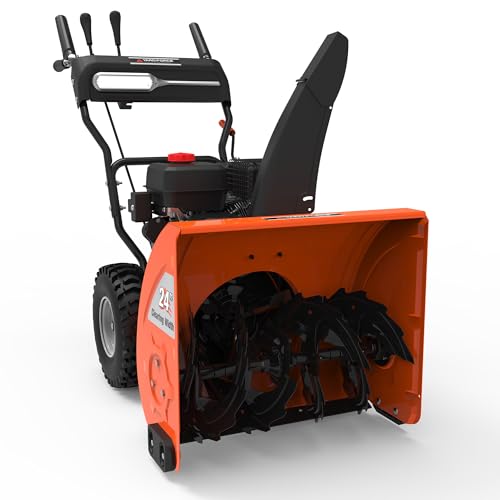
Yard Force YF24-DS21-GSB2 24 in. Two-Stage Gas Snow Blower
$1,099.00A Briggs & Stratton CR950 Snow Series 208cc engine drives a 12.5-inch steel auger and a 12-inch impeller, with a 21-inch intake, reinforced steel chute and deflector, 40-foot throw and 6 forward and 2 reverse speeds for slowing down in slush.
Best for: two-car driveways with occasional heavy storms
Check price on AmazonIntermediate picks: wider gas and battery two-stage
For regions where wet storms are routine, including coastal and southern snow belts where temperatures hover near freezing.
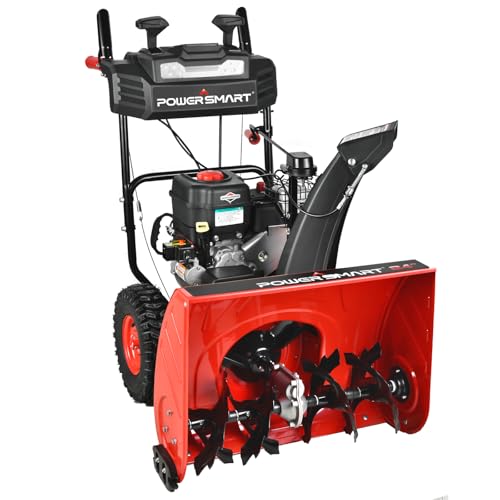
PowerSmart 26 in. Two-Stage Gas Snow Blower with Briggs & Stratton 208cc
$999.00A Briggs & Stratton 950 Snow Series 208cc rated at 2,700 pounds per minute, an all-steel auger and high-speed steel impeller, a 20-inch intake and a 45-foot throw, plus handle warmers for long, damp sessions.
Best for: wider driveways with routine wet snow
Check price on Amazon
EGO Power+ SNT2405 24 in. Self-Propelled Two-Stage Snow Blower Kit
$1,649.00EGO says its Peak Power system, which combines two 56V batteries, is designed to clear heavy, wet snow, with a variable-speed steel auger, a 20-inch intake and a 50-foot throw. Expect fewer cars per charge than the 18-car fresh-snow rating.
Best for: two and three-car paved driveways
Check price on AmazonExpert picks: lake-effect and heavy-snow-belt machines
For lake-effect belts, mountain towns and anyone who clears dense, wet snow and plow berms many times a season.
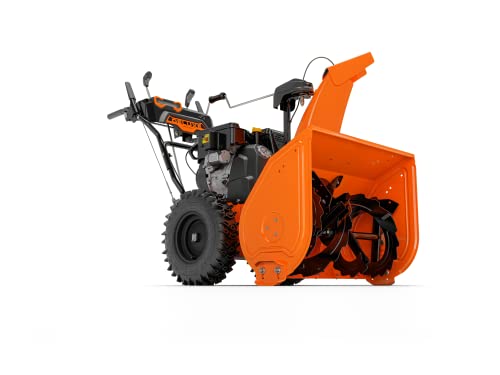
Ariens Deluxe 28 SHO Two-Stage Snow Blower (ST28DLE)
$1,999.00The SHO (Super High Output) version of the Deluxe 28 with electric start, sold and shipped by Amazon. It pairs with the Ariens drift cutter kit and composite skid shoes, and Ariens dealers across the snow belt stock its parts.
Best for: wide driveways with wet snow and big berms
Check price on Amazon
Honda HSS1332AATD 32 in. Two-Stage Track Snow Blower
$4,099.00The highest rated capacity in our catalog at 2,750 pounds per minute, from a commercial GX390 engine through a 31.9 by 21.7-inch housing, with hydrostatic track drive that lets you slow ground speed in slush without slowing the auger.
Best for: long or steep driveways in lake-effect regions
Check price on AmazonWho should not buy this tier: Homes in dry-snow climates, where powder at 15:1 to 20:1 is light enough for mid-range machines, and anyone with a short paved driveway that gets wet snow only once or twice a year. On those driveways a $700 to $1,000 24-inch two-stage cleared at a slower walking pace does the job, and a premium machine's extra power goes unused most of the season.
How do the heavy wet snow picks compare on specs?
| Model | Price | Clearing width | Intake height | Throw distance | Engine | Drive | Electric start |
|---|---|---|---|---|---|---|---|
| Ariens Deluxe 28 SHO Two-Stage Snow Blower (ST28DLE) | $1,999.00 | 28 in | - | - | - | - | Yes |
| Honda HSS1332AATD 32 in. Two-Stage Track Snow Blower | $4,099.00 | 31.9 in | 21.7 in | 56 ft | - | track | Yes |
| PowerSmart 26 in. Two-Stage Gas Snow Blower with Briggs & Stratton 208cc | $999.00 | 26 in | 20 in | 45 ft | 208 cc | self propelled | Yes |
| EGO Power+ SNT2405 24 in. Self-Propelled Two-Stage Snow Blower Kit | $1,649.00 | 24 in | 20 in | 50 ft | - | self propelled | - |
| Yard Force YF24-DS21-GSB2 24 in. Two-Stage Gas Snow Blower | $1,099.00 | 24 in | 21 in | 40 ft | 208 cc | self propelled | Yes |
How do I stop my snow blower from clogging in wet snow?
- Coat the chute and auger housing. Before clearing, with the engine off, spray the inside of the chute and housing with a silicone or non-stick spray such as silicone chute spray so slush slides off.
- Run the engine at full throttle. Impeller speed is what throws wet snow. Keep the throttle at full and slow the ground speed instead.
- Take narrower bites. Clear a half or two-thirds width pass so the auger never packs the housing full of slush.
- Clear during the storm. Wet snow compacts and gets heavier as it sits and as temperatures swing. Two clearings of 5 inches are easier than one of 10.
- Keep the chute pointed high and downwind. A higher deflector angle keeps heavy snow from dropping back onto the cleared lane.
- Clear clogs only with the engine off. Release controls, shut off the engine, remove the key and use the clean-out tool. Never use your hand, even with gloves on.
Is lake-effect snow wet or dry?
It varies. Lake-effect snow forms when cold air crosses warmer open lake water, and early-season bands, when the lakes are warmest and air temperatures are near freezing, often drop heavy, wet snow at high rates. Later bands in very cold air are often lighter and fluffier but can pile up very deep. For lake-effect regions, plan for both: a tall intake and wide path for depth, and enough power and impeller speed for the wet storms. The Honda HSS928AATD and HSS1332AATD suit steep or long lake-belt driveways, and the Ariens SHO suits wide flat ones. Pair either with an expert snow removal setup including a roof rake such as the SNOWPEELER 30-foot roof rake, since wet snow loads roofs quickly.
How we chose
We did not test these products in person. Picks are researched from manufacturer specifications and owner manuals, engine and safety certifications where they apply, warranty terms, public recall records, and the recurring themes in verified owner reviews. We favor established brands with large review counts and parts support, match each pick to a real yard size or task, and place it in the tier where its price and capability actually belong.
Frequently asked questions
What is the best snow blower for heavy wet snow?
A two-stage snow blower with a powerful engine, fast impeller and a 20-inch or taller intake. The Ariens Deluxe 28 SHO, a Super High Output 28-inch model, is our top pick, and the Honda HSS1332AATD has the highest rated capacity at 2,750 pounds per minute. The EGO SNT2405 is the battery option EGO designs for heavy, wet snow. Avoid single-stage machines.
Can a single stage snow blower handle wet snow?
Poorly. Single-stage machines use one auger to gather and throw snow, so wet, heavy snow lands short, clogs the chute and bogs down the motor. They can manage a couple of inches of slush on pavement if you take narrow passes. For regions where wet snow is common, a two-stage machine with a separate impeller is the reliable choice.
How much does wet snow weigh?
Heavy wet snow at a 5:1 snow-to-liquid ratio weighs about 12.5 pounds per cubic foot, compared with about 6.2 pounds for average 10:1 snow and 3.1 pounds for dry 20:1 powder. Six inches of wet snow on a 24 by 24-foot driveway weighs about 3,590 pounds, which is why wet storms are hard on both machines and people who shovel.
Why does my snow blower clog in wet snow?
Wet snow sticks to the chute, auger housing and impeller, and a slow impeller cannot throw it hard enough to keep it moving. Coat the chute and housing with silicone spray, run at full throttle, slow your walking speed, take narrower passes and clear during the storm. Always shut off the engine and use the clean-out tool, never your hand, to clear a clog.
Are battery snow blowers good in wet snow?
Two-stage battery snow blowers such as the EGO SNT2405, SNT2410 and SNT2807 handle wet snow well; EGO designs their Peak Power system for heavy, wet conditions. Runtime drops a lot, because wet snow can weigh twice as much as average snow. Plan for fewer cars per charge than the 8-inch fresh-snow ratings and consider larger batteries if you live in a wet-snow region.
What is the best way to clear heavy wet snow from a driveway?
Clear early and more than once during the storm, before snow compacts and gets heavier. Use a two-stage machine at full throttle with a slow ground speed and partial-width passes, and throw snow high and downwind. For steps and edges, push rather than lift with a wide pusher. Take breaks, because moving wet snow is heavy physical work in cold weather.
Researched, not professional advice. This page is compiled from published specifications, manuals, labels and owner-review consensus, not hands-on testing. Follow the manufacturer's instructions and product label, and consult a qualified professional where safety, chemicals, fuel or structures are involved. As an Amazon Associate we earn from qualifying purchases.