Snow Removal
What Size Snow Blower for Heavy Wet Snow?
Quick answer
Heavy, wet snow on a 2-car driveway of about 22 by 30 feet needs a 24 to 28-inch two-stage snow blower. A 28-inch machine clears it in 12 passes and about 8 minutes, a 24-inch in 13 passes and 9 minutes. Wet snow clogs chutes, so choose a strong two-stage such as the Ariens Deluxe 28 SHO.
Wet snow is a different material from powder. Near the freezing point it holds so much water that a foot of it can weigh four times as much as a foot of cold, dry snow, it sticks to the inside of the housing and chute, and it lands short no matter how far the machine is rated to throw. Lake-effect belts and late-season storms produce it most often.
Our top pick is the Ariens Deluxe 28 SHO Two-Stage Snow Blower (ST28DLE) at $1,999.00, the Super High Output version of the Ariens Deluxe line. For steep or icy driveways, the Honda HSS928AATD ($3,599.00) adds tracks and hydrostatic drive. More wet-snow machines are in best snow blowers for heavy wet snow.
On this page
How long does a driveway take in heavy wet snow?
| Clearing width | Passes | Time | Fit |
|---|---|---|---|
| 12 in | 26 | 18 min | Slow or underpowered |
| 18 in | 18 | 12 min | Slow or underpowered |
| 21 in | 15 | 10 min | Slow or underpowered |
| 24 in | 13 | 9 min | Recommended |
| 28 in | 12 | 8 min | Recommended |
| 32 in | 10 | 7 min | More than needed |
About 660 square feet. Recommended: 24 to 28 inch two-stage. Times assume a 15 percent overlap, walking speeds of 150, 120 and 85 feet per minute in light, moderate and heavy snow, and 20 seconds per turn.
What is the best snow blower for heavy wet snow?
A 24 to 28-inch two-stage with a strong engine or large battery. On a 22 by 30-foot driveway a 28-inch machine makes 12 passes in about 8 minutes and a 24-inch makes 13 passes in about 9 minutes, at a heavy-snow walking pace. In wet snow, the engine and impeller matter more than the width: a two-stage snow blower's impeller is the fan that throws the snow, and it needs speed to push wet, sticky snow out of the chute before it packs. Single-stage machines clog quickly in wet snow and should be kept for light, dry storms.
Why is wet snow so hard on snow blowers?
Fresh snow weighs roughly 5 to 20 pounds per cubic foot depending on moisture, and that range is the whole story for a snow blower.
| Snow type | Weight per cu ft | Weight on this driveway | How machines behave | What to do |
|---|---|---|---|---|
| Cold, dry powder | About 5 lb | About 3,300 lb | Throws far, rarely clogs | Full-width passes at normal speed |
| Average snow | About 10 lb | About 6,600 lb | Normal throw and clearing | Full width, steady pace |
| Heavy, wet snow near freezing | About 20 lb | About 13,200 lb | Short throws, chute and impeller clogs | Full throttle, slow walk, partial-width passes |
| Slush or rain on snow | Heavier still | Varies | Packs the housing, slides off the auger | Push with a pusher, or wait for it to firm up |
Weights use 12 inches over 660 square feet (660 cubic feet). "About 10 lb" is a mid-range example, not a measured value.
How do I stop a snow blower from clogging in wet snow?
- Coat the chute before the storm. Spray the inside of the chute and housing with a non-stick snow blower chute spray or silicone spray, on a cold, dry machine, and reapply during long storms.
- Run at full throttle. Wet snow needs full impeller speed. Throttling down to save fuel or battery is what lets snow pack the chute.
- Slow your ground speed. Use a low gear or slow hydrostatic setting so the impeller can empty the housing as fast as the auger fills it.
- Take partial-width passes. In deep wet snow, take a third to half the housing width per pass.
- Clear in stages. Go out partway through the storm; wet snow gets heavier as it settles.
- Clear clogs the safe way. Engine off, key or battery out, wait for all parts to stop, then use the clean-out tool. Never a hand.
- Run it dry before storage. Let the machine run a minute after the last pass to throw out wet snow that would freeze the auger and chute solid.
Where does heavy wet snow happen?
Anywhere storms arrive with temperatures near 32 F, but three patterns stand out. Lake-effect snow downwind of the Great Lakes can pile up fast and dense. Coastal storms in the Northeast often run near freezing and turn wet. And late-season storms in spring almost everywhere bring heavy, sticky snow onto warm pavement. If your region sees these regularly, buy for wet snow even if many storms are dry. Three-stage machines are sometimes pitched for wet snow; see two-stage vs three-stage snow blower before paying extra.
Battery or gas for heavy wet snow?
Gas has the edge in the wettest storms, because wet snow draws much more power than the dry-snow conditions battery ratings are based on, and a gas tank refills in a minute. That said, the large battery two-stage machines are capable: the EGO SNT2807 lists a 60-foot throw and two 12.0Ah batteries, and owners in wet-snow regions should expect well under its rated 32 car spaces per charge. On gas, the PowerSmart 26, with a Briggs & Stratton 950 Snow Series 208cc, is rated by PowerSmart at 2,700 pounds per minute. See Honda vs Ariens for the premium gas choice.
Which snow blowers handle heavy wet snow?
Two-stage machines with strong engines or large batteries, from 24 to 28 inches. All clear a 2-car driveway in about 8 to 9 minutes of wet snow.
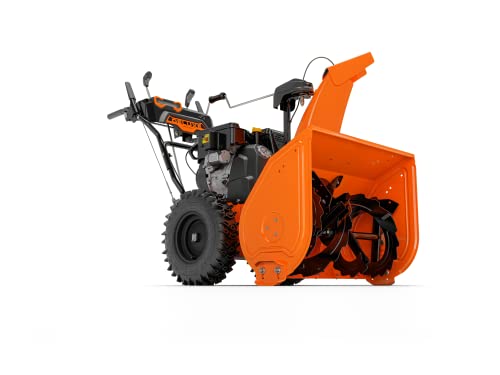
Ariens Deluxe 28 SHO Two-Stage Snow Blower (ST28DLE)
$1,999.00The Deluxe SHO (Super High Output) is the performance variant of Ariens' core two-stage line, with a 28-inch path and electric start, sold and shipped by Amazon.
Best for: wide suburban driveways that collect heavy, wet snow and plow berms
Check price on Amazon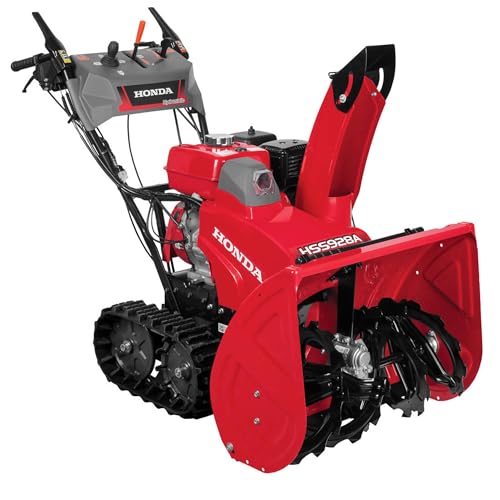
Honda HSS928AATD 28 in. Two-Stage Track Snow Blower
$3,599.00Honda GX270 power, cleated low-temperature rubber tracks, hydrostatic drive and auger height control, rated at 1,900 pounds per minute and a 52-foot throw with no assembly required.
Best for: steep or icy driveways where wheels lose traction
Check price on Amazon
Honda HSS928AAWD 28 in. Two-Stage Wheeled Snow Blower
$3,399.00The wheeled HSS928 swaps tracks for 14-inch pneumatic tires and adds an electric joystick chute with 198° of rotation, keeping the GX270, hydrostatic drive and 3-year residential warranty.
Best for: large flat paved driveways where a wheeled machine turns more easily
Check price on Amazon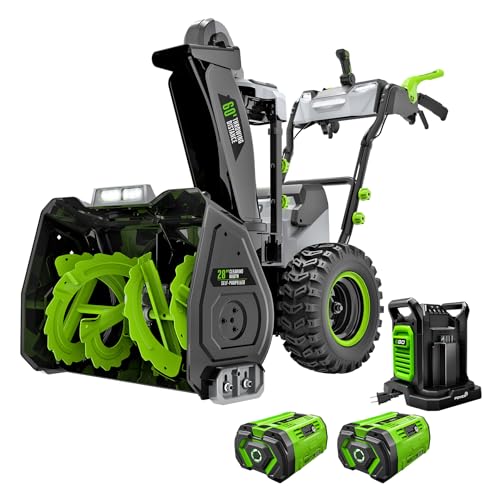
EGO Power+ SNT2807 28 in. Self-Propelled Two-Stage Snow Blower Kit
$2,308.28EGO rates this 28-inch two-stage at a 60-foot throw and a 32-car driveway of 8-inch snow per charge on its two included 12.0Ah batteries, with trigger steering, a joystick chute and heated grips.
Best for: long driveways in heavy-snow regions from owners ready to leave gas behind
Check price on Amazon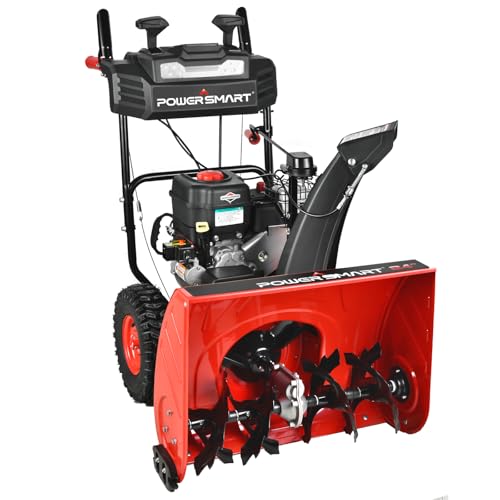
PowerSmart 26 in. Two-Stage Gas Snow Blower with Briggs & Stratton 208cc
$999.00A Briggs & Stratton 950 Snow Series 208cc rated at 2,700 pounds per minute, with steel housing, frame and chute, a 26-inch path, handle warmers and adjustable steel skid shoes.
Best for: wider driveways on a mid-range budget, including gravel
Check price on Amazon
EGO Power+ SNT2405 24 in. Self-Propelled Two-Stage Snow Blower Kit
$1,649.00A complete 24-inch two-stage kit with two 7.5Ah batteries: 20-inch intake, 50-foot throw, variable-speed self-propel with reverse, and a maker-rated 18-car driveway per charge.
Best for: mid-sized driveways that get deep, wet snow and end-of-driveway plow piles
Check price on AmazonHow we chose
We did not test these products in person. Picks are researched from manufacturer specifications and owner manuals, engine and safety certifications where they apply, warranty terms, public recall records, and the recurring themes in verified owner reviews. We favor established brands with large review counts and parts support, match each pick to a real yard size or task, and place it in the tier where its price and capability actually belong.
Frequently asked questions
What kind of snow blower is best for wet heavy snow?
A two-stage snow blower with a strong engine or large battery and a 20-inch or taller intake. Its separate impeller throws wet snow out of the chute before it packs, which single-stage machines cannot do. On a 22 by 30-foot driveway a 24 to 28-inch two-stage clears heavy wet snow in about 8 to 9 minutes. Run it at full throttle with a slow walking speed.
How much does wet snow weigh?
Fresh snow weighs roughly 5 to 20 pounds per cubic foot, and wet snow near freezing sits at the heavy end. A foot of it on a 22 by 30-foot driveway is 660 cubic feet, or about 13,200 pounds at 20 pounds per cubic foot, four times the weight of cold, dry powder. Slush and rain-soaked snow can weigh more.
Why does my snow blower keep clogging?
Wet snow sticks to the chute and housing, especially when the engine is throttled down or you walk too fast for the impeller to keep up. Run at full throttle, slow down, take partial-width passes and coat the chute with a non-stick spray before the storm. When it does clog, turn it off, wait for every part to stop and use the clean-out tool, never your hand.
Does a battery snow blower work in wet snow?
The large two-stage models do, with less runtime. Battery ratings such as EGO's 32 car spaces per charge for the SNT2807 assume 8-inch snow, and wet snow draws much more power, so expect noticeably fewer clearings per charge. For a 2-car driveway that is still usually enough. Owners on long driveways in lake-effect regions tend to prefer gas for the wettest storms.
Researched, not professional advice. This page is compiled from published specifications, manuals, labels and owner-review consensus, not hands-on testing. Follow the manufacturer's instructions and product label, and consult a qualified professional where safety, chemicals, fuel or structures are involved. As an Amazon Associate we earn from qualifying purchases.