Snow Removal
How to Use a Snow Blower Safely: Patterns, Clogs and Carbon Monoxide
Quick answer
To use a snow blower safely, pick up debris before the storm, start the engine outdoors, throw snow downwind and away from people, and take half-width bites in deep snow. Never clear a clog by hand: release the controls, shut the engine off, wait for the auger and impeller to stop, then use the clean-out tool.
A snow blower is one of the most dangerous tools most homeowners own, and nearly every serious injury comes from the same few mistakes: a hand in the chute, a machine started in a closed garage, or a child too close to the discharge. The good news is that the safe way to clear a driveway is also the fastest way, because a planned pattern means fewer passes and fewer clogs.
This guide covers the prep before the first storm, a clearing pattern for each driveway shape, wind and chute direction, deep and wet snow, the plow berm, gravel, steps and slopes, clogs, carbon monoxide, clothing and kids. If you are still choosing a machine, start with the best snow blowers by driveway size, and use the snow clearing time calculator to see how many passes your driveway takes.
On this page
- What should I do before the first snowstorm?
- How does a snow blower work, and which parts can injure you?
- What is the best pattern for clearing a driveway with a snow blower?
- Which way should I throw snow when it is windy?
- How do I clear deep or heavy wet snow with a snow blower?
- How do I clear the plow berm at the end of the driveway?
- Can you use a snow blower on a gravel driveway?
- Is it safe to use a snow blower on steps, decks and slopes?
- How do you safely unclog a snow blower chute?
- What should I wear to use a snow blower?
- How do I keep kids and pets safe around a snow blower?
- Which snow blower features make clearing safer?
- How do I use a snow blower step by step?
What should I do before the first snowstorm?
Do the prep on a dry fall afternoon, not at 6 a.m. with 10 inches on the ground. Owner manuals from Honda, Ariens, Toro and EGO all start with the same list: read the manual, learn the controls, and walk the area you will clear.
- Read the operator manual and find three things: how to stop the auger instantly, the maximum slope and the direction the manual tells you to travel on one, and where the clean-out tool is stored.
- Pick up everything the auger could swallow: newspapers, doormats, dog leashes, extension cords, garden hoses, kids' toys, landscape rocks and loose edging. A two-stage auger will throw a frozen newspaper or a rock hard enough to break a window.
- Mark the edges of the driveway, walks, curbs and in-ground sprinkler heads with stakes such as the Anley 48 in. Reflective Driveway Markers, 20 Pack so you do not chew up the lawn or a sprinkler head you cannot see.
- Test-start the machine outdoors with fresh, stabilized fuel, or fully charge the batteries indoors for a cordless model.
- Set the skid shoes for your surface: low for smooth pavement, raised for gravel and pavers (details below).
- Stage your gear: spare shear pins, the clean-out tool, eye and hearing protection, and boots with real tread.
How does a snow blower work, and which parts can injure you?
A single-stage snow blower uses one fast-spinning auger that scoops snow and throws it out of the chute in the same motion. A two-stage snow blower uses a slower steel auger to feed an impeller, a fan-like wheel behind the auger that throws the snow out of the chute. The impeller is the part that causes most hand injuries: it sits out of sight inside the housing, and it can keep turning for several seconds after you let go of the handle.
The U.S. Consumer Product Safety Commission (CPSC) has warned for years that snow blower injuries are commonly caused by reaching into the chute or auger to clear packed snow. A jam can hold the impeller under tension, and when you pull the clog free the blades can snap around even with the engine off. That is why every manual says to use the clean-out tool and never your hands. The single-stage vs two-stage comparison covers the design differences in more depth.
What is the best pattern for clearing a driveway with a snow blower?
The best pattern keeps every throw going away from the area you still have to clear, so you never move the same snow twice. Pass counts and times below use the snow clearing time calculator assumptions: a 15 percent overlap, about 120 feet per minute in moderate snow, and 20 seconds per turnaround.
| Driveway type | Pattern | Where to throw | Passes and time (moderate snow) | Watch for |
|---|---|---|---|---|
| 1-car, 10 x 20 ft | One pass up the center, then work outward on both sides | Onto the lawn on each side, never toward the house | 7 passes at 21 in, about 4 min | Doorways and car bumpers within throw range |
| 2-car, 20 x 24 ft | Split down the middle, then a horseshoe working outward | Rotate the chute at each end so snow always goes to the outside | 12 passes at 24 in, about 6 to 7 min | Throwing onto a neighbor's drive or walk |
| 3-car, 30 x 24 ft | Two horseshoes, one for each half, or clear across the doors first | Outside edges; save one side for wind days | 18 passes at 24 in, about 10 min | Snow piling against the garage doors |
| Long single lane, 12 x 250 ft | Center pass out and back, then one pass each side | Both sides, or all to the downwind side | 8 passes at 24 in, about 19 min; 7 at 28 in, about 17 min | Mailbox, reflector stakes, the plow berm at the street |
| Wide garage apron | Clear a strip along the garage doors first, then run lengthwise toward the street | Toward the lawn side of the apron | Add 2 to 4 passes to the driveway count | Throwing snow against siding, windows or parked cars |
| Circular or loop drive | Follow the loop in rings, starting on the inner edge | Toward the outside of the curve | Depends on loop length; measure the centerline | Chute direction changes every few feet on tight curves |
| Driveway plus public sidewalk | Driveway first, sidewalk last, berm as soon as the plow has passed | Lawn side only; many towns prohibit throwing snow into the street | A 4 ft walk is 3 passes at 21 in | Pedestrians and passing cars |
| Gravel | Same patterns, slower speed, housing raised on the skid shoes | Away from the house and cars, since stones can be thrown | Same as paved, at a slower walk | Thrown stones, soft spots before the ground freezes |
| Sloped | Direction and slope limit exactly as your manual states | Downhill side when the manual allows | Slower: plan 25 to 50 percent longer | Loss of traction, the machine pulling you downhill |
Times are planning estimates for moderate snow with a two-stage or single-stage machine at a normal walking pace. Heavy, wet snow and plow berms take longer.
Which way should I throw snow when it is windy?
Throw downwind. Snow thrown into the wind blows back over the area you just cleared, onto your face shield and down your collar. Before you start, look at which way loose snow is drifting and plan every pass so the chute points with the wind or across it, never into it.
On a narrow driveway where the machine's throw comfortably clears the full width, start at the downwind edge and work toward the wind, sending each throw across the pavement you have already cleared and onto the lawn beyond. On a wider driveway, use the horseshoe pattern but put all of the snow on the downwind side, turning the chute at each end rather than switching sides. Lower the chute deflector in strong wind so the snow travels in a flatter arc and lands closer to where you aimed. Models with a joystick or trigger chute control, such as the EGO SNT2410 XP and Honda HSS928AAWD, make those constant chute changes far easier than a hand crank.
How do I clear deep or heavy wet snow with a snow blower?
Deep and wet snow is where clogs, broken shear pins and strained backs happen. The fixes are about pace, not power:
- Take half-width bites. If the snow is deeper than the intake height, run the housing along the edge of the snow so the auger takes only half its width. Two slower passes clear more than one stalled pass.
- Slow the ground speed, keep the engine at full throttle. Two-stage machines throw best at full engine speed. Slow travel gives the impeller time to empty the housing.
- Clear during long storms. Clearing every 6 to 8 inches is easier on you and the machine than clearing 20 inches of settled, heavy snow once.
- Coat the chute and impeller with a silicone spray (with the engine off) to help wet snow slide instead of packing.
- Use drift cutters such as the Ariens Drift Cutter Kit (Set of 2) or EGO Power+ ADC2400 Drift Cutters to slice drift walls taller than the housing.
If your storms are routinely heavy and wet, the machine may simply be undersized. A two-stage with a 20 to 21.7 inch intake and a 45 to 60 foot throw handles slush that stalls a single-stage. See the best snow blowers for heavy wet snow.
How do I clear the plow berm at the end of the driveway?
The plow berm is the ridge of packed, chunky snow and ice the city plow leaves across your driveway entrance. It can be two or three times as dense as the snow on the driveway, and it freezes hard within hours, so clear it as soon as the plow has been through.
- Use a two-stage machine. Single-stage augers ride up and over packed berms and are not built for ice chunks.
- Attack the berm from the side in narrow bites, one third to one half of the clearing width, rather than ramming it head-on.
- Stop and let the housing empty whenever the engine bogs down. Forcing it is how shear pins break.
- Break up the ice chunks with a steel pusher such as the Garant Nordic NSP24D 24 in. Steel Blade Snow Pusher rather than feeding them to the auger.
- Face oncoming traffic, wear something bright, and never throw snow into the street.
The end-of-driveway plow pile sizing page covers the intake height that handles a typical berm.
Can you use a snow blower on a gravel driveway?
Yes, but only a two-stage machine. A single-stage auger touches the ground and will pick up gravel and throw it at high speed, which damages the machine and can injure people or break windows. A two-stage auger rides above the surface on adjustable skid shoes, so you can raise the housing and leave a thin layer of snow over the stones.
Raise the skid shoes to the gravel setting in your manual before the first storm, clear at a slow walk, and keep the chute pointed away from the house, cars and people in case a stone gets through. Early in the season, before the ground freezes, the gravel is soft and gets picked up more easily; many owners let the first storm pack down and freeze into a base. Composite shoes such as the Ariens Reversible Composite Skid Shoe Kit also help protect pavers. The best snow blowers for gravel driveways lists the machines built for it.
Is it safe to use a snow blower on steps, decks and slopes?
Steps: no. Never run a snow blower up or down stairs; it can tip, slide or pull you off balance, and the auger is pointed at your feet on the way down. Use a shovel or an electric snow shovel such as the EGO Power+ SNS1201 12 in. Cordless Snow Shovel Kit, which weighs a fraction of a snow blower and throws snow up to 25 feet. The deck and patio sizing page covers decks, which also need a tool that will not gouge boards.
Slopes: follow the slope limit and travel direction in your operator manual exactly. Snow blower manuals warn against clearing slopes steeper than they allow, and against turning or reversing where the machine could slide. On a steep driveway, go slowly, keep both hands on the controls, never pull the machine back toward your body on a downhill grade, and stop if the wheels start to spin. Track-drive machines such as the Honda HSS928AATD 28 in. Two-Stage Track Snow Blower hold a slope far better than wheels. See the best snow blowers for steep driveways and the track vs wheel comparison.
How do you safely unclog a snow blower chute?
Every snow blower manual gives the same sequence, and it is the most important safety rule in this guide. Never clear a clog with your hands, even with gloves, even with the engine off.
- Release the auger and drive controls.
- Shut the engine off and remove the key. On a battery machine, turn it off and remove the safety key and the battery.
- Wait until the auger and impeller have completely stopped, then wait a few seconds more.
- For a gas machine with a deep jam, disconnect the spark plug wire before reaching near the housing.
- Use the clean-out tool, or a broom handle if the tool is missing, to break up the packed snow in the chute and housing.
- If the auger hit something solid, check the shear pins and look for the object before restarting.
- Reconnect, make sure everyone is clear of the chute, then restart.
A clog is a sign to change technique: slower ground speed, half-width bites, full throttle, and a silicone coating on the chute.
What should I wear to use a snow blower?
- Boots with deep tread. Most falls happen on packed snow under the machine or on ice under the berm.
- Eye protection. Snow blowers kick up ice pellets and grit; anti-fog glasses such as the NoCry Clear Anti-Fog Safety Glasses work under a hat.
- Hearing protection for gas machines, which are loud enough over a long session that most manuals recommend it. Earmuffs like the Pro For Sho 34dB NRR Ear Muffs fit over a knit cap.
- Nothing loose: tuck in scarves, drawstrings and long hair. Anything that dangles can be pulled into the auger.
- Reflective or bright outerwear when clearing near the street at dawn or dusk.
Cold, heavy work also strains the heart. If you have a heart condition, ask your doctor before clearing snow, take breaks, and let the machine do the pushing. Self-propelled models with power steering reduce the effort significantly.
How do I keep kids and pets safe around a snow blower?
Keep children and pets indoors, or well away from the area you are clearing, every time the machine runs. Never let children operate a snow blower, ride on one or walk beside it. The chute can throw ice chunks and gravel 30 to 60 feet, so never point it toward people, pets, cars, windows or the street.
The less obvious hazard is the snowbank itself. Children love to dig forts and tunnels in the piles along the driveway, and those are exactly the piles you and the plow add to. Tell kids those piles are off limits, check them before you clear, and knock down any tunnels. After dark, a child in a white snowsuit in a snowbank is very hard to see.
Which snow blower features make clearing safer?
Some machines are simply safer to operate. Battery models such as the EGO Power+ SNT2405 24 in. Self-Propelled Two-Stage Snow Blower Kit produce no carbon monoxide and need no refueling; track drive holds a steep driveway; headlights help on dark mornings. If your current machine is a pull-start single-stage struggling with berms, the right upgrade removes most of the risky moments. The intermediate snow removal setup pairs a machine with the accessories in one list.

EGO Power+ SNT2405 24 in. Self-Propelled Two-Stage Snow Blower Kit
$1,649.00A 24-inch self-propelled two-stage with push-button start, an LED headlight and two 7.5Ah batteries, so there is no gasoline to handle and no exhaust in the garage. EGO rates it for an 18-car driveway of 8-inch snow per charge.
Best for: two-car driveways and anyone who wants to stop handling gas
Check price on Amazon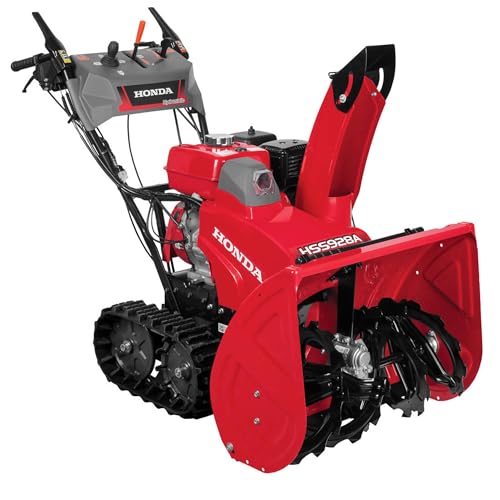
Honda HSS928AATD 28 in. Two-Stage Track Snow Blower
$3,599.00Cleated rubber tracks, hydrostatic drive and auger height control give it grip and control on steep or icy driveways where wheeled machines slide. Honda rates it at a 52-foot throw.
Best for: steep, long or gravel driveways
Check price on Amazon
EGO Power+ SNS1201 12 in. Cordless Snow Shovel Kit
$359.00A 56V cordless shovel that throws snow up to 25 feet and is light enough to carry up stairs, which is where a full snow blower should never go.
Best for: steps, decks and narrow walks
Check price on Amazon
Anley 48 in. Reflective Driveway Markers, 20 Pack
$23.59Twenty 4-foot reflective fiberglass stakes that mark driveway edges, curbs and sprinkler heads before snow hides them.
Best for: marking edges before the first storm
Check price on AmazonHow do I use a snow blower step by step?
- Prepare the area. Before snow falls, pick up debris, mark edges with stakes and set the skid shoes for pavement or gravel.
- Dress for it. Wear boots with tread, eye and hearing protection, and tuck in scarves, drawstrings and hair.
- Start it outdoors. Check oil and fuel with the engine cold, start the machine outdoors or with the garage door fully open, and move it out immediately.
- Clear kids and pets. Make sure children and pets are indoors or far from the chute and that no one is in the snowbanks you will throw onto.
- Pick the pattern. Choose the pattern for your driveway shape and aim the chute downwind, away from the house, cars and the street.
- Work at full throttle. Run the engine at full speed, walk at a pace that lets the housing empty, and take half-width bites in deep snow.
- Handle clogs safely. Release the controls, shut the engine off, wait for all moving parts to stop, and use the clean-out tool, never your hands.
- Finish and shut down. Run the engine a minute outdoors to shed snow, let it cool, then store it and refuel only when cold and outdoors.
How we chose
We did not test these products in person. Picks are researched from manufacturer specifications and owner manuals, engine and safety certifications where they apply, warranty terms, public recall records, and the recurring themes in verified owner reviews. We favor established brands with large review counts and parts support, match each pick to a real yard size or task, and place it in the tier where its price and capability actually belong.
Frequently asked questions
Why should you never unclog a snow blower with your hand?
The impeller and auger can hold stored tension when packed with snow. When you pull the clog free, the blades can spin suddenly even after the engine is off, and that is how most snow blower finger and hand injuries happen. Release the controls, shut the engine off, remove the key or battery, wait for all parts to stop, then use the clean-out tool or a broom handle.
Can I start my snow blower inside the garage?
Do not run a gas snow blower in a closed garage, even briefly, because exhaust carbon monoxide builds up quickly and can seep into the house. Start it outdoors, or with the garage door fully open and move it outside right away. Never leave it idling indoors to warm up, and refuel only when the engine is cold and outdoors. Battery snow blowers produce no exhaust.
Should I wait until the snow stops to use my snow blower?
In long storms, clearing every 6 to 8 inches is usually easier and safer than waiting for 18 or 20 inches of settled snow. Deep, compacted snow causes more clogs, broken shear pins and strain on your heart. Clear the plow berm soon after the plow passes, before it freezes into hard chunks that a single pass cannot handle.
Is it better to blow snow uphill or downhill on a sloped driveway?
Follow the direction and maximum slope in your snow blower manual, because it differs between machines. On any slope, move slowly, never pull the machine back toward your body when you are below it, and stop if the wheels lose grip. Throwing snow to the downhill side is easier where the manual allows. Track-drive machines hold steep driveways better than wheeled ones.
How far away should people stand from a snow blower?
Keep people and pets well out of the throw path and away from the machine, at least the full throw distance on the chute side, which is 30 to 60 feet on most two-stage machines. Never aim the chute at people, cars, windows or the street. Children should be indoors while the machine runs and should never ride on it, operate it or play in the snowbanks being cleared.
Can a snow blower be used on a gravel driveway without throwing rocks?
A two-stage snow blower can, because the auger rides above the surface on adjustable skid shoes. Raise the shoes to the gravel setting in the manual so a thin layer of snow stays on the stones, walk slowly, and keep the chute away from the house and cars. Never use a single-stage machine on gravel; its auger touches the ground and throws stones.
Researched, not professional advice. This page is compiled from published specifications, manuals, labels and owner-review consensus, not hands-on testing. Follow the manufacturer's instructions and product label, and consult a qualified professional where safety, chemicals, fuel or structures are involved. As an Amazon Associate we earn from qualifying purchases.