Chainsaws and Wood
Chainsaw Bar Length Chart: Bar Size by Wood Diameter
Quick answer
Choose a bar about 2 inches longer than the wood you cut most. Wood up to 12 inches suits a 14 inch bar, 16 inch rounds suit an 18 inch bar, and 18 inch logs need a 20 inch bar with a 50 to 60 cc engine. Longer bars are heavier and harder to control.
Bar length is the usable cutting length of the guide bar, measured from the front of the saw body to the tip. A bar a little longer than your wood lets you cut through in one pass without burying the tip, which is where kickback starts.
Match the wood you cut most often, not the largest log you might ever meet. The chainsaw bar length calculator adds your experience level and job type. Our top pick for firewood is the Husqvarna 450 Rancher at $354.99.
On this page
What bar length do I need for my wood?
| Typical wood diameter | Bar length | Power class | Catalog saws with that bar |
|---|---|---|---|
| 4 to 8 in | 10 to 12 in | Battery 20V to 56V, or a 30 to 40 cc gas saw | Craftsman CMCCS630P1 |
| 10 in | 12 in | Battery 20V to 56V, or a 30 to 40 cc gas saw | Craftsman CMCCS630P1 |
| 12 in | 14 in | Battery 40V to 56V, or a 30 to 40 cc gas saw | Common size, no 14 in saw in our catalog |
| 14 in | 16 in | Battery 56V to 80V, or a 40 to 50 cc gas saw | EGO CS1613, Husqvarna 120 Mark III |
| 16 in | 18 in | Battery 56V to 80V, or a 40 to 50 cc gas saw | EGO CS1815, ECHO CS-4510 |
| 18 in | 20 in | 50 to 60 cc gas saw | Husqvarna 450 Rancher, ECHO CS-590 |
| 22 in and up | 24 in or longer | 60 cc or larger professional saw | Professional and arborist saws |
Rule of thumb: bar about 2 inches longer than the wood. Experienced users can cut larger wood from two sides, but that is slower and raises kickback exposure.
What size chainsaw do I need for each job?
| Job | Bar length | Notes |
|---|---|---|
| Pruning and limbing | 10 to 14 in | Light and maneuverable; a pole saw is safer for overhead limbs |
| Storm cleanup, small trees | 14 to 16 in | Battery saws handle most yard cleanup well |
| Firewood, 8 to 16 in rounds | 16 to 20 in | The homeowner firewood sweet spot |
| Felling trees up to about 18 in | 18 to 20 in | Only with training and a clear escape path |
| Large hardwood, 20 in and up | 24 in or longer | Professional saws and arborist work |
How do bar length and power go together?
| Saw | Bar (in) | Power | Type |
|---|---|---|---|
| Craftsman CMCCS630P1 | 12 | 20V battery | Cordless |
| EGO CS1613 | 16 | 56V battery | Cordless |
| Husqvarna 120 Mark III | 16 | 38 cc | Gas |
| Milwaukee 2727-21HD | 16 | 18V battery | Cordless |
| EGO CS1815 | 18 | 56V battery | Cordless |
| Greenworks 80V 18 in | 18 | 80V battery | Cordless |
| Husqvarna 440 | 18 | 40 cc | Gas |
| ECHO CS-4510 | 18 | 45 cc | Gas |
| Husqvarna 450 Rancher | 20 | 50.2 cc | Gas |
| Husqvarna 455 Rancher | 20 | 55 cc | Gas |
| ECHO CS-590 Timber Wolf | 20 | 59.8 cc | Gas |
A longer bar carries more chain through the cut, so it needs more engine or battery power to hold chain speed. Only use bar lengths the saw maker lists as compatible.
Is a battery chainsaw powerful enough?
For most homeowners, yes. Current 56V and 80V saws with 16 to 18 inch bars, such as the EGO CS1815 and the Greenworks 80V 18 inch kit, cut storm limbs, small trees and firewood rounds to about 14 to 16 inches, start instantly and need no fuel mix.
The limits are runtime on large hardwood and sustained all-day cutting, where gas saws such as the Husqvarna 450 Rancher at 50.2 cc still lead. If you cut more than a couple of cords a year, gas is still the practical answer. See the best battery chainsaws and gas vs battery chainsaw.
How do I find the right replacement chain?
A chain is identified by three numbers that must all match your bar and saw: pitch, the spacing of the links, such as 3/8 inch low profile or .325 inch; gauge, the thickness of the drive links, such as .043, .050 or .058 inch; and the number of drive links. Most bars have the pitch and gauge stamped near the mount, and the manual lists the correct chain.
Two chains for the same bar length can have different drive link counts, so never buy by bar length alone. Keep chains sharp, because a dull chain bounces, burns the wood and kicks back more readily: a guided sharpener such as the Oregon Sure Sharp or a field sharpening kit keeps the cutting geometry consistent.
Which saws and safety gear should I buy?
Bar length is only half the purchase. Chaps and a helmet are not optional, and they cost a fraction of the saw. Full picks are in chainsaw safety gear.

Husqvarna 450 Rancher 20 in. Gas Chainsaw
$354.99A 50.2cc engine on a 20 inch bar cuts hardwood rounds to about 18 inches in a single pass, the standard homeowner firewood combination.
Best for: people who burn wood every winter
Check price on Amazon
EGO Power+ CS1815 18 in. Chainsaw Kit with 6.0Ah Battery
$399.00An 18 inch bar on 56V with a 6.0Ah battery included, which covers storm cleanup and firewood to about 16 inches without fuel mixing.
Best for: yard cleanup and occasional firewood
Check price on Amazon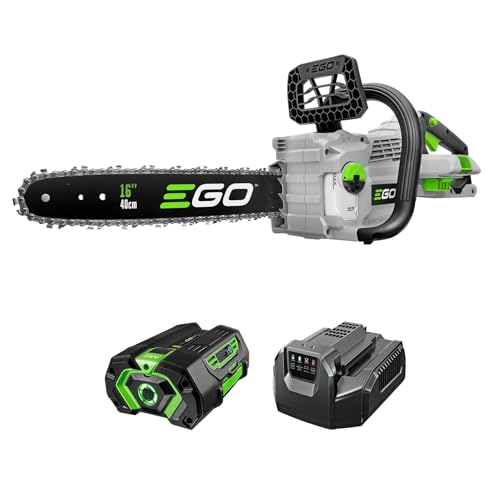
EGO Power+ CS1613 16 in. Chainsaw Kit with 4.0Ah Battery
$299.00A 16 inch bar is lighter and easier to control than an 18, and handles wood up to about 14 inches, which is most homeowner cutting.
Best for: first-time chainsaw buyers
Check price on Amazon
Husqvarna 587160702 Apron Chainsaw Chaps, 38 in.
$89.97Apron-style chainsaw chaps are the single most important piece of protective equipment for anyone running a saw at leg height.
Best for: every chainsaw owner
Check price on Amazon
Husqvarna 592752602 Forestry Helmet with Mesh Face Shield and Ear Muffs
$59.98A forestry helmet combines a hard hat, a mesh face screen and ear muffs, covering three risks in one purchase.
Best for: limbing, felling and storm work
Check price on Amazon
EGO Power+ PS1001 10 in. Telescopic Pole Saw Kit with 2.5Ah Battery
$339.00A telescopic pole saw with a 10 inch bar and about 13 feet of reach keeps you on the ground instead of cutting above shoulder height.
Best for: overhead limbs and pruning
Check price on AmazonHow we chose
We did not test these products in person. Picks are researched from manufacturer specifications and owner manuals, engine and safety certifications where they apply, warranty terms, public recall records, and the recurring themes in verified owner reviews. We favor established brands with large review counts and parts support, match each pick to a real yard size or task, and place it in the tier where its price and capability actually belong.
Frequently asked questions
What size chainsaw do I need for firewood?
For typical firewood rounds of 8 to 16 inches, an 18 inch bar is the most common homeowner choice, paired with a 40 to 50 cc gas engine or a 56V to 80V battery saw. If you regularly cut hardwood logs up to 18 inches, step up to a 20 inch bar on a 50 to 60 cc saw. Match the wood you cut most, not the biggest log you might see.
Can I cut a tree bigger than my chainsaw bar?
Experienced users can cut wood up to about twice the bar length by working from both sides, but it is slower and raises the chance of pinching and kickback. For felling, leaning or storm-damaged trees near that size the risk climbs sharply. If the wood is much larger than your bar, use a longer saw or hire a certified arborist rather than pushing a small saw.
Is a 16 inch or 18 inch chainsaw better?
A 16 inch saw is lighter and easier to handle for limbing, pruning and storm cleanup on wood up to about 14 inches. An 18 inch saw cuts firewood rounds to about 16 inches in one pass and is the more versatile choice if you burn wood. Beginners doing mostly yard cleanup are usually better served by the 16 inch.
Does a longer bar need a bigger engine?
Yes. A longer bar carries more chain in the cut, which needs more power to hold chain speed and cutting efficiency. As a guide, 12 to 14 inch bars pair with 30 to 40 cc engines or smaller battery platforms, 16 to 18 inch bars with 40 to 50 cc or higher-voltage battery saws, and 20 inch bars with 50 to 60 cc engines.
What chainsaw is best for a beginner?
A 14 to 16 inch battery chainsaw is usually the best start: no fuel mixing or pull starting, lighter weight and instant stopping when you release the trigger. It handles most yard cleanup and small firewood. Take a basic chainsaw safety course, wear chaps and a helmet with a face screen, and learn kickback avoidance before cutting anything under tension.
Researched, not professional advice. This page is compiled from published specifications, manuals, labels and owner-review consensus, not hands-on testing. Follow the manufacturer's instructions and product label, and consult a qualified professional where safety, chemicals, fuel or structures are involved. As an Amazon Associate we earn from qualifying purchases.