Patio Heat and Fire Pits
Best Electric Patio Heaters (2026): Infrared for Covered Patios
Quick answer
The best electric patio heater is the Bromic Tungsten Smart-Heat 4000W, a wall or ceiling infrared heater rated for 130 sq ft. It runs on 240V at about 16.6 amps, so hire a licensed electrician. For a lower price, the 3000W Dr. Infrared DR-239 plugs into a 240V outlet. Plug-in 120V: Fire Sense 02117.
An electric patio heater is an infrared heater that turns electricity into radiant heat aimed at people and surfaces. There is no flame, fuel or carbon monoxide, so it is the right heater for covered patios, pergolas with roofs and screened spaces where propane heaters are not allowed. The trade-off is wiring: most real outdoor heat needs a 240V circuit.
Our top pick, the Bromic Tungsten Smart-Heat 4000W Electric Patio Heater ($693.70), is built for permanent covered outdoor rooms. The Dr. Infrared Heater DR-239 3000W Wall or Ceiling Patio Heater ($293.20) is the value 240V choice, and the Fire Sense 02117 Offset Pole Electric Infrared Patio Heater ($210.00) plugs into a standard outlet. Size the space with the patio heater BTU calculator.
On this page
- What is the best electric patio heater?
- Are infrared heaters good for covered patios?
- How many watts, BTU and amps does an electric patio heater use?
- Do I need an electrician for an electric patio heater?
- How many electric heaters do I need for my covered patio?
- Beginner pick: plug-in infrared with no installation
- Intermediate pick: 240V wall or ceiling heat for less
- Expert pick: permanent, smart-controlled infrared
- How do the electric patio heaters compare on specs?
- What do IP ratings mean on outdoor heaters?
What is the best electric patio heater?
For a covered patio you will use all through the cool season, the Bromic Tungsten Smart-Heat 4000W. Bromic lists dual quartz elements, 130 sq ft of coverage, a stainless body with a high-temperature finish, IPX4 water ingress protection, 220 to 240V operation at about 16.6 amps and minimum clearances of 72 inches for wall mounting and 96 inches for ceiling mounting. Smart-control compatibility allows remote on and off and dimming.
The Dr. Infrared DR-239 delivers 3000 W, which Dr. Heater lists as 10,260 BTU, of carbon infrared heat with IP55 weather protection, wall and ceiling brackets, a remote, overheat protection, ETL listing and a NEMA 6-15P plug for a 240V receptacle. Other established infrared brands include Infratech W-Series and Bromic Platinum Smart-Heat Electric for recessed, architectural installs.
Are infrared heaters good for covered patios?
Yes, they are the best tool for them. Infrared heat travels in a line and warms whatever it hits, so it does not depend on heating the air, which blows away outdoors. It also has no combustion, so it produces no carbon monoxide under a roof, and wall or ceiling mounting keeps it off the floor. The Fire Sense 02117 listing describes its heat as a "9-foot blanket of heat, not affected by wind," and while any breeze will cool you, radiant heat holds up far better than a propane flame in moving air.
What infrared cannot do is heat around corners: aim heaters at the seating, not the middle of the floor, and mount at the height the manual requires. Propane towers still win on open patios with no power; compare in electric vs propane patio heater and best patio heaters.
How many watts, BTU and amps does an electric patio heater use?
Watts convert to heat at 3.412 BTU per hour each. Amps equal watts divided by volts. Heaters count as continuous loads, so circuits are sized with headroom: the National Electrical Code uses 125% of the heater's current for continuous loads. Your electrician chooses the breaker and wire; the heater manual governs.
| Heater size | Example | Voltage | BTU per hour | Amps | Circuit capacity at 125% |
|---|---|---|---|---|---|
| 1500 W | Fire Sense 02117 | 120V | 5,118 | 12.5 | 15.6 A (maker requires a dedicated 15 A circuit) |
| 2000 W | Small wall unit | 240V | 6,824 | 8.3 | 10.4 A |
| 3000 W | Dr. Infrared DR-239 | 240V | 10,236 (maker lists 10,260) | 12.5 | 15.6 A |
| 4000 W | Bromic Tungsten 4000W | 240V | 13,648 | 16.7 (maker lists about 16.6) | 20.8 A |
| 6000 W | Large commercial unit | 240V | 20,472 | 25.0 | 31.3 A |
BTU = watts x 3.412. Amps = watts / volts. Figures are calculated; confirm electrical requirements in the installation manual.
Do I need an electrician for an electric patio heater?
For any hardwired or 240V heater, yes: hire a licensed electrician, and expect a permit in many areas. A 240V heater needs its own circuit, outdoor-rated wiring and boxes, GFCI or other protection as code requires, and mounting that meets the clearances in the manual. The Dr. Infrared DR-239 ships with a NEMA 6-15P plug, which still needs a dedicated 240V receptacle with a weatherproof in-use cover installed by an electrician. The Fire Sense 02117 plugs into a standard 120V outlet, but Fire Sense states it requires a dedicated 15 amp circuit, so do not share the circuit with other loads and do not run it through extension cords or power strips. Ask for each heater on its own switch or smart control so it is easy to shut off when the patio empties.
How many electric heaters do I need for my covered patio?
This planning table uses Bromic's 130 sq ft rating for a 4000 W unit and assumes an enclosed-on-one-side covered patio in mild wind. Concentrated seating may need fewer heaters; open sides and cold climates need more.
| Covered patio | Area (sq ft) | 4000 W heaters needed | Total watts | Placement |
|---|---|---|---|---|
| 10 x 10 ft | 100 | 1 | 4,000 | One wall unit aimed at the seating |
| 12 x 12 ft | 144 | 1 to 2 | 4,000 to 8,000 | One for a single seating group; two for full coverage |
| 12 x 16 ft | 192 | 2 | 8,000 | Opposite ends, angled toward the center |
| 16 x 20 ft | 320 | 3 | 12,000 | Two over the lounge, one over dining |
| 20 x 20 ft | 400 | 3 to 4 | 12,000 to 16,000 | Zoned by seating area on separate controls |
Heaters needed = area divided by 130 sq ft, rounded up. Each 4000 W unit draws about 16.7 A at 240V, so several heaters usually need several circuits.
Beginner pick: plug-in infrared with no installation
You rent, want to try electric heat first, or need a heater you can roll to the seating area.
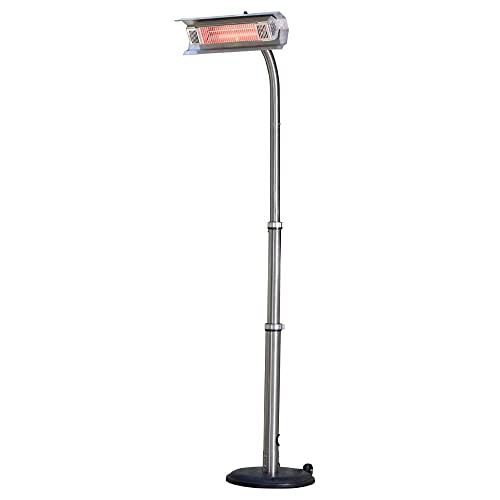
Fire Sense 02117 Offset Pole Electric Infrared Patio Heater
$210.00A 1500 W telescoping offset infrared heater on a 120V cord, adjustable from 72 to 93 inches tall, with tip-over protection, wheels and indoor or outdoor use. It needs a dedicated 15 amp circuit.
Best for: plug-in heat with no propane
Check price on AmazonIntermediate pick: 240V wall or ceiling heat for less
A covered patio or pergola roof, a willingness to add a 240V receptacle and a budget under $300 per heater.

Dr. Infrared Heater DR-239 3000W Wall or Ceiling Patio Heater
$293.20A 3000 W carbon infrared heater, listed at 10,260 BTU, with IP55 weather protection, wall and ceiling brackets, a remote for power levels, overheat protection, ETL listing and a NEMA 6-15P plug.
Best for: covered patios with a 240V circuit
Check price on AmazonExpert pick: permanent, smart-controlled infrared
A finished outdoor room you use nightly, with an electrician and a budget for a premium heater that looks built in.

Bromic Tungsten Smart-Heat 4000W Electric Patio Heater
$693.70Dual quartz elements at 4000 W rated for 130 sq ft, a stainless corrosion-resistant body, IPX4 protection, wall, ceiling or recessed mounting and compatibility with smart dimming controls.
Best for: high-end covered outdoor rooms
Check price on AmazonWho should not buy this tier: Skip the Bromic if your patio has no roof, if you would not hire a licensed electrician for 240V wiring, or if you only need heat a few nights a year. It draws about 16.6 amps per unit, needs mounting clearances of 72 inches on walls and 96 inches on ceilings, and heats a defined zone rather than an open yard. A propane tower is cheaper for occasional use on an uncovered patio.
How do the electric patio heaters compare on specs?
| Model | Price | Power | Heat area | Mount | Outdoor only |
|---|---|---|---|---|---|
| Fire Sense 02117 Offset Pole Electric Infrared Patio Heater | $210.00 | 1,500 W | - | freestanding | No |
| Dr. Infrared Heater DR-239 3000W Wall or Ceiling Patio Heater | $293.20 | 3,000 W | - | wall | No |
| Bromic Tungsten Smart-Heat 4000W Electric Patio Heater | $693.70 | 4,000 W | 130 sq ft | wall | - |
What do IP ratings mean on outdoor heaters?
An IP (ingress protection) rating tells you how well a device resists dust and water. The first digit covers solids, the second covers water. IPX4, listed for the Bromic Tungsten, means protection against splashing water from any direction, with no rating claimed for dust. IP55, listed for the Dr. Infrared DR-239, means dust protected and resistant to low-pressure water jets. Neither rating means a heater can sit in driving rain or be hosed down, so mount under the roof line, away from direct weather, and follow the manual's location rules. Salt air near the coast is harder on heaters than rain, so wipe stainless housings with the power off as the manual directs and inspect mounting hardware each season. Complete the space with outdoor string lights, patio furniture sets and the expert patio evening setup.
How we chose
We did not test these products in person. Picks are researched from manufacturer specifications and owner manuals, engine and safety certifications where they apply, warranty terms, public recall records, and the recurring themes in verified owner reviews. We favor established brands with large review counts and parts support, match each pick to a real yard size or task, and place it in the tier where its price and capability actually belong.
Frequently asked questions
Do electric patio heaters really work outdoors?
Infrared electric heaters work well outdoors within their rated zone because they warm people and surfaces directly instead of heating the air. They perform best under a roof or with a wall on one side, aimed at seating. Bromic rates its 4000 W Tungsten for 130 sq ft. On open, windy patios, propane towers cover larger areas, while electric heaters give a smaller but steadier warm zone.
Can I plug an electric patio heater into a regular outlet?
Only 120V models up to about 1500 W, such as the Fire Sense 02117, and even that one requires a dedicated 15 amp circuit per its maker. Do not use extension cords or power strips. Larger 3000 to 4000 W heaters run on 240V: the Dr. Infrared DR-239 needs a 240V receptacle for its NEMA 6-15P plug, and hardwired units like the Bromic need a licensed electrician.
How much does it cost to run an electric patio heater?
Multiply kilowatts by hours by your electricity rate. At an assumed $0.17 per kWh, a 1500 W heater costs about $0.26 per hour, a 3000 W heater about $0.51 and a 4000 W heater about $0.68. Running two 4000 W units for three hours a night would cost about $4.08 at that rate. Dimmers and zoned controls reduce use when full output is not needed.
How high should an infrared patio heater be mounted?
Follow the manual for your model, because minimum clearances protect ceilings and people. Bromic lists minimum clearances of 72 inches for wall mounting and 96 inches for ceiling mounting on the Tungsten 4000W. Mounting higher spreads heat over a wider but less intense area, while mounting lower concentrates it. Angle wall units down toward the seating rather than straight out.
Is electric or propane cheaper for patio heating?
Electric is usually cheaper per hour. At assumed prices of $0.17 per kWh and $3.50 per gallon of propane, a 4000 W infrared heater costs about $0.68 an hour, while a 48,000 BTU propane tower costs about $1.84. Electric has higher installation costs if you need a 240V circuit. For frequent use on a covered patio, electric usually wins; for occasional use on open patios, propane often does.
Are infrared patio heaters safe under a wood ceiling?
They can be when the heater is listed for ceiling mounting and installed at or beyond the manufacturer's minimum clearance to the ceiling and surrounding materials. Electric infrared heaters produce no carbon monoxide, which is why they are preferred under roofs. Have a licensed electrician mount and wire the unit, keep combustible decor away from the element and never cover or obstruct the heater face.
Researched, not professional advice. This page is compiled from published specifications, manuals, labels and owner-review consensus, not hands-on testing. Follow the manufacturer's instructions and product label, and consult a qualified professional where safety, chemicals, fuel or structures are involved. As an Amazon Associate we earn from qualifying purchases.