Patio Heat and Fire Pits
Best Patio Heaters (2026): Propane vs Electric and Heat Radius
Quick answer
The best patio heater for most open patios is the Fire Sense 61130, a 48,000 BTU propane tower rated to heat an 18 foot circle for about 9 hours per 20 lb tank. For covered patios with 240V power, the Bromic Tungsten 4000W infrared heater is the upgrade.
A patio heater is a radiant heater that warms people and surfaces rather than the air, which is why it works outdoors at all. Propane tower heaters, often called mushroom heaters, burn gas under a reflector hood; electric infrared heaters glow and beam heat in one direction. Which is best depends on whether your patio is open or covered and whether you have power where you sit.
Our top pick, the Fire Sense 61130 Standing Propane Patio Heater, 48,000 BTU ($131.24), gives published coverage, ETL approval, a tilt shutoff and wheels at a low price. Work out how many heaters your space needs with the patio heater BTU calculator before you buy two when one would do.
On this page
- What are the best patio heaters?
- Propane vs electric patio heater: which is better?
- How far does a patio heater reach?
- How many patio heaters do I need?
- How long does a propane patio heater last on a tank, and what does it cost to run?
- Beginner pick: simple propane heat for an open patio
- Intermediate pick: stainless propane or plug-in electric
- Expert pick: flame ambiance or permanent infrared
- How do the patio heaters compare on specs?
- Should I get a patio heater or a fire pit?
What are the best patio heaters?
For an open patio or deck, a 46,000 to 48,000 BTU propane tower is still the most heat per dollar. The Fire Sense 61130 and the Amazon Basics 46,000 BTU heater both list an 18 foot heat diameter. The Hiland HLDS01-SSHST adds stainless construction, wheels and a built-in drink table, from a brand that sells replacement burners and parts.
For a covered patio or pergola with a solid roof, electric infrared is safer and simpler: no tanks, no combustion and heat that a breeze cannot blow away as easily. The Dr. Infrared Heater DR-239 3000W Wall or Ceiling Patio Heater and Bromic Tungsten Smart-Heat 4000W Electric Patio Heater mount on walls or ceilings; see best electric patio heaters. For glow as much as heat, the Hiland HLDS01-CGTHG Quartz Glass Tube Pyramid Patio Heater puts a visible flame in a quartz glass tube.
Propane vs electric patio heater: which is better?
Propane wins on open patios: more output, no wiring, and you can move it. Electric wins under roofs and where you use heat often, because it has no combustion, no tanks and a lower cost per hour. The catch with electric is power: a 1500 W plug-in heater like the Fire Sense 02117 Offset Pole Electric Infrared Patio Heater needs a dedicated 15 amp circuit per its maker, and 3000 to 4000 W wall heaters need a 240V circuit. Infrared electric heat also warms a smaller zone, so it suits a seating group rather than a whole deck. The full comparison is in electric vs propane patio heater.
How far does a patio heater reach?
Heat radius is the manufacturer's rated coverage in calm air, and real comfort falls off quickly past it, especially in wind. Here is what the heaters on this page publish.
| Heater | Fuel | Output | Output in BTU per hour | Rated coverage | Approximate radius |
|---|---|---|---|---|---|
| Cuisinart Tabletop | Propane | 11,000 BTU | 11,000 | about 30 sq ft | about 3 ft |
| Fire Sense 02117 | Electric 120V | 1500 W | 5,118 | 9 ft blanket of heat | about 4.5 ft |
| Bromic Tungsten 4000W | Electric 240V | 4000 W | 13,648 | 130 sq ft | about 6.5 ft |
| Hiland Pyramid | Propane | 40,000 BTU | 40,000 | not published | n/a |
| Amazon Basics 46,000 | Propane | 46,000 BTU | 46,000 | 18 ft diameter | 9 ft |
| Fire Sense 61130 | Propane | 48,000 BTU | 48,000 | 18 ft diameter | 9 ft |
Electric BTU = watts x 3.412. Radius calculated from rated area or diameter. Manufacturer ratings assume calm conditions.
How many patio heaters do I need?
In calm air, plan one 46,000 to 48,000 BTU tower for each 18 foot circle, roughly 250 sq ft. A 12 by 16 foot patio (192 sq ft) needs one. A 20 by 20 foot patio (400 sq ft) needs two, placed on opposite sides of the seating. Add a heater or move to a sheltered spot if the area is windy, and expect less comfort on very cold nights: radiant heat makes people feel warmer, it does not turn an open deck into a heated room. For a dining table of four, a single tower at the edge of the table works; for a small bistro set, an 11,000 BTU tabletop heater like the Hiland HLDS032-B Tabletop Propane Patio Heater is enough. Run your exact numbers in the patio heater BTU calculator.
How long does a propane patio heater last on a tank, and what does it cost to run?
A 20 lb propane tank holds about 4.7 gallons, roughly 430,000 BTU. Hours = 430,000 divided by the heater's BTU per hour. The cost columns use stated assumptions so you can swap in your local prices: propane at $3.50 per gallon (91,500 BTU per gallon) and electricity at $0.17 per kWh.
| Heater output | Hours per 20 lb tank | Hours on low (about half) | Fuel used per hour | Cost per hour at assumptions |
|---|---|---|---|---|
| 11,000 BTU tabletop (propane) | 39 | 78 | 0.12 gal | $0.42 |
| 40,000 BTU pyramid (propane) | 10.8 | 21.5 | 0.44 gal | $1.53 |
| 46,000 BTU tower (propane) | 9.3 | 18.7 | 0.50 gal | $1.76 |
| 48,000 BTU tower (propane) | 9.0 | 17.9 | 0.52 gal | $1.84 |
| 1500 W infrared (electric) | n/a | n/a | 1.5 kWh | $0.26 |
| 3000 W infrared (electric) | n/a | n/a | 3.0 kWh | $0.51 |
| 4000 W infrared (electric) | n/a | n/a | 4.0 kWh | $0.68 |
An 11,000 BTU tabletop heater on a 1 lb cylinder (about 22,000 BTU) runs about 2 hours on high. Cold weather lowers usable output from small cylinders. See the propane tank burn time chart.
Beginner pick: simple propane heat for an open patio
An open patio or deck, a seating or dining group, and no power where you sit.

Fire Sense 61130 Standing Propane Patio Heater, 48,000 BTU
$131.24A 48,000 BTU tower rated for an 18 foot heat diameter, ETL approved, with piezo ignition, a tilt shutoff valve and wheels. Fire Sense estimates roughly 10 hours per 20 lb tank.
Best for: warming a dining set outdoors
Check price on Amazon
Amazon Basics 46,000 BTU Propane Patio Heater with Wheels
$162.74A 46,000 BTU heater rated for an 18 foot diameter with one-touch ignition, a tilt shutoff, a water box to weigh down the base and a chain to secure the tank.
Best for: a low-cost standing heater
Check price on Amazon
Cuisinart Portable Tabletop Patio Heater, 11,000 BTU
$149.99An 11,000 BTU tabletop heater rated for about 30 sq ft with an anti-tilt shutoff and burner screen, running on a 1 lb cylinder or a 20 lb tank with an optional regulator.
Best for: small balconies where allowed and bistro tables
Check price on AmazonIntermediate pick: stainless propane or plug-in electric
You use the patio most evenings in the cool season and want better materials, or you want to try electric heat without hiring an electrician.
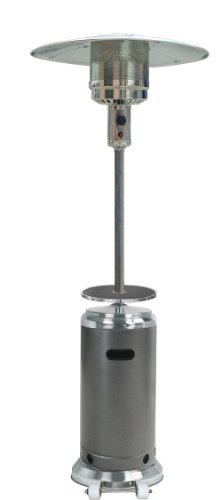
Hiland HLDS01-SSHST 48,000 BTU Patio Heater with Wheels and Table
$238.99A 48,000 BTU stainless tower with wheels and a built-in table, from a patio heater brand that keeps replacement burners and parts in stock and offers a service center.
Best for: large patios that want a drink ledge
Check price on Amazon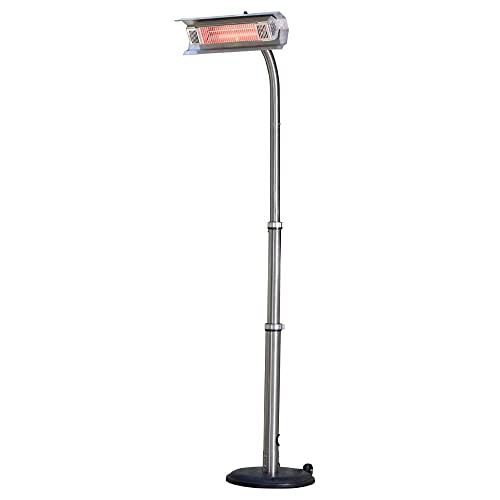
Fire Sense 02117 Offset Pole Electric Infrared Patio Heater
$210.00A 1500 W telescoping offset infrared heater that adjusts from 72 to 93 inches tall, puts out what Fire Sense calls a 9 foot blanket of heat and has tip-over protection. It needs a dedicated 15 amp circuit.
Best for: plug-in heat with no propane
Check price on AmazonExpert pick: flame ambiance or permanent infrared
You want a heater that is also a design feature, or permanent heat for a covered outdoor room.

Hiland HLDS01-CGTHG Quartz Glass Tube Pyramid Patio Heater
$424.99A 94 inch commercial-grade pyramid heater with a one-piece quartz glass flame tube, 40,000 BTU, thermocouple and anti-tilt devices and CSA approval. The dancing flame is the point.
Best for: visible flame ambiance with real heat
Check price on Amazon
Bromic Tungsten Smart-Heat 4000W Electric Patio Heater
$693.70A dual-element 4000 W stainless infrared heater rated for 130 sq ft, wall or ceiling mounted, IPX4 rated and compatible with smart dimming controls.
Best for: high-end covered outdoor rooms
Check price on AmazonWho should not buy this tier: Skip the pyramid heater if heat is the priority: its 40,000 BTU flame tube looks dramatic but is less output than a cheaper 48,000 BTU tower and it is more top-heavy in wind. Skip the Bromic if your patio is uncovered, you lack a 240V circuit, or you would not hire a licensed electrician to wire it: a propane tower heats an open patio better for far less.
How do the patio heaters compare on specs?
| Model | Price | Output | Power | Heat radius | Heat area | Mount | Tank size |
|---|---|---|---|---|---|---|---|
| Fire Sense 61130 Standing Propane Patio Heater, 48,000 BTU | $131.24 | 48,000 BTU | - | 9 ft | - | freestanding | 20 lb |
| Amazon Basics 46,000 BTU Propane Patio Heater with Wheels | $162.74 | 46,000 BTU | - | 9 ft | - | freestanding | 20 lb |
| Cuisinart Portable Tabletop Patio Heater, 11,000 BTU | $149.99 | 11,000 BTU | - | - | 30 sq ft | tabletop | - |
| Hiland HLDS01-SSHST 48,000 BTU Patio Heater with Wheels and Table | $238.99 | 48,000 BTU | - | - | - | freestanding | - |
| Fire Sense 02117 Offset Pole Electric Infrared Patio Heater | $210.00 | - | 1,500 W | - | - | freestanding | - |
| Hiland HLDS01-CGTHG Quartz Glass Tube Pyramid Patio Heater | $424.99 | 40,000 BTU | - | - | - | freestanding | - |
| Bromic Tungsten Smart-Heat 4000W Electric Patio Heater | $693.70 | - | 4,000 W | - | 130 sq ft | wall | - |
Should I get a patio heater or a fire pit?
A patio heater gives directed, controllable warmth for dining and conversation, with no smoke, sparks or ash, and it works where open fires are banned. A fire pit gives a gathering point and ambiance, but its heat is uneven and depends on wind and fuel. Many patios use both: a heater near the dining table, a fire pit in the lounge area. See patio heater vs fire pit and best fire pits, then finish the space with patio furniture sets and the intermediate patio evening setup.
How we chose
We did not test these products in person. Picks are researched from manufacturer specifications and owner manuals, engine and safety certifications where they apply, warranty terms, public recall records, and the recurring themes in verified owner reviews. We favor established brands with large review counts and parts support, match each pick to a real yard size or task, and place it in the tier where its price and capability actually belong.
Frequently asked questions
How many BTUs do I need for a patio heater?
For an open patio in calm air, one 46,000 to 48,000 BTU propane tower covers about an 18 foot circle, roughly 250 sq ft, per manufacturer ratings. Double the heaters for a 400 sq ft patio, and add capacity for wind or very cold nights. A small bistro table is warmed by an 11,000 BTU tabletop heater. The patio heater BTU calculator adjusts for size, temperature and wind.
Do patio heaters work in wind?
Poorly. Propane tower heaters radiate heat downward from a reflector, and wind carries much of the warm air and flame heat away, shrinking the comfortable zone well below the rated diameter. Strong wind can also tip tall heaters. Electric infrared heaters are affected less because they warm people and objects directly, but a windbreak, wall or screen helps any heater more than extra BTU.
Can I use a propane patio heater under a covered patio?
Usually not. Most propane tower heaters are outdoor-only and their manuals specify minimum clearance to ceilings and overhead materials, and they produce carbon monoxide that can collect under a roof. Only use one under a cover if the manual allows that exact situation with its stated clearances and ventilation. For covered patios, a wall or ceiling mounted electric infrared heater is the safer choice.
How long does a 20 lb tank last in a patio heater?
A 20 lb tank holds about 430,000 BTU. A 48,000 BTU tower on high runs about 9 hours and a 46,000 BTU tower about 9.3 hours. On a low setting of roughly half output, expect 18 hours or more. An 11,000 BTU tabletop heater runs about 39 hours on a 20 lb tank, but only about 2 hours on a 1 lb cylinder.
Is it cheaper to run an electric or propane patio heater?
Electric is usually cheaper per hour. At an assumed $0.17 per kWh, a 1500 W heater costs about $0.26 an hour and a 4000 W heater about $0.68. At an assumed $3.50 per gallon, a 48,000 BTU propane tower burns about half a gallon an hour, around $1.84. Propane heats a larger open area, so compare cost per useful hour of warmth, not just the meter.
Are patio heaters safe on a wood deck?
Many are used safely on decks when the manual allows it. Set the heater on a level, stable spot, keep its stated clearances from railings, walls and anything overhead, weight or anchor the base as directed and do not use it in strong wind. Use models with tilt shutoff valves, keep the propane tank inside the base, and never leave a running heater unattended.
Researched, not professional advice. This page is compiled from published specifications, manuals, labels and owner-review consensus, not hands-on testing. Follow the manufacturer's instructions and product label, and consult a qualified professional where safety, chemicals, fuel or structures are involved. As an Amazon Associate we earn from qualifying purchases.