Lawn Care
Best Lawn Aerators: Core vs Spike and Tow-Behind Picks (2026)
Quick answer
The best lawn aerator for a riding-mower owner is the Brinly PA-42BH-A, a 42 inch tow-behind that pulls plugs up to 3 inches deep. Choose a core (plug) aerator over a spike aerator: turf research favors removing cores, and spikes add little. For small patches, use a manual coring tool.
Core aeration pulls finger-sized plugs of soil out of the lawn, which opens space for air, water and roots and relieves compaction. Spike aeration only pokes holes, and in clay it can press the soil around each hole even tighter. University extension guidance consistently recommends core aeration, so every serious pick below pulls plugs.
If you own a lawn tractor or zero-turn, a tow-behind plug aerator such as the Brinly PA-42BH-A ($379.00) or the Agri-Fab 48 in pays for itself against a few years of rentals. Without a rider, rent a walk-behind core aerator for the whole lawn and keep a Yard Butler coring tool for paths and dog runs. The how to aerate a lawn guide covers timing and technique.
On this page
- Core aerator vs spike aerator: which one actually works?
- When should I aerate my lawn?
- Beginner pick: a manual core tool plus a weekend rental
- Intermediate picks: a 48 inch tow plug aerator or a combo that seeds as it goes
- Expert pick: a sectioned spoon aerator for uneven yards and zero-turns
- How do the aerator picks compare on specs?
- Are tow-behind plug aerators as good as a rental core aerator?
- What should I do right after aerating?
- Can I aerate, overseed and fertilize with one machine?
Core aerator vs spike aerator: which one actually works?
A core aerator works; a spike aerator mostly does not. Core aerators use hollow tines or spoons that remove plugs 2 to 3 inches long and leave them on the surface to break down. Removing soil is what relieves compaction. Spike aerators push a solid tine into the ground and pull it back out, which leaves a hole but moves no soil, and on heavy clay the tine can compact the walls of the hole. That is why turf researchers and extension services recommend core aeration and treat spiking as, at best, a light-duty step before seeding.
The Yard Butler spike tool and the spike tines on the Brinly combination aerator spreader still have a use: they open the surface so seed and water get into the soil. Just do not expect them to fix a hard, compacted lawn. The full comparison is on core vs spike aerator.
| Factor | Core (plug) aerator | Spike aerator |
|---|---|---|
| What it does | Removes 2 to 3 in soil plugs | Pokes a hole, removes no soil |
| Relieves compaction | Yes, the recommended method | Little; can compact clay around holes |
| Helps thatch | Yes, cores mix soil into thatch | Minimal |
| Seed-to-soil contact | Good, seed falls into holes | Fair |
| Example | Brinly PA-42BH-A, Agri-Fab 48 in | Yard Butler IM-7C, Brinly combo |
| Best use | Compacted or high-traffic lawns | Opening soil before seeding a small area |
When should I aerate my lawn?
Aerate when your grass is growing strongly so it fills the holes quickly. For cool-season grasses (tall fescue, Kentucky bluegrass, perennial ryegrass, fine fescue), that is late summer to early fall, which is also the best window to overseed. Spring is second best. For warm-season grasses (bermudagrass, zoysia, St. Augustine, centipede), aerate from late spring to early summer, after the lawn has fully greened up.
Soil moisture matters more than the calendar. Tines penetrate moist soil and bounce off dry, hard ground. Extension guides suggest watering about an inch a day or two before aerating, or waiting for a soaking rain. Do not aerate soggy soil, which smears, or during drought and heat stress. Most home lawns on clay or with heavy traffic benefit from aeration once a year; sandy lawns may only need it every two to three years.
| Grass | Season type | Best time to aerate | Second choice |
|---|---|---|---|
| Tall fescue | Cool | Late summer to early fall | Early spring |
| Kentucky bluegrass | Cool | Late summer to early fall | Early spring |
| Perennial ryegrass | Cool | Early fall | Spring |
| Fine fescue | Cool | Early fall | Spring, lightly |
| Bermudagrass | Warm | Late spring to early summer | Midsummer with water |
| Zoysiagrass | Warm | Late spring to early summer | Midsummer |
| St. Augustinegrass | Warm | Late spring to early summer | Midsummer |
| Centipedegrass | Warm | Late spring to early summer | Skip if not compacted |
Beginner pick: a manual core tool plus a weekend rental
For lawns under about a quarter acre with no riding mower, owning a large aerator rarely makes sense. Rent a walk-behind core aerator once a year, and keep a manual tool for spots that compact between rentals.

Yard Butler ID-6C Manual Lawn Coring Aerator
$48.95A long-handled powder-coated steel step tool that pulls two plugs per push, with a foot bar for leverage. It is slow for a whole lawn but exactly right for a worn path, a dog run or the strip beside a driveway where cars and feet pack the soil.
Best for: spot-aerating compacted patches
Check price on AmazonIntermediate picks: a 48 inch tow plug aerator or a combo that seeds as it goes
If you own a lawn tractor and have half an acre or more, a tow-behind plug aerator costs roughly what several rentals do and is ready when the soil is right.
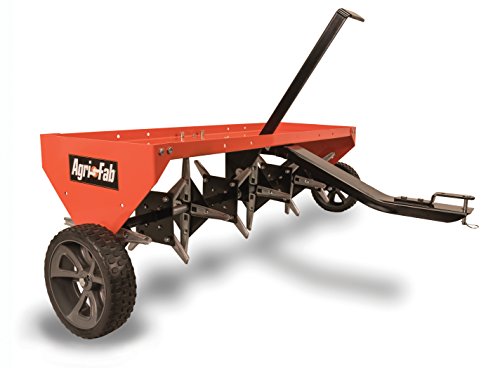
Agri-Fab 48 in Tow-Behind Plug Aerator
$319.98Thirty-two galvanized self-sharpening knives pull plugs up to 3 inches deep across a 48 inch path, with a weight tray for up to 175 lb, flat-free tires and a transport handle you can reach from the seat. The wide path makes it faster than the Brinly on open ground.
Best for: open, fairly flat acre lots
Check price on Amazon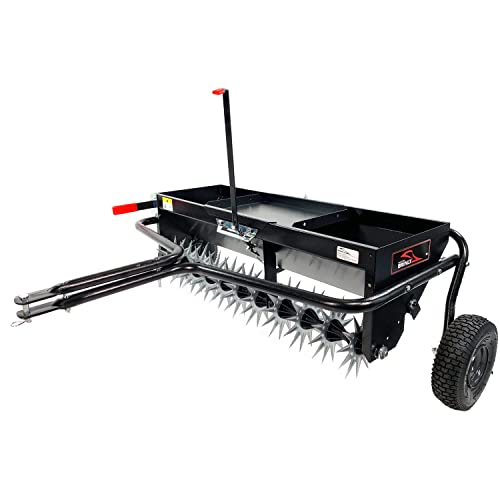
Brinly 40 in Tow-Behind Combination Aerator Spreader
$384.00Steel star tines perforate up to 2 inches while a 100 lb steel hopper drops seed, fertilizer or lime into the holes. It is a spike design and does not pull cores, so buy it for overseeding and liming in one pass, not to fix hard compaction.
Best for: overseeding loose to moderate soil
Check price on AmazonExpert pick: a sectioned spoon aerator for uneven yards and zero-turns
For owners who aerate every year on bumpy or sloped ground, independent tine sections keep the spoons in the soil and reduce the tearing that one-piece shafts cause on turns.

Brinly PA-42BH-A 42 in Tow-Behind Plug Aerator
$379.00Narrow, sharpened 16-gauge heat-treated spoons need less weight to penetrate, three independently rotating sections follow uneven ground, and 10 inch semi-pneumatic transport tires cross driveways. The folding tow bar stores flat in a shed.
Best for: aerating uneven yards with a rider or ZTR
Check price on Amazon
Brinly 485 lb Tow-Behind Poly Lawn Roller, 18 x 48 in
$299.00A 48 inch poly drum that holds up to 54 gallons of water or sand. Use it lightly after overseeding to press seed into loose soil, or to smooth frost heave and mole ridges; never roll wet clay, which undoes the aeration.
Best for: firming seed and sod on large areas
Check price on AmazonWho should not buy this tier: Skip tow-behind aerators if you do not own a lawn tractor or zero-turn with a hitch, if your lawn is under a quarter acre, or if your yard has steep slopes, many trees with surface roots, or shallow irrigation lines and dog fence wire that spoons can snag. Sandy soil that is not compacted rarely needs yearly aeration, and a heavy roller is the wrong tool for clay lawns, where it adds compaction.
How do the aerator picks compare on specs?
| Model | Price | Type | Width | Tow-behind |
|---|---|---|---|---|
| Brinly PA-42BH-A 42 in Tow-Behind Plug Aerator | $379.00 | tow behind plug | 42 in | Yes |
| Agri-Fab 48 in Tow-Behind Plug Aerator | $319.98 | tow behind plug | 48 in | Yes |
| Brinly 40 in Tow-Behind Combination Aerator Spreader | $384.00 | tow behind spike with spreader | 40 in | Yes |
| Yard Butler ID-6C Manual Lawn Coring Aerator | $48.95 | manual core | - | No |
 Yard Butler IM-7C Spike Grass Aerator Yard Butler IM-7C Spike Grass Aerator | $48.95 | manual spike | - | No |
Are tow-behind plug aerators as good as a rental core aerator?
Not pass for pass. A walk-behind rental core aerator with a crankshaft or drum drives hollow tines straight down and pulls many cores per square foot. Tow-behind spoon aerators rely on weight and rolling, so they pull fewer and sometimes shallower plugs per pass, especially on dry or hard soil. Extension services often cite a target of roughly 20 to 40 holes per square foot for effective aeration. Owners of tow-behinds commonly close that gap by making two or three passes in different directions, loading the weight tray fully and aerating when the soil is moist.
The payoff is convenience: no truck to haul a 200 lb rental, no rental deadline, and the freedom to aerate when the soil is right instead of when the shop has a machine. For an acre lot, that trade usually favors owning.
What should I do right after aerating?
- Leave the cores. Let soil plugs dry and break down on the surface over one to two weeks; mowing over them speeds it up.
- Overseed thin areas. Aeration holes give seed good soil contact. Use about half the new-lawn rate for your grass type from the grass seed rate chart.
- Feed at the label rate. Apply a starter or regular fertilizer at the rate on the bag with a calibrated spreader, keeping granules off pavement.
- Water lightly and often if you seeded. Keep the top half inch of soil moist until seedlings establish, then move to deeper, less frequent watering.
- Hold off on pre-emergent. Most pre-emergent herbicides stop grass seed from germinating, so do not apply them over new seed unless the label allows it.
Can I aerate, overseed and fertilize with one machine?
The Brinly 40 in combination aerator spreader ($384.00) drops seed, fertilizer or lime from a 100 lb steel hopper while its star tines open the soil, so material lands in the holes. It is a real time saver on soil that is not badly compacted. On hard clay, the better sequence is a core aeration pass first, then a separate spreader pass with a tow-behind like the ones in our best lawn spreaders roundup, then a light pass with a roller if the seedbed is loose.
If thatch is thicker than half an inch, deal with that first; the dethatcher vs aerator comparison explains which job comes first, and the best dethatchers page covers the tools.
How we chose
We did not test these products in person. Picks are researched from manufacturer specifications and owner manuals, engine and safety certifications where they apply, warranty terms, public recall records, and the recurring themes in verified owner reviews. We favor established brands with large review counts and parts support, match each pick to a real yard size or task, and place it in the tier where its price and capability actually belong.
Frequently asked questions
Is core aeration better than spike aeration?
Yes. Core aerators remove plugs of soil, which relieves compaction and helps break down thatch. Spike aerators only push holes into the ground and can press clay soil tighter around each hole. University extension services recommend core aeration for compacted lawns. Spike tools are useful only for lightly opening the surface before seeding small areas, and they add little on hard, high-traffic lawns.
How deep should a lawn aerator go?
Aim for cores about 2 to 3 inches long. The Brinly PA-42BH-A and Agri-Fab 48 in tow aerators both list plugs up to 3 inches. Depth depends on soil moisture and weight, so water about an inch a day or two before, fill the weight tray, and make a second pass in a different direction if the plugs come up short on hard ground.
Do tow-behind aerators work?
Tow-behind plug aerators do work when the soil is moist and the weight tray is loaded, though they usually pull fewer cores per pass than a walk-behind rental core aerator. Owners commonly make two or three passes in different directions to reach a good hole density. They are most worthwhile for half-acre and larger lawns where renting and hauling a heavy machine every year gets expensive and inconvenient.
How often should I aerate my lawn?
Most lawns on clay soil or with heavy foot traffic benefit from core aeration once a year. Sandy soils and lightly used lawns may need it only every two to three years. Aerate when grass is actively growing: late summer to early fall for cool-season grass, and late spring to early summer for warm-season grass, so the turf recovers quickly and fills in the holes.
Should I aerate before or after overseeding?
Aerate first, then overseed. The holes and broken-up soil from the cores give seed the soil contact it needs to germinate. Spread seed at about half the new-lawn rate for your grass type, add a starter fertilizer at the label rate, and keep the soil surface moist until the seedlings are established. Avoid pre-emergent herbicides that would stop the new seed from sprouting.
Can I aerate with a zero-turn mower?
Many tow-behind aerators include a universal hitch pin that fits most zero-turn mowers, and Brinly says its sectioned plug aerator works on turns with riders and ZTRs. Check that your zero-turn has a hitch point and that the manual allows towing attachments of that weight. Zero-turns lose traction on slopes, so keep tow work to flat and gently sloped ground.
Researched, not professional advice. This page is compiled from published specifications, manuals, labels and owner-review consensus, not hands-on testing. Follow the manufacturer's instructions and product label, and consult a qualified professional where safety, chemicals, fuel or structures are involved. As an Amazon Associate we earn from qualifying purchases.