Snow Removal
EGO vs Ryobi Snow Blower: 21-Inch EGO or 18-Inch Ryobi 40V
Quick answer
At current Amazon prices, the EGO SNT2122 is the better snow blower: 3 inches wider, a 13-inch intake, a 42-foot throw and two batteries for less money. The RYOBI RY40890VNM makes sense only if you already run RYOBI 40V yard tools and have a short driveway and walks.

EGO Power+ SNT2122 21 in. Single-Stage Snow Blower Kit
$699.0021-inch path, 13-inch intake, two batteries.
Best for: first-time cordless buyers with a standard two-car driveway
Check price on Amazon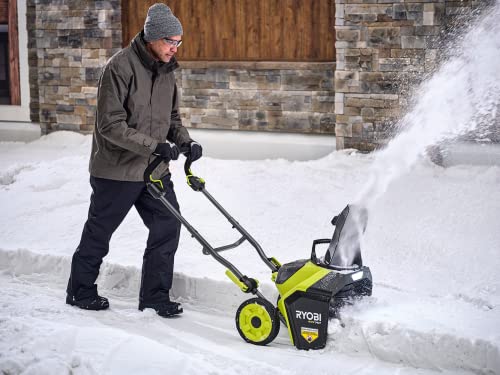
RYOBI 40V HP Brushless 18 in. Single-Stage Snow Blower Kit (RY40890VNM)
$902.4418-inch path, one 40V 6.0Ah battery.
Best for: RYOBI 40V tool owners with a short driveway and walks
Check price on AmazonThis is a lopsided matchup on paper. The EGO kit lists at $699.00 with a 21-inch path, 13-inch intake, 42-foot throw and two 4.0Ah batteries. The RYOBI 40V HP 18-inch kit lists at $902.44 with one 6.0Ah battery and a charger. The Amazon listing for the RYOBI carries very few published specs beyond width and battery, which is itself useful information when you are spending that much.
RYOBI tools are sold mainly through Home Depot in the US, so the price there can differ from the Amazon listing, and that can change the math. The honest case for the RYOBI is platform loyalty: its battery also runs the rest of the RYOBI 40V line. Drawn from published specifications and owner reports, rather than side-by-side testing.
On this page
- How do the EGO and Ryobi snow blowers compare?
- Should I buy the EGO or Ryobi snow blower?
- Is an 18-inch snow blower big enough?
- Does the battery platform matter more than the snow blower?
- What do owners commonly report about small cordless snow blowers?
- What other cordless snow blowers compete with these two?
How do the EGO and Ryobi snow blowers compare?
| EGO SNT2122 | RYOBI RY40890VNM | |
|---|---|---|
| Amazon price | $699.00 | $902.44 |
| Type | Single-stage, paved only | Single-stage, paved only |
| Clearing width | 21 in | 18 in |
| Intake height | 13 in | Not listed; check the RYOBI manual |
| Maker-rated throw | 42 ft | Not listed |
| Battery system | 56V ARC Lithium | 40V HP brushless |
| Batteries in the kit | Two 4.0Ah | One 6.0Ah |
| Published runtime | 10-car driveway of 8 in snow | Not listed |
| Warranty in listing | 5-year tool, 3-year battery | Not listed; check RYOBI terms |
| 2-car driveway, 22 x 30 ft, moderate snow | 15 passes, about 9 min | 18 passes, about 11 min |
The RYOBI Amazon listing publishes width, voltage and battery only. Clearing times assume 15 percent overlap and a steady walking pace.
Should I buy the EGO or Ryobi snow blower?
Choose EGO if:
- You have no battery platform yet, or you are willing to start one.
- Your driveway is a full two-car size or larger.
- You want published intake, throw, runtime and warranty figures before paying several hundred dollars.
- You may want a two-stage later, such as the EGO SNT2405, on the same batteries.
Choose RYOBI if:
- You already own several RYOBI 40V tools and batteries.
- You clear a one-car driveway, a walk and steps where 18 inches is plenty.
- You find it at a lower price in store, which narrows the value gap.
- You want to look at other RYOBI 40V HP snow blowers, which may fit your driveway better than the 18-inch kit.
Is an 18-inch snow blower big enough?
For a one-car driveway, yes. A 12 by 30-foot driveway takes about 10 passes and 5 minutes of light snow with an 18-inch path, against 9 passes with 21 inches. The difference is trivial. A 4-foot sidewalk takes 4 passes either way. On a 22 by 30-foot two-car driveway, 18 inches means 18 passes and about 11 minutes versus 15 passes and 9 minutes, still manageable.
Width is rarely the real limit on an 18-inch machine. Intake height is. Most 18-inch single-stage models open about 10 to 10.5 inches tall, like the Snow Joe 24V-X2-SB18 and Poulan Pro 18. If storms regularly bring more than 6 to 8 inches, you will be taking half-width bites or double passes. Check the 1-car driveway sizing page to confirm.
Does the battery platform matter more than the snow blower?
For many buyers, yes. Batteries are the most expensive part of any cordless tool, and a snow blower sits unused for most of the year. If the same pack runs your mower, string trimmer and leaf blower, you get far more use out of it. That is the strongest argument for the RYOBI: a RYOBI 40V household adds a snow blower without adding a new charger and battery family.
The counterargument is capacity. A 40V platform designed around handheld tools delivers less energy per pack than the large 56V EGO packs used in two-stage machines, which is why EGO's two-stage line exists on its platform. If your snow needs may grow, or you have gravel, pick the platform that has a two-stage in it. The battery tool platform guide lays out each brand's range.
What do owners commonly report about small cordless snow blowers?
Owner feedback on 18 to 21-inch battery machines tends to follow the same pattern regardless of brand. People like how quietly and instantly they start, how easily they lift onto a porch, and not having gas in the garage. The common complaints are runtime in wet snow, snow blowing back in wind, and the machine riding up on packed snow at the curb. Anyone expecting a cordless single-stage to replace a two-stage on a long or gravel driveway is usually disappointed.
What other cordless snow blowers compete with these two?
EGO Power+ SNT2122 21 in. Single-Stage Snow Blower Kit
$699.00Two 4.0Ah batteries, a 21-inch steel auger, 42-foot throw and a 5-year tool warranty at a lower Amazon price than the RYOBI kit.
Best for: two-car paved driveways
Check price on Amazon RYOBI 40V HP Brushless 18 in. Single-Stage Snow Blower Kit (RY40890VNM)
$902.44An 18-inch single-stage on RYOBI 40V HP brushless power, sold with a 6.0Ah battery that runs the rest of the 40V line.
Best for: short driveways in RYOBI households
Check price on Amazon
Snow Joe 24V-X2-SB18 48V Cordless Snow Blower Kit
$549.99An 18-inch path with a 10-inch intake and two 24V 4Ah batteries, plus a cover and scraper, for walks and short drives in light snow.
Best for: walkways and patios
Check price on AmazonHow we chose
We did not test these products in person. Picks are researched from manufacturer specifications and owner manuals, engine and safety certifications where they apply, warranty terms, public recall records, and the recurring themes in verified owner reviews. We favor established brands with large review counts and parts support, match each pick to a real yard size or task, and place it in the tier where its price and capability actually belong.
Frequently asked questions
Is RYOBI or EGO better for snow blowers?
At current Amazon prices, EGO is the better snow blower buy. The EGO SNT2122 costs less than the RYOBI RY40890VNM kit, clears a 21-inch path instead of 18 inches, lists a 13-inch intake and 42-foot throw, and includes two batteries with a 5-year tool warranty. RYOBI makes sense for existing RYOBI 40V owners with short driveways, especially if a store price is lower.
Can I use my RYOBI 40V mower battery in the RYOBI snow blower?
The RYOBI RY40890VNM runs on RYOBI 40V batteries, and RYOBI designs its 40V line so batteries are shared across tools. Check the snow blower manual for any recommended minimum battery capacity, because a small pack will run out quickly in snow. Charge and store the battery indoors, and install it just before you start, since cold batteries deliver noticeably less runtime.
How long does it take to clear a driveway with an 18-inch snow blower?
A 12 by 30-foot one-car driveway takes about 10 passes and 5 minutes of light snow with an 18-inch path. A 22 by 30-foot two-car driveway takes about 18 passes and 11 minutes of moderate snow, compared with 15 passes and 9 minutes at 21 inches. Those times assume 15 percent overlap and a steady walking pace, and deep or wet snow slows everything down.
Does RYOBI make a two-stage snow blower?
The only RYOBI snow blower in our verified catalog is the 18-inch single-stage RY40890VNM. RYOBI's range changes by season and retailer, so search current listings for larger models and compare intake height, drive type and runtime rating against the EGO SNT2405, which offers a 24-inch path, 20-inch intake and self-propelled drive. For gravel or heavy snow, you need a two-stage of some brand.
Is an EGO snow blower worth the money?
For paved driveways and owners who want to avoid gas, the EGO SNT2122 is good value: it costs less than the RYOBI kit and about the same as the Greenworks Pro 60V kit while listing a 42-foot throw, 10-car runtime rating and 5-year tool warranty. It is not worth it on gravel or where plow berms and foot-deep storms are common. In those conditions, a two-stage such as the EGO SNT2405 or a gas two-stage is the right tool.
Researched, not professional advice. This page is compiled from published specifications, manuals, labels and owner-review consensus, not hands-on testing. Follow the manufacturer's instructions and product label, and consult a qualified professional where safety, chemicals, fuel or structures are involved. As an Amazon Associate we earn from qualifying purchases.