Watering and Irrigation
Hybrid vs Rubber Garden Hose: Which Lasts and Handles Better?
Quick answer
Buy a hybrid polymer hose like the 50 ft Flexzilla for everyday watering: it is lighter, lays flat without memory and costs less. Buy rubber like the Dramm ColorStorm if you need hot water, rough use or a hose that coils easily in cold weather and lasts for years. For long runs to sprinklers, choose 3/4 in over 5/8 in.
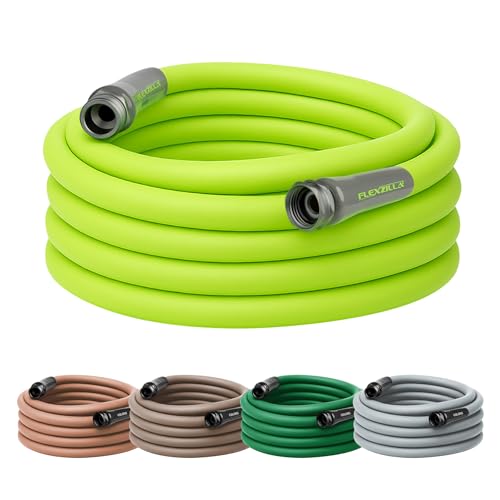
Flexzilla Garden Hose, 5/8 in x 50 ft
$39.97A lightweight hybrid polymer hose that lays flat with no memory.
Best for: everyday watering near the house
Check price on Amazon
Dramm ColorStorm Premium Rubber Garden Hose, 5/8 in x 50 ft
$79.99A made-in-USA rubber hose rated for hot water to 160 F with a lifetime guarantee.
Best for: people who want rubber that lasts
Check price on AmazonA rubber garden hose is made mostly of rubber compounds: heavy, durable, tolerant of heat and flexible in cold weather. A hybrid hose blends polymer materials to get much of rubber's flexibility at lower weight and cost. Vinyl hoses, the cheapest type, are light but stiff in cold and prone to kinking, and lightweight woven hoses such as zero-G are a fourth option that trades bulk for a non-expanding design.
For most people watering beds and running a sprinkler near the house, a hybrid like the Flexzilla 5/8 in x 50 ft ($39.97) is the better daily hose. Rubber like the Dramm ColorStorm ($79.99) makes sense for hot water at a utility sink, heavy dragging across concrete or a hose that stays out all season. If you are feeding a sprinkler far from the spigot, diameter matters more than material; check the hose pressure loss calculator.
On this page
- How does a hybrid hose compare with a rubber hose?
- Which should you choose, hybrid or rubber?
- Does hose diameter matter more than material?
- What about vinyl and lightweight woven hoses?
- Which hose lasts longer, and what does each cost over 5 years?
- What do owners commonly report?
- Garden hoses worth considering
How does a hybrid hose compare with a rubber hose?
| Factor | Hybrid: {{p:flexzilla-5-8-x-50|Flexzilla}} | Rubber: {{p:dramm-colorstorm-5-8-x-50|Dramm ColorStorm}} |
|---|---|---|
| Material | Hybrid polymer | Premium rubber |
| Weight | Lighter than traditional hoses | Heavier, typical of rubber |
| Flexibility and memory | Lays flat with zero memory | Flexible; coils easily |
| Kinking | Won't kink under pressure (Flexzilla) | Resists kinking (Dramm) |
| Cold weather | Marketed as all-weather | Coils easily even in cold weather |
| Hot water | Check the listing | Rated to 160 F |
| Fittings | Crush-resistant anodized aluminum with O-ring | Crush-proof nickel-plated |
| Abrasion | Abrasion-resistant outer cover | Heavy-duty rubber |
| Guarantee | Check the listing | Lifetime guarantee |
| Made in | See listing | USA |
| Catalog price | $39.97 | $79.99 |
Claims from Flexzilla and Dramm listings; neither lists a hose weight in its catalog entry.
Which should you choose, hybrid or rubber?
Choose a hybrid hose if:
- You carry or drag the hose around the yard often and want less weight.
- You hate a hose that coils back on itself or kinks around corners.
- You want good quality at a moderate price.
- You store it on a reel or cart, where a flat-laying, flexible hose winds easily.
Choose a rubber hose if:
- You run hot water, for example from a utility sink, to wash equipment.
- You drag hoses over concrete, gravel and sharp edges.
- You water in cold weather and want a hose that stays soft.
- You prefer paying more once for a hose with a lifetime guarantee.
Does hose diameter matter more than material?
For sprinklers, yes. A wider bore carries more water with less pressure loss, and the loss grows with length. Flexzilla says its 3/4 in x 100 ft ($89.00) carries more flow to impact and traveling sprinklers than a 5/8 in hose. If you run a Nelson Rain Train, which follows up to 200 ft of hose, or an impact sprinkler at the far end of the lawn, a 3/4 in hose often makes the difference between full coverage and a weak spray. For hand watering and short runs, 5/8 in is lighter and plenty. The hose pressure loss calculator shows the effect for your length.
What about vinyl and lightweight woven hoses?
Heavy-duty vinyl is a value option that has improved: the Gilmour Flexogen ($55.99) is an 8-layer, made-in-USA hose rated to 500 psi with brass couplings. The Gilmour Pro Commercial blends rubber and vinyl, with a 400 psi burst strength and a steel spring guard at the spigot. The zero-G 5/8 in x 100 ft is a woven, non-expanding design that zero-G says is 50 percent lighter than commercial vinyl, drinking-water safe and lead free, with a 600 psi plus burst rating; it lists a maximum feed water temperature of 80 F, so it is not for hot water.
Which hose lasts longer, and what does each cost over 5 years?
Rubber usually lasts longest, which is why Dramm backs its ColorStorm with a lifetime guarantee. Hybrid hoses last many seasons when stored out of the sun and drained before freezing. Most early hose failures are at the couplings or from UV exposure and freeze damage, not the hose body, so storage matters as much as material. Over five years a well-stored hybrid often costs less in total than one rubber hose, while a cheap vinyl hose may need replacing more than once. A reel such as the Suncast metal hose cart or wall-mounted Ames NeverLeak AutoWinder protects any hose; see the best hose reels.
What do owners commonly report?
Flexzilla owners commonly praise how light and flexible it is and how easily it winds on a reel; the recurring complaints are occasional kinks when pulled sharply around corners and wear on the outer cover with heavy dragging. Rubber hose owners, including Dramm buyers, praise durability, easy coiling in cool weather and solid couplings, and the main complaints are weight and price. Across all types, owners most often replace the washer or O-ring at the spigot to fix leaks, a cheap repair worth trying first.
Garden hoses worth considering
See the full best garden hoses roundup.
Flexzilla Garden Hose, 5/8 in x 50 ft
$39.97A lightweight hybrid polymer hose that lays flat with no memory, with crush-resistant anodized aluminum fittings and an abrasion-resistant cover.
Best for: everyday watering near the house
Check price on Amazon Dramm ColorStorm Premium Rubber Garden Hose, 5/8 in x 50 ft
$79.99A made-in-USA rubber hose rated for hot water to 160 F that coils easily in cold weather, with nickel-plated couplings and a lifetime guarantee.
Best for: hot water and hard use
Check price on Amazon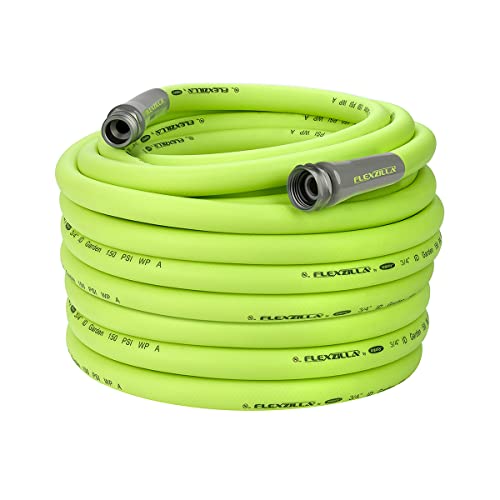
Flexzilla Garden Hose, 3/4 in x 100 ft
$89.00The same flexible hybrid polymer in a 3/4 in bore, which carries more flow over 100 ft to impact and traveling sprinklers.
Best for: long runs to a sprinkler
Check price on Amazon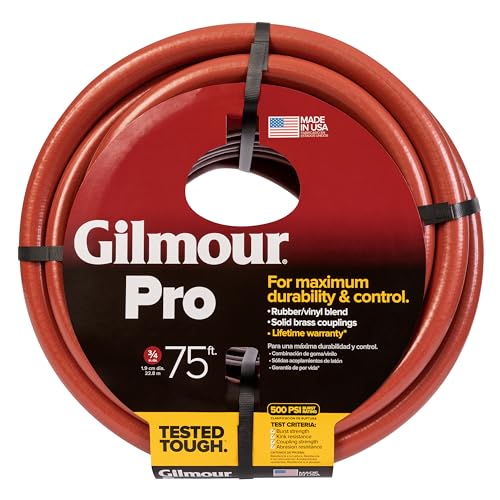
Gilmour Pro Commercial Heavy Duty Hose, 3/4 in x 75 ft
$72.59A double-reinforced rubber and vinyl hose with 400 psi burst strength, brass couplings and a steel spring guard, made in the USA.
Best for: high-flow sprinklers and rough use
Check price on AmazonHow we chose
We did not test these products in person. Picks are researched from manufacturer specifications and owner manuals, engine and safety certifications where they apply, warranty terms, public recall records, and the recurring themes in verified owner reviews. We favor established brands with large review counts and parts support, match each pick to a real yard size or task, and place it in the tier where its price and capability actually belong.
Frequently asked questions
Is a rubber hose better than a hybrid hose?
Rubber is more durable, handles hot water and stays flexible in cold weather, so it is better for hard use. Hybrid hoses are lighter, lay flat and cost less, so they are better for everyday watering. The Dramm ColorStorm rubber hose is rated to 160 F with a lifetime guarantee; the Flexzilla hybrid is the easier hose to drag around the yard.
Are hybrid hoses safe for drinking water?
Only if the specific hose is labeled drinking-water safe or lead free; material type alone does not tell you. Many garden hoses are not intended for drinking. The zero-G 5/8 in x 100 ft is listed as drinking-water safe and lead free. For filling a pet bowl or an RV tank, buy a hose labeled for potable water and let it run briefly before use.
Do rubber hoses kink?
Less than vinyl. Rubber is thick and flexible, so it tends to bend rather than fold, and Dramm says its ColorStorm resists kinking. Any hose can kink if pulled sharply around a corner or left twisted on the ground. Uncoil a new hose fully in the sun before first use, store it on a reel, and use a spring guard at the spigot, as on the Gilmour Pro Commercial.
What diameter garden hose should I buy?
Choose 5/8 in for hand watering, washing and sprinklers within about 50 ft of the spigot; it is lighter and cheaper. Choose 3/4 in for long runs or high-flow sprinklers such as impact heads and traveling sprinklers, because the wider bore delivers more flow and pressure at the end. Flexzilla, for example, sells its hybrid in a 3/4 in x 100 ft version for that reason.
How long do garden hoses last?
It depends more on care than material. A quality rubber or hybrid hose can last many seasons if it is kept out of direct sun, drained before freezing and stored on a reel. Cheap vinyl hoses often crack or kink within a few seasons. Leaks at the connection are usually a worn washer or O-ring, which is inexpensive to replace before you give up on the hose.
Researched, not professional advice. This page is compiled from published specifications, manuals, labels and owner-review consensus, not hands-on testing. Follow the manufacturer's instructions and product label, and consult a qualified professional where safety, chemicals, fuel or structures are involved. As an Amazon Associate we earn from qualifying purchases.