Watering and Irrigation
Soaker Hose vs Drip Irrigation: Which Is Better for Beds?
Quick answer
A soaker hose is the cheap, fast way to water a straight bed or hedge row: it weeps along its whole length. Drip irrigation costs more and takes an afternoon to set up, but it delivers set gallons per hour to each plant, stays even on long runs and slopes, and lasts longer. Choose drip for anything permanent.
A soaker hose is a porous hose that seeps water through its walls along the entire length. A drip system uses solid tubing with emitters placed at each plant, each rated in gallons per hour (GPH). Both put water at soil level, so both waste far less than sprinklers. The difference is control: a soaker hose waters a continuous strip, more heavily where pressure is higher, while drip waters exact points at a known rate.
That makes a soaker hose a good fit for a dense row of shrubs, a hedge or a flower border you can snake a hose through, especially as a seasonal fix. Drip suits spaced plants, new trees, slopes and anything you want to automate for years. A kit like the Raindrip SDFSTH1P ($71.99) includes a timer and pressure regulator. For vegetable beds, see GreenhouseSetup.
On this page
- How does a soaker hose compare with drip irrigation?
- Which should you choose, a soaker hose or drip?
- Soaker hose vs irrigation system: which is better for beds?
- How long should you run a soaker hose or drip system?
- How do you set up a simple soaker hose or drip line?
- What does each cost over 5 years?
- What do owners commonly report?
- Drip kits and timers worth considering
How does a soaker hose compare with drip irrigation?
| Factor | Soaker hose | Drip irrigation |
|---|---|---|
| How water comes out | Weeps through the porous wall along the whole length | Emitters at each plant; Raindrip drippers are 2 GPH |
| Evenness | Uneven on long runs and slopes; wetter near the supply or low end | Even with pressure-compensating emitters (Rain Bird kit) |
| Flow rate known | No; varies with pressure and age | Yes; gallons per hour per emitter |
| Run length | Short runs work best; follow the maker's maximum | Longer runs on 1/2 in supply tubing |
| Pressure | Low; use a pressure reducer or barely open faucet | Low; regulator included in many kits |
| Best layout | Straight rows, hedges, dense borders | Spaced shrubs, trees, containers, slopes |
| Waters between plants | Yes, the whole strip | No, only at emitters |
| Setup time | Minutes | An afternoon |
| Automation | Add a hose timer such as the Melnor AquaTimer | Timer included in the Raindrip kit |
| Typical lifespan | Owners commonly report a few seasons; sun and freezing shorten it | Poly tubing lasts longer; emitters may clog |
| Catalog price | Not in catalog; see soaker hoses | $62.83 to $71.99 per kit |
Drip specs from Rain Bird and Raindrip listings. Soaker hose run limits vary by brand; check the packaging.
Which should you choose, a soaker hose or drip?
Choose a soaker hose if:
- You need to water a hedge, a straight shrub row or a dense flower border this season.
- The run is fairly short and level.
- You want the lowest cost and a setup you can move or remove.
- You will cover it with mulch and check it by hand.
Choose drip irrigation if:
- Plants are spaced out: foundation shrubs, new trees, containers.
- The bed is on a slope or the run is long.
- You want to know exactly how many gallons each plant gets.
- You want a permanent, automated system on a timer or smart controller.
Soaker hose vs irrigation system: which is better for beds?
For a permanent landscape bed, a drip irrigation system is better. It waters each plant at a known rate, stays even along the run, can be split into zones for sun and shade, and connects to a smart controller or hose timer. Soaker hoses are a reasonable budget choice for a single hedge or border and a practical way to get new shrubs through their first dry season. Neither is right for lawns; turf needs sprinklers, as explained in drip irrigation vs sprinklers.
The biggest practical weakness of soaker hoses is that you cannot see how much water each plant receives, and output drifts as the hose ages or mineral deposits clog pores. Drip removes that guesswork.
How long should you run a soaker hose or drip system?
Drip is simple math: emitter GPH times hours. Two 2 GPH emitters running for 30 minutes give a shrub 2 gallons. Established shrubs in most climates do well with deep, infrequent watering; new plantings need more frequent water until roots establish.
A soaker hose has no rating you can trust, so test it. Run it for 30 minutes, wait an hour, then dig a small hole beside the hose and check how deep the soil is moist. Many shrubs root mostly in the top foot of soil, so adjust the time until moisture reaches the root zone, and repeat the check after a few weeks since output changes. Use a low pressure setting; a soaker hose at full faucet pressure sprays and can burst.
How do you set up a simple soaker hose or drip line?
- Add backflow protection. Fit a hose bib vacuum breaker at the faucet so fertilizer or soil water cannot siphon back into household water.
- Add a timer and regulator. Attach a hose timer, then a pressure regulator and filter; the Raindrip SDFSTH1P includes both.
- Lay the line. Snake a soaker hose close to plant stems, or run 1/2 in drip tubing along the bed and punch in emitters at each plant.
- Cover with mulch. Cover the line with 2 to 3 in of mulch to cut evaporation and sun damage, keeping mulch off stems.
- Test and adjust. Run the system, check soil moisture depth and look for dry plants, sprays or leaks before setting a schedule.
What does each cost over 5 years?
A soaker hose is the cheaper start, but owners commonly replace them every few seasons as they crack, clog or burst, and each replacement means relaying the line. A drip kit such as the Rain Bird LNDDRIPKIT ($62.83) costs more once, and then mainly needs a few replacement emitters and fittings. Add a timer either way; a 4 zone hose timer like the B-hyve XD or Rachio Smart Hose Timer can run a soaker hose and a drip line from the same spigot on separate schedules. Over five years, drip usually costs about the same or less and delivers far more control.
What do owners commonly report?
Soaker hose owners commonly praise the price and simplicity, and complain about uneven weeping, water spraying from weak spots, bursting at high pressure and hoses that clog or crack after a few seasons, particularly with hard water or when left in the sun. Drip kit owners generally praise easy three-step installs and even watering with pressure-compensating emitters, and complain about emitters popping out, fittings separating when pressure is not regulated and animals chewing tubing.
Drip kits and timers worth considering
Everything here connects to an ordinary outdoor faucet. For sprinklers and controllers see the best lawn sprinklers and best smart sprinkler controllers.

Raindrip SDFSTH1P Automatic Drip Kit with Timer
$71.99A timer, pressure regulator and filter, 50 ft of 1/2 in tubing and ten 2 GPH drippers to automate water for up to 10 shrubs or trees.
Best for: new trees and foundation shrubs
Check price on Amazon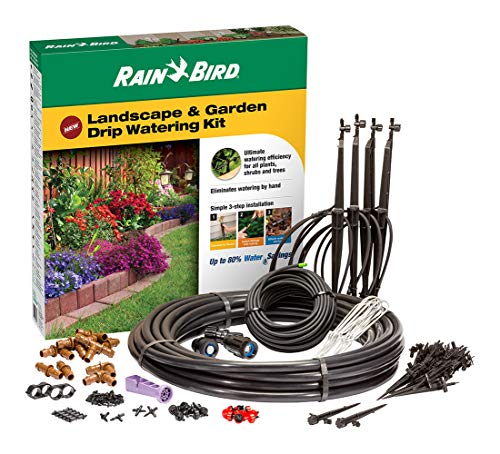
Rain Bird LNDDRIPKIT Landscape Drip Irrigation Kit
$62.83A 108-piece kit with pressure-compensating drippers, micro-bubblers and micro sprays for beds, shrubs and trees, installed in three steps.
Best for: flower beds and mixed plantings
Check price on Amazon
Melnor AquaTimer 4-Zone Programmable Digital Hose Timer
$69.99A non-WiFi 4 valve digital timer with independent schedules, 1 minute to 6 hour runs, a manual override and a 7-year limited warranty.
Best for: automating soaker hoses without an app
Check price on Amazon
Orbit B-hyve XD 4-Port Smart Hose Timer with Wi-Fi Hub
$124.05A battery-powered 4 outlet faucet timer with WeatherSense scheduling over Bluetooth or the included Wi-Fi hub.
Best for: running drip and soaker lines on weather-aware schedules
Check price on AmazonHow we chose
We did not test these products in person. Picks are researched from manufacturer specifications and owner manuals, engine and safety certifications where they apply, warranty terms, public recall records, and the recurring themes in verified owner reviews. We favor established brands with large review counts and parts support, match each pick to a real yard size or task, and place it in the tier where its price and capability actually belong.
Frequently asked questions
Is a soaker hose better than drip irrigation?
Not for most permanent beds. Drip irrigation delivers a known amount of water to each plant, stays even on long runs and slopes and lasts longer. A soaker hose is cheaper and faster to set up and works well for a short, level hedge row or dense border. For spaced shrubs, trees and automated watering, a drip kit such as the Rain Bird LNDDRIPKIT is the better choice.
How long do soaker hoses last?
Owners commonly report a few seasons, though it varies by brand and care. Sun exposure, freezing, high water pressure and mineral deposits from hard water shorten their life, causing cracks, bursts and clogged pores. Covering the hose with mulch, running it at low pressure and draining and storing it indoors before winter help it last longer. Drip tubing generally outlasts soaker hose.
Can you bury a soaker hose?
Covering a soaker hose with 2 to 3 in of mulch is recommended, because it cuts evaporation and protects the hose from sun. Burying it in soil is generally discouraged by makers, since soil particles and roots can clog the pores and you cannot see leaks or bursts. If you want a buried system, use drip tubing with emitters designed for it.
Do soaker hoses need a pressure regulator?
A pressure reducer is a good idea. Soaker hoses are designed for low pressure, and full household pressure can make them spray instead of seep, water unevenly and even burst. Many soaker hoses include a flow-restricting washer; otherwise add a reducer at the faucet, or open the faucet only slightly. Drip systems need a regulator too, which kits like the Raindrip SDFSTH1P include.
How long should I run a soaker hose?
There is no fixed time because output varies by hose, pressure and length. Start with about 30 minutes, then dig beside the hose after an hour to see how deep the soil is moist, and adjust until water reaches the root zone. Repeat the check after a few weeks. A hose timer, such as the Melnor AquaTimer, keeps the schedule consistent once you find the right time.
Researched, not professional advice. This page is compiled from published specifications, manuals, labels and owner-review consensus, not hands-on testing. Follow the manufacturer's instructions and product label, and consult a qualified professional where safety, chemicals, fuel or structures are involved. As an Amazon Associate we earn from qualifying purchases.