Lawn Care
Fine Fescue Grass for Shade: Mowing Height, Seed Rate and Care
Quick answer
Fine fescue is the most shade-tolerant cool-season lawn grass, a group that includes creeping red, chewings, hard and sheep fescue. Seed 4 to 5 pounds per 1,000 square feet (2 to 2.5 to overseed), mow at 2.5 to 4 inches, and feed only 1 to 2 pounds of nitrogen a year on soil around pH 5.5 to 6.5.
Fine fescue is not one grass but a group of narrow, almost needle-like cool-season fescues that share a talent for dry shade, poor soil and low fertilizer. Creeping red, chewings, hard and sheep fescue are the four sold for lawns, usually as blends or as part of shade mixes. They grow in zones 3 to 7, especially the Northeast, Great Lakes and Pacific Northwest, and they are the grass most likely to survive under mature trees. The trade-off is poor tolerance of foot traffic and of hot, humid, wet weather.
Fine fescue is less forgiving of too much care than too little. Check seed pounds with the grass seed calculator, keep feedings light with the fertilizer calculator, and test before using the lime calculator, since fine fescue tolerates acidic soil better than most lawn grasses.
On this page
What are the key numbers for fine fescue?
| Trait | Fine fescue |
|---|---|
| Season type | Cool-season |
| USDA zones and region | Zones 3 to 7; Northeast, Great Lakes, upper Midwest, Pacific Northwest; shaded lawns in cooler areas |
| Mowing height | 2.5 to 4 in; can be left unmown at 4 to 6 in as a no-mow lawn |
| Seeding rate | 4 to 5 lb per 1,000 sq ft new; 2 to 2.5 lb overseeding |
| Germination | 7 to 14 days in 50 to 65 F soil |
| Shade tolerance | Best of the cool-season grasses, especially dry shade |
| Drought tolerance | Good; goes dormant and recovers, and handles sandy, dry soil |
| Wear and traffic | Poor; avoid paths, play areas and dog runs |
| Nitrogen per year | 1 to 2 lb N per 1,000 sq ft; excess nitrogen causes thatch and disease |
| Soil pH | 5.5 to 6.5 |
| Spreading habit | Creeping red has short rhizomes; chewings, hard and sheep fescue are bunch-type |
| Weak spot | Hot, humid weather and wet, poorly drained soil |
Ranges reflect common university extension guidance. Shade mixes that contain fine fescue list the percentage on the seed tag.
Which fine fescue type should I plant?
| Type | Growth habit | Strength | Best use |
|---|---|---|---|
| Creeping red fescue | Short rhizomes, spreads slowly | Shade and dry soil; fills small gaps | Shade mixes and general low-input lawns |
| Chewings fescue | Bunch-type, dense | Shade and closer mowing than other fine fescues | Shaded lawns mowed near 2.5 in |
| Hard fescue | Bunch-type, slow | Among the best heat and disease tolerance in the group; very low maintenance | No-mow and low-mow areas, slopes |
| Sheep fescue | Bunch-type, bluish | Drought and poor soil | Unmown banks and naturalized areas |
Blends of two or more fine fescues hedge against one type failing in your conditions.
Does fine fescue grow in shade?
Yes. Fine fescue is the cool-season grass extension services recommend first for shade, especially dry shade under trees where bluegrass and ryegrass fade. No lawn grass grows in deep shade, though, and trees compete for water and nutrients as well as light. Give fine fescue the best odds by limbing up low branches to let in filtered light, mowing at 3 to 4 inches, keeping traffic off, raking leaves promptly in fall and overseeding thin spots every fall at 2 to 2.5 pounds per 1,000 square feet.
Fine fescue seed is sold mostly in blends; search creeping red fescue seed or hard fescue blends and check the seed tag. For spots with only 2 to 6 hours of sun, the Pennington Smart Seed Dense Shade Mix, 7 lb blends perennial ryegrass, Kentucky bluegrass and tall fescue instead. More picks are in the best grass seed for shade.
How tall should fine fescue be mowed?
Mow fine fescue at 2.5 to 4 inches, toward 4 inches in shade and summer. Chewings fescue tolerates the lower end better than the others. Hard and sheep fescue blends can be left unmown or cut once or twice a season, which produces a soft, flopping meadow look at 4 to 6 inches, though it does not suit every neighborhood or HOA. Mow only when the grass is dry, because fine fescue blades mat and tear when wet.
A mulching mower is the right tool because clippings return nutrients this low-feeding grass needs. The Toro 60V MAX 21 in. Super Recycler Personal Pace Mower (Tool Only) and the EGO POWER+ LM2114 21 in. Push Mower Kit, which adjusts from 1.25 to 4 inches, both suit small shaded lawns. See the mowing height chart.
How much fertilizer does fine fescue need?
Only 1 to 2 pounds of nitrogen per 1,000 square feet per year, and many low-input fine fescue lawns do well on a single fall feeding. More than that pushes soft growth, builds thatch and invites disease in humid weather. A slow-release organic such as the Milorganite Slow-Release Nitrogen 6-4-0 Fertilizer, 5 lb Bag (4-Pack) works well here: at 6 percent nitrogen it takes about 8.3 pounds per 1,000 square feet for half a pound of nitrogen, a gentle feeding that will not surge growth. Skip summer feeding entirely, and base phosphorus, potassium and lime on a soil test from a kit such as the MySoil Soil Test Kit.
When should I plant fine fescue?
Seed in late summer to early fall when soil is 50 to 65 F. Under deciduous trees, that timing lets seedlings grow while the canopy thins and light increases, but you must keep fallen leaves off the new grass, which smother seedlings within days. Early spring is a distant second choice because summer heat arrives before roots are deep. Rake the soil lightly, spread seed with a hand unit such as the Scotts Whirl Hand-Powered Spreader for patches under trees, rake it into the top quarter inch and keep it moist until the first mowing. Watering guidance is in how to overseed a lawn.
What gear fits a shaded fine fescue lawn?
Small, light tools suit the small, shaded areas where fine fescue usually grows.

Scotts Whirl Hand-Powered Spreader
$27.57A crank-powered handheld with an arm support that holds up to 1,500 sq ft of product for seeding under trees and around beds.
Best for: shade patches and small lawns
Check price on Amazon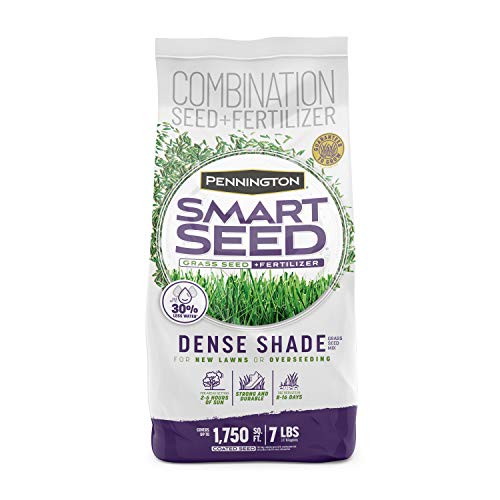
Pennington Smart Seed Dense Shade Mix, 7 lb
$28.47A ryegrass, bluegrass and tall fescue blend with fertilizer for spots getting 2 to 6 hours of sun, covering 1,750 sq ft.
Best for: shade spots with a little more light
Check price on Amazon
Milorganite Slow-Release Nitrogen 6-4-0 Fertilizer, 5 lb Bag (4-Pack)
$40.99A low-salt slow-release 6-4-0 nitrogen with iron that the maker says feeds for 8 to 10 weeks, in four 5 lb bags.
Best for: the one fall feeding fine fescue needs
Check price on Amazon
EGO POWER+ LM2114 21 in. Push Mower Kit
$499.00A 21 inch battery push mower with a 1.25 to 4 inch height range and a 6.0Ah battery rated for up to 55 minutes.
Best for: small shaded lawns
Check price on AmazonHow we chose
We did not test these products in person. Picks are researched from manufacturer specifications and owner manuals, engine and safety certifications where they apply, warranty terms, public recall records, and the recurring themes in verified owner reviews. We favor established brands with large review counts and parts support, match each pick to a real yard size or task, and place it in the tier where its price and capability actually belong.
Frequently asked questions
Can fine fescue take foot traffic?
Not much. Fine fescue has the poorest wear tolerance of the common cool-season lawn grasses, and creeping red is the only type with rhizomes to help it recover. It suits shaded ornamental areas, slopes and quiet side yards. For play areas or dog paths in shade, blend in tall fescue, lay stepping stones or mulch the path, and overseed thin spots every fall.
Is fine fescue a good no-mow lawn?
Hard fescue and sheep fescue blends are the usual choice for no-mow and low-mow lawns in cool climates because they grow slowly and flop over at about 4 to 6 inches instead of standing upright. Most owners mow them once or twice a season to tidy seedheads. They need full establishment first, weed control during the first year, and very little fertilizer or water afterward.
Can you mix fine fescue with tall fescue?
Yes, and many shade and sun-shade mixes do. Tall fescue handles more traffic and heat, while fine fescue carries the shadiest spots, so a blend lets each grass sort itself out across a yard with mixed light. Mow a mix at 3 to 4 inches and feed it at the low end of the tall fescue range, around 2 pounds of nitrogen a year.
How long does fine fescue take to germinate?
Fine fescue usually germinates in about 7 to 14 days in soil between 50 and 65 F, faster than Kentucky bluegrass but slower than perennial ryegrass. Keep the seedbed consistently moist and clear of tree leaves. In dry shade under trees, seedlings compete with roots for water, so plan on light watering for several weeks until the grass is mowed a couple of times.
Researched, not professional advice. This page is compiled from published specifications, manuals, labels and owner-review consensus, not hands-on testing. Follow the manufacturer's instructions and product label, and consult a qualified professional where safety, chemicals, fuel or structures are involved. As an Amazon Associate we earn from qualifying purchases.