Lawn Care
Zoysiagrass: Mowing Height, Seed Rate and Lawn Care
Quick answer
Zoysiagrass is a dense warm-season grass for zones 6 to 10 that spreads by stolons and rhizomes. Mow it at 1 to 2 inches, seed at 1 to 2 pounds per 1,000 square feet in 70 F soil, expect 14 to 21 days to germinate, and feed only 1 to 3 pounds of nitrogen a year. Most named cultivars are plugged or sodded.
Zoysiagrass makes the thickest, most carpet-like lawn of the warm-season grasses. It spreads by stolons and rhizomes into a stand so dense that weeds struggle to find an opening, it takes more cold than any other common warm-season grass, and it needs roughly half the nitrogen bermudagrass does. The trade-offs are patience and thatch: zoysia is slow to establish, slow to repair damage, and its stiff stems build a spongy layer that eventually needs removing.
Seed exists for a few types, but the popular named cultivars such as Emerald, Meyer and Zeon are grown from plugs or sod. Figure seed with the grass seed calculator, keep feedings light using the fertilizer calculator, and check the lime calculator only if a soil test reads below pH 6.0.
On this page
What are the key numbers for a zoysia lawn?
| Trait | Zoysiagrass |
|---|---|
| Season type | Warm-season; dormant and straw-colored through winter |
| USDA zones and region | Zones 6 to 10; the Southeast, mid-South and the warmer half of the transition zone |
| Mowing height | 1 to 2 in; fine-bladed cultivars look best near 1 in |
| Seeding rate | 1 to 2 lb per 1,000 sq ft new; 0.5 to 1 lb overseeding. Named cultivars: plugs or sod only |
| Germination | 14 to 21 days, and up to 30, once soil holds 70 F |
| Shade tolerance | Moderate; better than bermudagrass, not as good as St. Augustinegrass |
| Drought tolerance | Very good; goes dormant in drought and recovers |
| Wear and traffic | Very good, but slow to repair when it is damaged |
| Nitrogen per year | 1 to 3 lb N per 1,000 sq ft, in the warm months only |
| Soil pH | 6.0 to 6.5 |
| Spreading habit | Stolons and rhizomes, but slow; a plugged lawn can take two seasons to close |
| Main drawback | Heavy thatch and slow recovery from damage |
Ranges reflect common southern extension guidance. Cultivars differ, so check the sod or seed tag.
How does zoysia compare with bermudagrass and St. Augustinegrass?
| Trait | Zoysiagrass | Bermudagrass | St. Augustinegrass |
|---|---|---|---|
| Mowing height | 1 to 2 in | 1 to 2 in common, lower for hybrids | 2.5 to 4 in |
| How it is planted | Seed, plugs or sod | Seed for common, sprigs or sod for hybrids | Sod or plugs only |
| Nitrogen per year | 1 to 3 lb | 3 to 6 lb | 2 to 5 lb |
| Shade tolerance | Moderate | Poor | Best of the three |
| Cold hardiness | Best of the three, to zone 6 | Zone 7 and warmer | Zone 8 and warmer |
| Traffic and recovery | Takes traffic, repairs slowly | Takes traffic, repairs fastest | Least traffic tolerant |
| Establishment speed | Slow | Fast | Fast from sod |
| Texture | Fine to medium, very dense | Fine to medium | Coarse, wide blades |
| Thatch tendency | High | Moderate to high | High |
Cold hardiness is the usual deciding factor at the northern edge of the warm-season range, and shade is the usual factor under trees.
Does zoysia grow in shade?
Zoysia handles moderate shade, meaning roughly four to six hours of direct sun or bright filtered light through the day. That puts it ahead of bermudagrass and behind St. Augustinegrass, which is the shade champion of southern turf. In shade, raise the cut toward 2 inches, cut nitrogen to the low end of the range and keep traffic off, since a shaded zoysia lawn repairs very slowly.
No warm-season grass grows in deep shade under a dense canopy. If a spot stays dark all day, thinning tree limbs to let in filtered light is the only real fix short of mulching the area.
How do I plant zoysia from plugs or seed?
Plugs are the usual route because most named cultivars produce no useful seed. Plant them in late spring or early summer once soil holds 70 F, spaced 6 to 12 inches apart, and expect one to two full seasons to close the gaps. Closer spacing costs more and fills faster. The ZoysiaPlug.com Zoysia Plugs, 100 Large Plugs listing describes 100 mature plugs covering about 100 square feet, and it needs daily water for the first two weeks.
From seed, use 1 to 2 pounds per 1,000 square feet, which is 5 to 10 pounds for a 5,000 square foot lawn. Seed is slow and unforgiving: germination runs 14 to 21 days and the seedbed must stay damp the whole time. The Scotts Turf Builder Zoysia Grass Seed and Mulch, 5 lb combines seed with mulch and is labeled for up to 2,000 square feet. Feed new plantings with a starter such as the Scotts Turf Builder Starter Food for New Grass, 15 lb.
How much fertilizer does zoysia need?
Only 1 to 3 pounds of nitrogen per 1,000 square feet per year, applied in two or three feedings during the warm months. Overfeeding zoysia is the most common mistake: extra nitrogen does not make it grow in faster, it just adds thatch and disease pressure. A lawn in full sun with clippings returned often does well on 2 pounds.
Stop nitrogen roughly four to six weeks before the first expected frost so the lawn is not pushing tender growth into cold weather. Base phosphorus, potassium and lime on an actual soil test rather than a guess: a mail-in kit such as the MySoil Soil Test Kit reports pH and plant-available nutrients, and how to test soil pH walks through sampling.
When should zoysia be dethatched?
Dethatch when the spongy layer between the green blades and the soil passes about half an inch. Push a finger or a trowel into the turf to check. Do the work in late spring or early summer while the grass is actively growing and can recover, never on a dormant lawn or in the heat of late summer.
A power rake such as the Greenworks 40V 15 in 2-in-1 Dethatcher and Scarifier Kit or the corded Sun Joe AJ805E 15 in Electric Dethatcher and Scarifier pulls thatch across a 15 inch path. Core aeration with the Brinly PA-42BH-A 42 in Tow-Behind Plug Aerator works more gradually by mixing soil into the thatch layer. The trade-offs are in dethatcher vs aerator and how to aerate a lawn.
What gear fits a zoysia lawn?
Thatch control first, then a mower that goes low, a spreader for two or three light feedings and water for new plugs. Roundups: dethatchers and lawn aerators.

Greenworks 40V 15 in 2-in-1 Dethatcher and Scarifier Kit
$279.00Swappable dethatching and scarifying reels with five depth settings across a 15 inch path, with the battery and rapid charger included.
Best for: zoysia thatch over half an inch
Check price on Amazon
Honda HRX-BE 21 in. Battery Self-Propelled Mower
$999.00A 0.75 to 4 inch cutting range covers fine-bladed zoysia near 1 inch, and the self-propelled drive handles the dense turf zoysia builds.
Best for: keeping zoysia at 1 to 2 inches
Check price on Amazon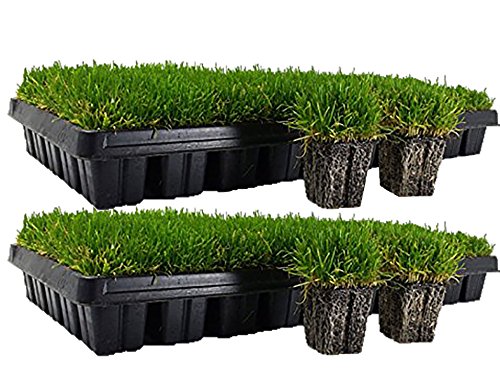
ZoysiaPlug.com Zoysia Plugs, 100 Large Plugs
$109.99Two trays of 50 mature plugs already producing runners, listed as covering 100 sq ft, for spreading zoysia into an existing yard.
Best for: starting or patching a zoysia lawn
Check price on Amazon
Brinly PA-42BH-A 42 in Tow-Behind Plug Aerator
$379.00Heat-treated spoons pull plugs up to 3 inches deep across three independently rotating 42 inch sections that limit turf tearing on turns.
Best for: compacted zoysia on larger lots
Check price on Amazon
Melnor AquaTimer 4-Zone Programmable Digital Hose Timer
$69.99A four valve digital hose timer with independent schedules and 1 minute to 6 hour runs, so new plugs get daily water without hand watering.
Best for: the first two weeks after plugging
Check price on AmazonHow we chose
We did not test these products in person. Picks are researched from manufacturer specifications and owner manuals, engine and safety certifications where they apply, warranty terms, public recall records, and the recurring themes in verified owner reviews. We favor established brands with large review counts and parts support, match each pick to a real yard size or task, and place it in the tier where its price and capability actually belong.
Frequently asked questions
How long does zoysia take to fill in?
Plugs spaced 6 to 12 inches apart usually take one to two full growing seasons to close, and seeded zoysia can take just as long because germination alone runs 14 to 21 days. Warmth, steady water and light feeding speed it up, while shade and traffic slow it down. Closer plug spacing is the reliable way to shorten the wait, at a higher upfront cost.
Is zoysia better than bermudagrass?
Neither wins everywhere. Zoysia makes a denser, softer lawn, takes more shade and cold, and needs about half the nitrogen. Bermuda establishes far faster, repairs damage quickly and handles heavy traffic and full sun better. For a low-input lawn at the northern edge of the warm-season range, zoysia usually wins. For a sunny, heavily used yard that needs to recover fast, bermuda does.
Why does my zoysia feel spongy to walk on?
That sponginess is thatch, the layer of slowly decomposing stems and stolons between the soil and the green canopy. Zoysia builds it faster than most grasses because its stems are stiff and break down slowly, and heavy nitrogen makes it worse. Once the layer passes about half an inch, dethatch or core aerate in late spring or early summer while the grass is growing.
Can zoysia survive a cold winter?
Zoysia is the most cold-hardy of the common warm-season grasses and is grown up into zone 6, with Meyer types being the usual choice at the cold edge. It still goes fully dormant and straw-colored for a long stretch of the year, which is the trade many northern-edge owners dislike. Late-season nitrogen raises winterkill risk, so stop feeding well before frost.
Researched, not professional advice. This page is compiled from published specifications, manuals, labels and owner-review consensus, not hands-on testing. Follow the manufacturer's instructions and product label, and consult a qualified professional where safety, chemicals, fuel or structures are involved. As an Amazon Associate we earn from qualifying purchases.