Seasonal Lawn Care
Zone 6 Fall Lawn Care Calendar: What to Do and When
Quick answer
Zone 6 gets the longest and most forgiving fall in cool-season country. Core aerate and overseed tall fescue at 3 to 4 pounds per 1,000 square feet as soil falls through 65 F, feed 1 pound of nitrogen, treat perennial broadleaf weeds, and add a winterizer once top growth stops.
Tall fescue is a bunch grass: it does not spread by runners, so every thin spot a zone 6 summer creates stays thin until you put seed in it. That makes fall overseeding an annual maintenance job here rather than an occasional project, and zone 6 gives the widest window in which to do it.
The season is long enough to do things properly in sequence rather than all at once. Size seed with the grass seed calculator, set both feedings with the fertilizer calculator, and apply lime from a soil test with the lime calculator, since transition-zone soils often run acidic.
On this page
What should I do to my lawn in zone 6 in fall?
Seed first, feed second, treat weeds third. The long zone 6 fall gives room to separate them properly.
| Task | Trigger | Timing cue in zone 6 | Notes |
|---|---|---|---|
| Core aerate | Soil 50 to 65 F and moist, not saturated | Early fall | Relieves the compaction a hot summer leaves behind. |
| Overseed tall fescue | Immediately after aerating | Early fall | 3 to 4 lb per 1,000 sq ft to overseed, 6 to 8 lb for bare soil. |
| Starter fertilizer on seed | At seeding | Same day | The Scotts Turf Builder Starter Food for New Grass, 15 lb is a 24-25-4 starter. |
| Keep seed moist | Top half inch drying | Daily for 2 to 3 weeks | Light and frequent until germination, then deeper and less often. |
| Main nitrogen feed | Active growth, soil above 50 F | Early to mid fall | 1 lb N per 1,000 sq ft, the year’s most valuable application. |
| Perennial broadleaf control | Weeds growing, air 50 to 85 F | Mid to late fall | The widest window of any cool zone. Wait 3 to 4 mows on seeded areas. |
| Fall pre-emergent for winter annuals | Soil falling through about 70 F | Early fall | Stops poa annua, henbit and chickweed before they germinate. |
| Lime if the test called for it | Ground not frozen | Fall | Cap each pass near 50 lb per 1,000 sq ft. |
| Mulch-mow leaves | Leaves covering turf | Through a long leaf drop | Never on freshly seeded ground until the new grass is established. |
| Winterizer feeding, last mow at 3 in | Growth stopped, grass still green | Late fall | The Espoma Turf-Tone Fall Winterizer 8-0-5, 30 lb is an 8-0-5 organic option. |
Seeding rates match the grass seed calculator; nitrogen follows the 2 to 4 lb per 1,000 sq ft annual guidance for cool-season lawns.
When should I overseed tall fescue in zone 6?
As soil falls back through 65 F, which in zone 6 means early fall, the latest window of the cool-season zones. Seed germinates best between 50 and 65 F soil, tall fescue takes 7 to 14 days in that range, and the long zone 6 fall leaves plenty of growing weather afterward, so the window runs roughly eight weeks. Earlier is still better, because warm soil speeds germination and young plants root before the first frosts.
Overseed at 3 to 4 pounds per 1,000 square feet, or 6 to 8 for bare soil. The Jonathan Green Black Beauty Tall Fescue Blend, 25 lb is a pure turf-type blend rated for 7,500 square feet overseeded, the coated Scotts Turf Builder Grass Seed Tall Fescue Mix, 16 lb covers 4,000, and the economical Pennington Kentucky 31 Tall Fescue Grass Seed, 40 lb is the older coarse pasture type at a lighter rate. For shade, the Pennington Smart Seed Dense Shade Mix, 7 lb is blended for 2 to 6 hours of sun. Method is in how to overseed a lawn.
How much seed and fertilizer does a zone 6 fall need?
Worked out for three common lawn sizes, at the tall fescue overseeding rate and a 1 pound nitrogen feeding.
| Lawn size | Tall fescue to overseed | Product for 1 lb N at 32 percent | Product for 1 lb N at 24 percent |
|---|---|---|---|
| 2,500 sq ft | 9 to 10 lb | 8 lb | 10 lb |
| 5,000 sq ft | 15 to 20 lb | 16 lb | 21 lb |
| 10,000 sq ft | 30 to 40 lb | 31 lb | 42 lb |
| 1 acre (43,560 sq ft) | 131 to 174 lb | 136 lb | 182 lb |
Seed at 3 to 4 lb per 1,000 sq ft. Fertilizer figures use pounds of product = 100 divided by the nitrogen percentage, so a 32-0-3 such as the Lesco Basic Nutrition 32-0-3 Stabilized Nitrogen Fertilizer, 50 lb runs about 3.1 lb per 1,000 sq ft and a 24-6-12 such as the The Andersons Core 24-6-12 Professional Lawn Fertilizer, 45 lb about 4.2 lb.
Should I use a fall pre-emergent in zone 6?
Yes, unless you are seeding. Zone 6 has a long, mild late fall, which is ideal for winter annual weeds: poa annua, henbit, purple deadnettle and common chickweed all germinate as soil falls through about 70 F, sit low through winter and take over a dormant lawn in late winter when nothing else is green. A pre-emergent applied at that 70 F trigger stops all of them before they appear, which is far easier than treating mature plants later.
The conflict is obvious: the same product that stops poa annua stops tall fescue seed. If you are overseeding, skip the fall pre-emergent entirely this year and handle winter annuals with a post-emergent on a mild day instead. If you are not seeding, the Quali-Pro Prodiamine 65 WDG Pre-Emergent Herbicide, 5 lb or the granular Lesco 0-0-7 with 0.43% Stonewall Pre-Emergent, 50 lb does the job. See poa annua and henbit.
What gear does a zone 6 fall need?
Aeration, tall fescue seed, two feedings and leaf equipment that will run for weeks. More in the best lawn aerators and the best backpack leaf blowers.
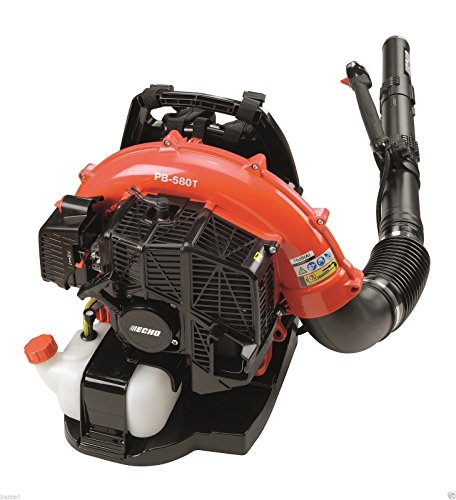
ECHO PB-580T 58.2cc Backpack Blower
$429.99A 58.2cc backpack blower rated at 510 CFM with a tube-mounted throttle, sized for homeowners and landscapers moving big leaf piles across wooded lots.
Best for: a long leaf season on a treed half acre
Check price on Amazon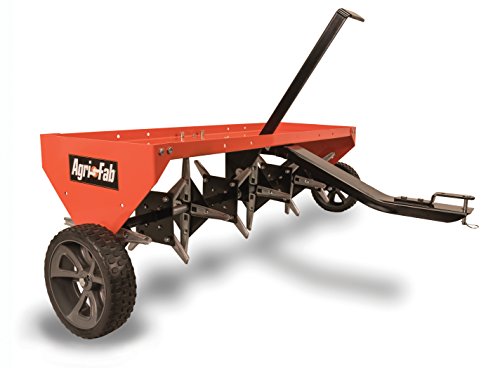
Agri-Fab 48 in Tow-Behind Plug Aerator
$319.98Thirty-two galvanized self-sharpening knives pull plugs up to 3 inches deep across 48 inches, with a 175 pound weight tray, flat-free tires and a seat-reachable transport handle.
Best for: relieving summer compaction on a large lawn
Check price on Amazon
Jonathan Green Black Beauty Tall Fescue Blend, 25 lb
$106.33A 100 percent turf-type tall fescue blend for sun and shade with a waxy leaf coating for heat tolerance, sized at 3,750 square feet new or 7,500 overseeded.
Best for: the annual overseed a bunch grass requires
Check price on Amazon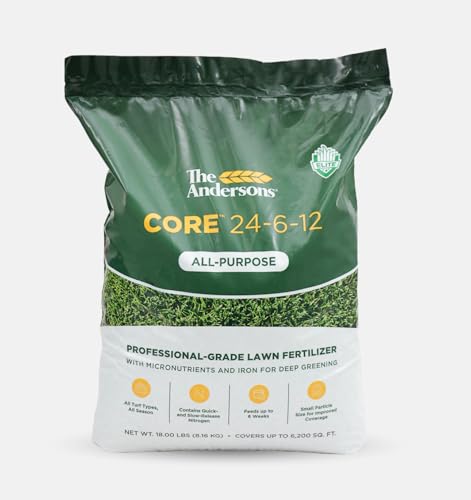
The Andersons Core 24-6-12 Professional Lawn Fertilizer, 45 lb
$89.88Super-fine granules with quick and slow release nitrogen plus iron and micronutrients, labeled for all turf types at 15,500 square feet per 45 pound bag.
Best for: even coverage on the main fall feeding
Check price on AmazonHow we chose
We did not test these products in person. Picks are researched from manufacturer specifications and owner manuals, engine and safety certifications where they apply, warranty terms, public recall records, and the recurring themes in verified owner reviews. We favor established brands with large review counts and parts support, match each pick to a real yard size or task, and place it in the tier where its price and capability actually belong.
Frequently asked questions
How often should I overseed tall fescue?
Most zone 6 tall fescue lawns benefit from overseeding every fall, because tall fescue is a bunch grass that cannot spread into thin areas the way Kentucky bluegrass does with rhizomes. Use 3 to 4 pounds per 1,000 square feet over an aerated lawn. If the lawn came through summer thick and undamaged you can skip a year, but thin spots will not close on their own.
Can I put down a fall pre-emergent and seed?
No. Pre-emergent herbicides stop grass seed from germinating just as effectively as they stop poa annua and henbit, and most labels list a waiting period of several months before seeding. Choose one per year: if the lawn needs overseeding, seed now and control winter annuals with a post-emergent later, and save the fall pre-emergent for a year you are not seeding.
When should I stop watering new seed in zone 6?
Shift gradually rather than stopping. Keep the top half inch of soil moist with light, frequent watering until the seed germinates, which for tall fescue is 7 to 14 days in 50 to 65 F soil. Then water less often and more deeply so roots chase the moisture down, and move to a normal schedule once the new grass has been mowed two or three times.
Researched, not professional advice. This page is compiled from published specifications, manuals, labels and owner-review consensus, not hands-on testing. Follow the manufacturer's instructions and product label, and consult a qualified professional where safety, chemicals, fuel or structures are involved. As an Amazon Associate we earn from qualifying purchases.