Pressure Washing
What PSI to Pressure Wash Windows? Low Pressure or by Hand
Quick answer
Windows should see little or no pressure. Stay under about 1,200 PSI with a 40 degree tip at least 24 inches back, or rinse with a soap tip and wash by hand. High pressure can break glass, blow out insulated glass seals and force water past frames, and the hand method gives a better finish.
Glass does not get dirty in a way that pressure fixes. The film on a window is fine dust and mineral spotting, and the marks people hate are the ones left behind by drying water, which pressure adds rather than removes. Meanwhile the risks are real and expensive: a cracked pane, a fogged insulated unit with a blown seal, or water past the frame and into the wall.
The calculator treats windows as a low or no pressure surface, which you can see in the pressure washer PSI calculator and the pressure washer PSI chart.
On this page
What PSI is safe on windows?
| Setting | Windows |
|---|---|
| Pressure | Soft wash, under about 1,200 PSI |
| Minimum flow | 1.2 GPM |
| Nozzle | 40 degree, at a distance |
| Distance from the surface | 24 in or more, the greatest on this site |
| Cleaning rate | About 5 sq ft per minute for each 1 GPM as a rinse |
| Surface cleaner | No |
| Better method | Soap tip rinse, then wash and squeegee by hand |
| Watch for | Cracked glass, fogged insulated units from a blown seal, water past frames and sills |
High pressure can break glass, blow out insulated glass seals and force water past frames. A soap tip rinse or cleaning by hand is safer.
Which nozzle should I use near windows?
| Tip | Color | Use near windows |
|---|---|---|
| 65 degree or soap | Black | The right tip. Applies soap at low pressure with no risk to glass or seals. |
| 40 degree | White | Rinse only, from 24 inches or more, angled across the glass rather than into the frame. |
The 0, 15 and 25 degree tips have no use anywhere near a window. A narrow tip can crack glass outright and will drive water past weatherstripping into the wall.
How long does it take to rinse the windows on a house?
These are rinse times only, at the soft wash settings above. Hand washing and drying each pane is separate work, usually a few minutes per window.
| Glass area | 1.2 GPM | 1.4 GPM | 1.8 GPM |
|---|---|---|---|
| 150 sq ft (small ranch) | 25 min | 21 min | 17 min |
| 300 sq ft (average house) | 50 min | 43 min | 33 min |
| 450 sq ft (large house) | 75 min | 64 min | 50 min |
| 600 sq ft (many large windows) | 100 min | 86 min | 67 min |
Minutes = area divided by (GPM x 5 square feet per minute per GPM), the same formula the pressure washer PSI calculator uses. Heavy staining, mildew and detergent dwell time add to every figure, and a pass with detergent plus a rinse pass doubles the wand time.
How do I clean windows without damaging them?
- Check the glass and seals first. Look for chips, cracks and fogging between panes. A fogged unit already has a failed seal, and water pressure will make it worse.
- Rinse the frame and glass at low pressure. Fit the soap tip or stand 24 inches or more back with a 40 degree tip, and rinse from the top of the window down.
- Wash with a soft brush or mitt. Glass cleaner or mild soap and a soft brush remove the film. This is the step that actually cleans, and it costs nothing in risk.
- Rinse and squeegee. Rinse gently, then squeegee top to bottom with overlapping strokes, wiping the blade between passes. That is where a spot-free finish comes from.
- Stay on the ground. Upper floor windows are reached with an extension pole and brush, or hired out. A pressure washer and a ladder are never combined.
Can a pressure washer break a window?
Yes. A narrow tip at close range can crack a pane directly, particularly on older single glazing or on glass that already has a chip. The more common and more expensive failure is subtler: forcing water into the perimeter seal of an insulated glass unit, which ruins the seal and leaves permanent fogging between the panes that only a replacement unit fixes.
Water past the frame is the third problem. Weatherstripping is designed to shed rain falling downward, not a jet aimed upward or straight into a joint, so water gets behind trim and sits there. The fix for all three is the same: soap tip, plenty of distance, and hands doing the actual cleaning. For reaching upper windows from the ground, an extension pole such as the EXTEND-A-REACH 5 to 30 ft. Telescoping Extension Pole with a brush head keeps you off a ladder entirely. If you are washing the wall around the glass, the numbers are on vinyl siding and stucco.
What should I use on windows instead?
A small electric washer used gently, or no washer at all. Hand washing beats pressure on glass every time. More machines are in the best electric pressure washers.

Sun Joe SPX3000 Electric Pressure Washer
$169.00Five tips including 40 degree and soap plus two detergent tanks, so windows get soap and a rinse rather than pressure, and the same machine handles furniture afterward.
Best for: ground-floor windows and screens
Check price on Amazon
Kärcher K 5 Premium Electric Pressure Washer with Hose Reel
$386.01Vario Power adjusts pressure at the wand, so the same tool rinses glass gently and then cleans the walkway below without a tip change.
Best for: households that want one adjustable machine
Check price on Amazon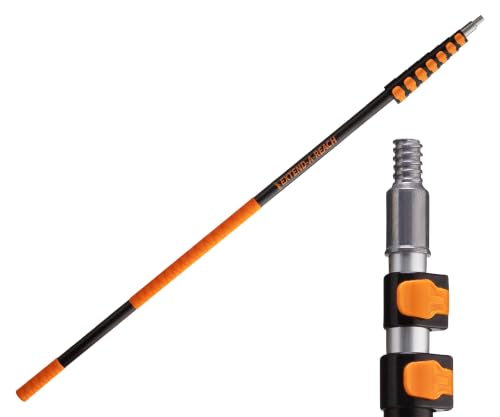
EXTEND-A-REACH 5 to 30 ft. Telescoping Extension Pole
$109.97A telescoping pole that extends from 5 to 30 feet for washing second story glass from the ground, which is the safe alternative to climbing with a wand.
Best for: second story windows and high trim
Check price on Amazon
Wet & Forget Outdoor Cleaner Concentrate (128 oz.)
$34.99A no-rinse outdoor cleaner for green growth on frames, sills and the shaded siding around windows, applied without pressure anywhere near the glass.
Best for: shaded window walls that green up each year
Check price on AmazonHow we chose
We did not test these products in person. Picks are researched from manufacturer specifications and owner manuals, engine and safety certifications where they apply, warranty terms, public recall records, and the recurring themes in verified owner reviews. We favor established brands with large review counts and parts support, match each pick to a real yard size or task, and place it in the tier where its price and capability actually belong.
Frequently asked questions
Can you pressure wash windows?
Only at low pressure, under about 1,200 PSI, with a 40 degree tip from at least 24 inches or, better, the soap tip alone. Even then a pressure washer only rinses. The film on glass comes off with soap and a soft brush, and the spot-free finish comes from a squeegee. Hand washing carries none of the risk to glass, seals and frames.
Will pressure washing break the seal on double-pane windows?
It can. The perimeter seal of an insulated glass unit keeps the gas fill in and moisture out, and water forced into that joint at pressure can defeat it. The result is permanent fogging between the panes that cleaning cannot fix, only a replacement unit. Keep the spray wide, keep well back and never aim into the edge of the glass.
How do I wash second story windows safely?
From the ground with a telescoping pole and brush, or by hiring a window cleaning service. Never from a ladder with a pressure washer: the wand recoils the moment you squeeze the trigger, and there is nowhere to shift your weight on a ladder. Poles that extend to 30 feet cover most two story homes.
Why do my windows look worse after pressure washing?
Usually mineral spotting. Pressure washing leaves the glass covered in droplets that then dry in place, and hard water leaves the minerals behind as spots. It can also push dirt from the frame onto clean glass. The fix is to finish by hand: wash, rinse gently, then squeegee top to bottom, wiping the blade after each stroke.
Researched, not professional advice. This page is compiled from published specifications, manuals, labels and owner-review consensus, not hands-on testing. Follow the manufacturer's instructions and product label, and consult a qualified professional where safety, chemicals, fuel or structures are involved. As an Amazon Associate we earn from qualifying purchases.