Snow Removal
What Size Snow Blower for a 250 Foot Driveway in Heavy Snow?
Quick answer
A 250-foot driveway, 12 feet wide, in heavy snow needs a 28 to 30-inch two-stage snow blower with a large engine. A 28-inch machine clears it in 7 passes and about 23 minutes. The 31.9-inch Honda HSS1332AATD cuts that to 6 passes and about 20 minutes with a Honda GX390 engine and track drive.
This is the biggest residential snow blower job on the site. A foot of snow on a 12 by 250-foot driveway is 3,000 cubic feet, roughly 7.5 to 30 tons depending on moisture, and it has to be moved 250 feet at a time at a heavy-snow walking pace. The machine needs a large engine, a tall intake, traction on packed snow and a throw that clears banks the length of the driveway.
Our top pick is the Honda HSS1332AATD 32 in. Two-Stage Track Snow Blower at $4,099.00: a commercial-grade Honda GX390, electric key start, hydrostatic track drive and a 31.9-inch path Honda rates at 2,750 pounds per minute. It is slightly wider than the 28 to 30-inch range, so the table above marks 32 inches as more than needed, but on 250 feet that one fewer pass saves about 3 minutes every storm. The 28-inch Honda HSS928AATD ($3,599.00) is the in-range alternative. Plan your storm in the snow clearing time calculator.
On this page
- How long does a 250 foot driveway take in heavy snow?
- What size snow blower for a 250 foot driveway with heavy snow?
- How do I clear a 250 foot driveway in a heavy storm?
- How much fuel or battery does a 250 foot driveway take in heavy snow?
- Why choose track drive for a long rural driveway?
- When does a 250 foot driveway need a plow instead of a snow blower?
- Which snow blowers fit a 250 foot driveway in heavy snow?
How long does a 250 foot driveway take in heavy snow?
| Clearing width | Passes | Time | Fit |
|---|---|---|---|
| 12 in | 15 | 49 min | Slow or underpowered |
| 18 in | 10 | 33 min | Slow or underpowered |
| 21 in | 9 | 29 min | Slow or underpowered |
| 24 in | 8 | 26 min | Slow or underpowered |
| 28 in | 7 | 23 min | Recommended |
| 32 in | 6 | 20 min | More than needed |
About 3,000 square feet. Recommended: 28 to 30 inch two-stage, large engine. Times assume a 15 percent overlap, walking speeds of 150, 120 and 85 feet per minute in light, moderate and heavy snow, and 20 seconds per turn.
What size snow blower for a 250 foot driveway with heavy snow?
A 28 to 30-inch two-stage with a large engine. On a 12-foot-wide driveway a 28-inch path makes 7 passes in about 23 minutes, a 24-inch makes 8 passes in about 26 minutes, and a 21-inch machine would need 9 passes and about 29 minutes. The recommendation is not about the minutes between sizes; it is about a machine that holds its pace for 1,750 feet of deep, heavy snow without stalling, clogging or losing traction.
How do I clear a 250 foot driveway in a heavy storm?
In sessions. Going out when the snow reaches about half the intake height keeps every pass full width and avoids a settled, heavy bottom layer. Here is what that looks like with the two Honda track machines.
| Storm total | Sessions | Machine time, 28 in | Machine time, 31.9 in | Snow moved (5 to 20 lb per cu ft) |
|---|---|---|---|---|
| 8 in | 1, after the plow passes | About 23 min | About 20 min | 10,000 to 40,000 lb |
| 12 in | 1, or 2 if the snow is wet | About 23 to 46 min | About 20 to 40 min | 15,000 to 60,000 lb |
| 18 in | 2 | About 46 min | About 40 min | 22,500 to 90,000 lb |
| 24 in | 2 to 3 | About 46 to 69 min | About 40 to 60 min | 30,000 to 120,000 lb |
Session times use the computed heavy-snow row for each width. The street berm, turns at the far end and clearing clogs add time.
How much fuel or battery does a 250 foot driveway take in heavy snow?
Plan for 40 minutes to an hour or more of engine time in a big storm. On gas, start each storm with a full tank, keep a sealed can of stabilized fuel in a detached shed or away from living space, and refuel only outdoors with the engine off and cool; the GX390's tank capacity is in Honda's owner manual. On battery, a 12 by 250-foot driveway is about 15 car spaces, and EGO rates its largest machine, the EGO SNT2807, at 32 car spaces of 8-inch snow per charge. Heavy, wet snow uses far more energy than that rating assumes, so a battery machine here realistically covers one session per charge. That is why we point heavy-snow rural owners to gas; see battery vs gas snow blower.
Why choose track drive for a long rural driveway?
Long rural driveways are rarely flat and rarely bare. Tracks spread the machine's weight and grip on packed snow, ice and grades where wheels spin, and on Honda's track models an auger height control lets you tilt the housing to shave a packed layer or lift it over a rough patch. The trade-off is effort in turns, which matters less when each pass is 250 feet long. For a flat, paved driveway the wheeled Honda HSS928AAWD turns more easily. The comparison is in track vs wheel snow blower.
When does a 250 foot driveway need a plow instead of a snow blower?
Be honest about the math. If storms regularly pass 24 inches, if the driveway is wider than a single lane, or if clearing it takes more than an hour of walking behind a machine in cold weather, a plow service or a tractor with a blade may be the better plan, with a snow blower kept for the apron, walks and berms. Many rural owners in lake-effect areas combine both. A three-stage machine is not the answer to length; see two-stage vs three-stage snow blower.
Which snow blowers fit a 250 foot driveway in heavy snow?
The largest two-stage machines in our catalog, led by Honda's hydrostatic track models. Read the Honda HSS928AATD review before choosing between the 28 and 31.9-inch frames.

Honda HSS1332AATD 32 in. Two-Stage Track Snow Blower
$4,099.00A commercial-grade Honda GX390 with electric key start, hydrostatic track drive and a 31.9-inch path that Honda rates at 2,750 pounds of snow per minute and a 56-foot throw.
Best for: long, sloped or gravel driveways in lake-effect and mountain snow
Check price on Amazon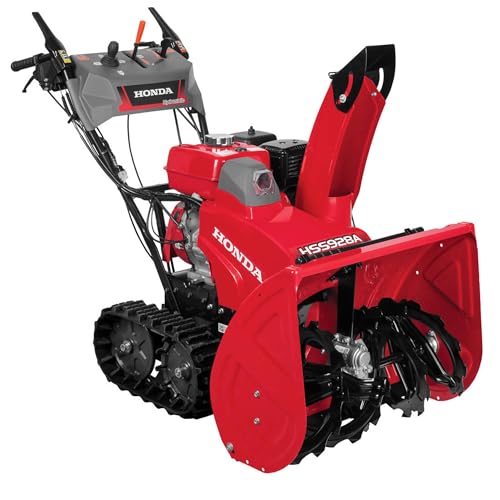
Honda HSS928AATD 28 in. Two-Stage Track Snow Blower
$3,599.00Honda GX270 power, cleated low-temperature rubber tracks, hydrostatic drive and auger height control, rated at 1,900 pounds per minute and a 52-foot throw with no assembly required.
Best for: steep or icy driveways where wheels lose traction
Check price on Amazon
Honda HSS928AAWD 28 in. Two-Stage Wheeled Snow Blower
$3,399.00The wheeled HSS928 swaps tracks for 14-inch pneumatic tires and adds an electric joystick chute with 198° of rotation, keeping the GX270, hydrostatic drive and 3-year residential warranty.
Best for: large flat paved driveways where a wheeled machine turns more easily
Check price on Amazon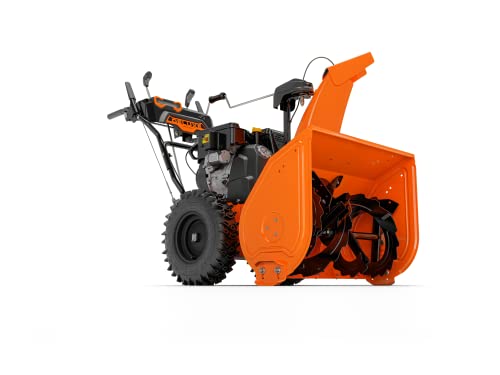
Ariens Deluxe 28 SHO Two-Stage Snow Blower (ST28DLE)
$1,999.00The Deluxe SHO (Super High Output) is the performance variant of Ariens' core two-stage line, with a 28-inch path and electric start, sold and shipped by Amazon.
Best for: wide suburban driveways that collect heavy, wet snow and plow berms
Check price on Amazon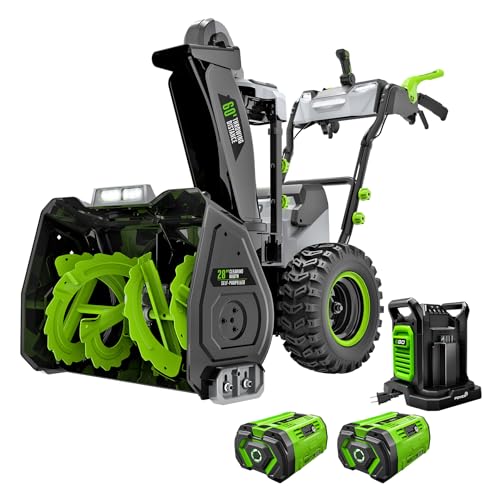
EGO Power+ SNT2807 28 in. Self-Propelled Two-Stage Snow Blower Kit
$2,308.28EGO rates this 28-inch two-stage at a 60-foot throw and a 32-car driveway of 8-inch snow per charge on its two included 12.0Ah batteries, with trigger steering, a joystick chute and heated grips.
Best for: long driveways in heavy-snow regions from owners ready to leave gas behind
Check price on Amazon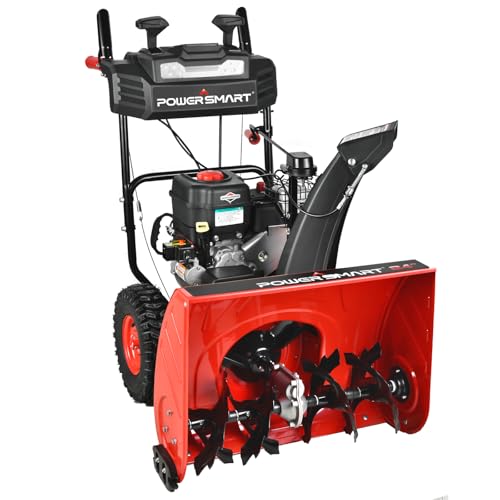
PowerSmart 26 in. Two-Stage Gas Snow Blower with Briggs & Stratton 208cc
$999.00A Briggs & Stratton 950 Snow Series 208cc rated at 2,700 pounds per minute, with steel housing, frame and chute, a 26-inch path, handle warmers and adjustable steel skid shoes.
Best for: wider driveways on a mid-range budget, including gravel
Check price on AmazonHow we chose
We did not test these products in person. Picks are researched from manufacturer specifications and owner manuals, engine and safety certifications where they apply, warranty terms, public recall records, and the recurring themes in verified owner reviews. We favor established brands with large review counts and parts support, match each pick to a real yard size or task, and place it in the tier where its price and capability actually belong.
Frequently asked questions
What is the best snow blower for a long driveway with heavy snow?
A 28 to 32-inch two-stage with a large engine and track or hydrostatic drive. In our catalog, the Honda HSS1332AATD pairs a GX390 engine with a 31.9-inch path rated at 2,750 pounds per minute and clears a 12 by 250-foot driveway in about 20 minutes of heavy snow. The 28-inch Honda HSS928AATD takes about 23 minutes and costs less.
How long does it take to snow blow a 250 foot driveway in heavy snow?
About 23 minutes of machine time per session with a 28-inch two-stage, which makes 7 passes of 250 feet at a heavy-snow pace of about 85 feet per minute. A 31.9-inch machine takes about 20 minutes. In storms deeper than the intake, plan two sessions, so 40 minutes to an hour or more in total, plus the plow berm at the street.
Is a 32 inch snow blower too big for a single-lane driveway?
On a 12-foot-wide driveway a 31.9-inch machine is slightly wider than the recommended 28 to 30 inches, and it saves only one pass over a 28-inch machine. On a 250-foot driveway that pass is 250 feet and about 3 minutes per storm. Buy one for its engine, capacity and throw in heavy snow, not for its width alone.
Should I hire a plow for a very long driveway?
Consider it if storms regularly exceed 24 inches, if clearing takes more than an hour, or if the physical effort is a health concern. A plow service or tractor blade moves deep snow on long driveways faster than any walk-behind machine. Many rural owners keep a two-stage snow blower for the apron, walks, berms and light storms, and call the plow for the biggest ones.
Researched, not professional advice. This page is compiled from published specifications, manuals, labels and owner-review consensus, not hands-on testing. Follow the manufacturer's instructions and product label, and consult a qualified professional where safety, chemicals, fuel or structures are involved. As an Amazon Associate we earn from qualifying purchases.