Lawn Care
Best Grass Seed Brands for Every Lawn Type (2026)
Quick answer
The best grass seed for most northern and transition-zone lawns is a turf-type tall fescue such as Jonathan Green Black Beauty Tall Fescue, seeded at 6 to 8 lb per 1,000 sq ft for a new lawn. Kentucky bluegrass needs only 2 to 3 lb. In the South, bermudagrass or zoysia seed goes down in late spring.
The best grass seed is the right species for your climate, sun and traffic, bought from a brand that prints a clean label: named varieties, high germination, and near-zero weed seed. Brand matters less than those label facts. Jonathan Green, Pennington, Scotts and GreenView all sell good seed; they differ in whether the bag is pure seed or a coated mix with fertilizer and mulch that weighs more per square foot.
Our top pick is Black Beauty Tall Fescue ($106.33), a 100 percent turf-type tall fescue blend rated for 3,750 sq ft new or 7,500 sq ft overseeded. Before you buy, measure the area with the lawn size calculator and get exact pounds from the grass seed calculator. Seed is the cheap part of a new lawn; a good spreader and core aeration do more for the result, so see the best lawn spreaders and best lawn aerators too.
On this page
- How much grass seed per square foot do I need?
- What is the best grass seed brand?
- Beginner picks: coated tall fescue, budget K-31 and southern bermuda
- Intermediate picks: dark green blends, fast ryegrass and zoysia from seed
- Expert picks: pure tall fescue and sod-quality Kentucky bluegrass
- How do the grass seed picks compare on coverage?
- What do the bag labels work out to per 1,000 sq ft?
- What is the best grass seed to just throw down?
- Warm-season lawns: seed, plugs or sod?
- Grass seed buying and planting tips
How much grass seed per square foot do I need?
Seeding rates are quoted per 1,000 sq ft, and they vary tenfold by species because seed size varies. Tall fescue seed is large, so a new lawn needs 6 to 8 lb per 1,000 sq ft. Kentucky bluegrass seed is tiny, so 2 to 3 lb does the same job. Overseeding a thin existing lawn takes about half the new-lawn rate. These are university extension ranges for pure seed; coated seed and seed-mulch mixes weigh more, so follow the bag's coverage for those.
Per square foot, that works out to about 0.006 to 0.008 lb of tall fescue, which is why nobody quotes it that way. Enter your area in the grass seed calculator, or see the full grass seed rate chart.
| Grass type | New lawn (lb) | Overseed (lb) | Germination (days) | Plant when |
|---|---|---|---|---|
| Tall fescue | 6 to 8 | 3 to 4 | 7 to 14 | Late summer to early fall; spring second |
| Kentucky bluegrass | 2 to 3 | 1 to 1.5 | 14 to 30 | Late summer to early fall |
| Perennial ryegrass | 5 to 7 | 2.5 to 3.5 | 5 to 10 | Late summer to early fall |
| Fine fescue | 4 to 5 | 2 to 2.5 | 7 to 14 | Early fall |
| Bermudagrass (hulled) | 1 to 2 | 0.5 to 1 | 7 to 21 | Late spring to early summer, soil 65 F plus |
| Zoysiagrass | 1 to 2 | 0.5 to 1 | 14 to 21 | Late spring to early summer |
| Centipedegrass | 0.25 to 0.5 | About 0.25 | 14 to 28 | Late spring to early summer |
Seeding rates are university extension consensus ranges. Germination is typical in warm, moist soil and runs slower in cool soil. St. Augustinegrass is planted from sod or plugs, not seed.
What is the best grass seed brand?
There is no single best brand, but there are clear label signals. Look for named turf-type varieties rather than "variety not stated", germination of 85 percent or better, weed seed under about 0.5 percent, and "noxious weeds: none". Jonathan Green and GreenView sell pure seed blends with clear species mixes. Scotts Turf Builder and Pennington Smart Seed are often coated or blended with fertilizer, which helps beginners but means more pounds per square foot.
One honest note on value: Pennington Kentucky 31 is cheap per pound and covers up to 8,000 sq ft, but Kentucky 31 is an older, coarser, lighter-green tall fescue. Turf-type tall fescues such as Black Beauty are finer and darker. K-31 is a fine choice for utility areas, fields and banks, and a poor match if you want a lawn that looks like sod.
Beginner picks: coated tall fescue, budget K-31 and southern bermuda
These bags forgive mistakes. Coated seed holds moisture and includes starter nutrients, and each bag prints simple coverage numbers.

Scotts Turf Builder Grass Seed Tall Fescue Mix, 16 lb
$58.00A 3-in-1 of tall fescue seed, fertilizer and soil improver, rated for 1,330 sq ft new or 4,000 sq ft overseeded. Scotts says to seed when air temperatures hold between 65 F and 85 F and keep soil moist for at least 3 weeks.
Best for: first-time overseeding
Check price on Amazon
Pennington Kentucky 31 Tall Fescue Grass Seed, 40 lb
$67.00The classic K-31 in a 40 lb bag covering up to 8,000 sq ft, drought resistant and tolerant of full sun to medium shade. It is lighter green and coarser than turf-type fescue, so use it where durability matters more than looks.
Best for: large utility lawns and banks
Check price on Amazon
Scotts Turf Builder Grass Seed Bermudagrass, 4 lb
$34.97Coated bermudagrass seed for full sun with fertilizer and soil improver, planted in late spring or early summer. The 4 lb bag covers 1,330 sq ft new or 4,000 sq ft overseeded.
Best for: sunny southern lawns
Check price on AmazonIntermediate picks: dark green blends, fast ryegrass and zoysia from seed
For owners who prep soil, calibrate a spreader and want a specific look or fast fill.

Jonathan Green Black Beauty Ultra Grass Seed, 7 lb
$43.99Tall fescue, Kentucky bluegrass and perennial ryegrass for full sun to partial shade, with a 7 to 14 day germination window. The bluegrass component spreads to repair small damage over time.
Best for: a denser cool-season lawn
Check price on Amazon
GreenView Pure Grass Seed Perennial Ryegrass Blend, 20 lb
$86.98A 99.9 percent weed-free perennial ryegrass blend that starts germinating in 7 to 12 days, covering 5,000 sq ft new or 10,000 sq ft overseeded. Ryegrass fills high-traffic areas quickly but is less heat tolerant than tall fescue.
Best for: fast fill-in on sports and play areas
Check price on Amazon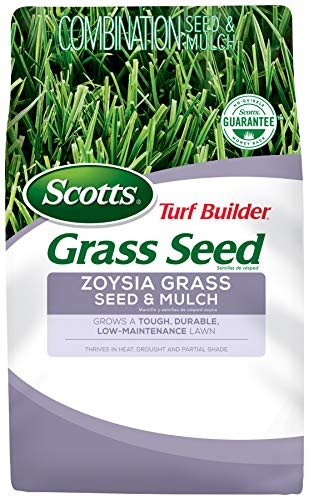
Scotts Turf Builder Zoysia Grass Seed and Mulch, 5 lb
$51.63Zoysia seed mixed with mulch for full sun and light shade, seeding up to 2,000 sq ft. Zoysia is slow to establish from seed, so expect a full season or more before it knits into a dense lawn.
Best for: patient warm-season seeding
Check price on AmazonExpert picks: pure tall fescue and sod-quality Kentucky bluegrass
Pure-species seed for full renovations, where soil testing, a starter fertilizer and irrigation are already planned.

Jonathan Green Black Beauty Tall Fescue Blend, 25 lb
$106.33A 100 percent turf-type tall fescue blend with a waxy leaf coating and roots Jonathan Green says reach up to 4 ft deep. The 25 lb bag seeds 3,750 sq ft new or 7,500 sq ft overseeded, enough for most front and back yards.
Best for: a pure tall fescue lawn
Check price on Amazon
Jonathan Green Blue Panther Kentucky Bluegrass Seed, 25 lb
$167.24Pure Kentucky bluegrass from varieties grown by sod farms, covering 20,000 sq ft new or 40,000 sq ft overseeded. Label germination is 21 to 28 days, so weeds and washouts are a bigger risk than with fescue or rye.
Best for: full-sun northern lawns
Check price on AmazonWho should not buy this tier: Skip pure Kentucky bluegrass if your lawn gets less than about 6 hours of sun, if you cannot water daily for a month, or if you are seeding in late fall when a 3 to 4 week germination window runs into cold soil. Skip a 25 lb pure bag for patching a few bare spots: a small coated repair mix is cheaper and easier. And in the Deep South, neither cool-season pick belongs on a permanent lawn.
How do the grass seed picks compare on coverage?
| Model | Price | Grass type | Bag size | New lawn coverage | Overseed coverage | Coated seed |
|---|---|---|---|---|---|---|
| Jonathan Green Black Beauty Tall Fescue Blend, 25 lb | $106.33 | tall fescue | 25 lb | 3,750 sq ft | 7,500 sq ft | - |
| Jonathan Green Blue Panther Kentucky Bluegrass Seed, 25 lb | $167.24 | kentucky bluegrass | 25 lb | 20,000 sq ft | 40,000 sq ft | - |
| Jonathan Green Black Beauty Ultra Grass Seed, 7 lb | $43.99 | sun shade mix | 7 lb | 1,400 sq ft | 2,800 sq ft | - |
| GreenView Pure Grass Seed Perennial Ryegrass Blend, 20 lb | $86.98 | perennial ryegrass | 20 lb | 5,000 sq ft | 10,000 sq ft | - |
| Pennington Kentucky 31 Tall Fescue Grass Seed, 40 lb | $67.00 | tall fescue | 40 lb | 8,000 sq ft | - | - |
| Scotts Turf Builder Grass Seed Tall Fescue Mix, 16 lb | $58.00 | tall fescue | 16 lb | 1,330 sq ft | 4,000 sq ft | Yes |
| Scotts Turf Builder Grass Seed Bermudagrass, 4 lb | $34.97 | bermudagrass | 4 lb | 1,330 sq ft | 4,000 sq ft | Yes |
| Scotts Turf Builder Zoysia Grass Seed and Mulch, 5 lb | $51.63 | zoysia | 5 lb | 2,000 sq ft | - | - |
What do the bag labels work out to per 1,000 sq ft?
Dividing each bag's weight by its label new-lawn coverage shows why coated and mulched products seem expensive per square foot: much of the weight is not seed. Compare against the pure-seed rates above.
| Product | Bag (lb) | New coverage (sq ft) | Lb per 1,000 sq ft | Why |
|---|---|---|---|---|
| Scotts Turf Builder Tall Fescue | 16 | 1,330 | 12.0 | Coated with fertilizer and soil improver |
| Pennington Kentucky 31 | 40 | 8,000 | 5.0 | Pure seed |
| Jonathan Green Black Beauty Tall Fescue | 25 | 3,750 | 6.7 | Pure seed |
| Jonathan Green Black Beauty Ultra | 7 | 1,400 | 5.0 | Fescue, bluegrass and rye mix |
| Jonathan Green Blue Panther KBG | 25 | 20,000 | 1.25 | Small bluegrass seed |
| GreenView Perennial Ryegrass | 20 | 5,000 | 4.0 | Pure seed |
| Scotts Bermudagrass | 4 | 1,330 | 3.0 | Coated seed |
| Scotts Zoysia Seed and Mulch | 5 | 2,000 | 2.5 | Seed plus mulch |
| Scotts Centipede Seed and Mulch | 5 | 665 | 7.5 | Seed plus mulch |
Calculated from each manufacturer's listed bag weight and new-lawn coverage.
What is the best grass seed to just throw down?
Honestly, no seed grows well if you only throw it on hard ground. Seed needs contact with loose soil and steady moisture for two to four weeks. Seed sitting on thatch or packed dirt dries out, washes away or feeds birds. The closest thing to "throw and grow" is a seed, mulch and fertilizer product such as Scotts EZ Seed Patch and Repair, whose expanding mulch holds water around the seed and whose tackifier helps it stay put on slopes. Even that needs you to loosen the soil first, and it covers only 225 sq ft per 10 lb bag.
The minimum-effort method that actually works: rake the spot hard to expose soil, spread seed, rake it lightly so it is barely covered (about 1/8 to 1/4 inch), step on it or roll it, and water lightly once or twice a day. A thin layer of peat moss over the seed helps it stay damp. For a whole lawn, core aerate or dethatch before overseeding so seed falls into soil, not onto grass. The how to overseed a lawn guide walks through it.
Warm-season lawns: seed, plugs or sod?
Bermudagrass, centipede and zoysia can be seeded. St. Augustinegrass cannot, and zoysia often establishes faster from plugs.

Scotts Turf Builder Centipede Grass Seed and Mulch, 5 lb
$55.09Centipede seed with mulch for sandy, acidic, sunny sites, planted in late spring or early summer at 665 sq ft new or 2,000 sq ft overseeded. Centipede wants little fertilizer and struggles with high pH.
Best for: Southeast lawns on acidic sand
Check price on Amazon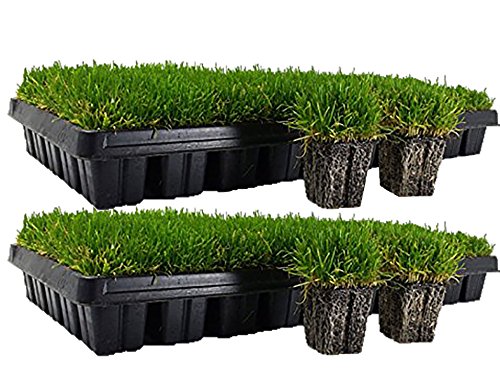
ZoysiaPlug.com Zoysia Plugs, 100 Large Plugs
$109.99One hundred 1.5 by 1.5 inch plugs already producing runners, listed as covering 100 sq ft, with daily watering needed for the first 2 weeks. Plugs ordered in the dormant season arrive brown and green up with warm weather.
Best for: converting an area to zoysia
Check price on Amazon
SodPods St. Augustine Seville Grass Plugs, 64 Count
$109.98Sixty-four 3 by 3 inch Seville plugs that the listing says cover 144 sq ft at 18 inch spacing once mature. St. Augustine does not grow from seed, so plugs or sod are the only options; the seller cannot ship to California or Arizona.
Best for: repairing St. Augustine lawns
Check price on AmazonGrass seed buying and planting tips
- Match the season. Cool-season seed does best when soil is about 50 F to 65 F in late summer to early fall; warm-season seed needs soil of 65 F or warmer in late spring.
- Check the pre-emergent history. If you applied a crabgrass preventer this season, most labels require a wait of several months before seeding. See when to apply pre-emergent.
- Feed with starter fertilizer. A starter such as Scotts Turf Builder Starter (24-25-4) at the label rate supports new roots.
- Spread in two directions. Half the seed north to south, half east to west, with a calibrated spreader.
- First mowing. Mow when seedlings are about a third taller than your target height, with a sharp blade. The mowing height chart lists targets by grass.
- Big lawn? Seeding an acre is only half the job; mowing it every week is the other. The beginner 1 acre lawn setup shows the mower and spreader that make it manageable.
How we chose
We did not test these products in person. Picks are researched from manufacturer specifications and owner manuals, engine and safety certifications where they apply, warranty terms, public recall records, and the recurring themes in verified owner reviews. We favor established brands with large review counts and parts support, match each pick to a real yard size or task, and place it in the tier where its price and capability actually belong.
Frequently asked questions
How much grass seed per square foot do I need?
Rates are given per 1,000 sq ft. For a new lawn, extension ranges are 6 to 8 lb of tall fescue, 2 to 3 lb of Kentucky bluegrass, 5 to 7 lb of perennial ryegrass, 4 to 5 lb of fine fescue, and 1 to 2 lb of hulled bermudagrass or zoysia. Overseeding takes about half those rates. Coated seed and seed-mulch products need more by weight, so follow their bag coverage.
What is the best grass seed brand?
Judge the label rather than the brand. Good seed lists named turf-type varieties, germination of about 85 percent or higher, weed seed below about 0.5 percent and no noxious weeds. Jonathan Green Black Beauty and GreenView sell pure blends; Scotts Turf Builder and Pennington Smart Seed often include coatings or fertilizer that help beginners but add weight. Pick the species that fits your climate and sun first.
What is the best grass seed to just throw down?
No grass seed grows reliably if it is only tossed onto hard ground, because seed needs soil contact and constant moisture. Seed-and-mulch products such as Scotts EZ Seed come closest since the mulch holds water around the seed. Rake the area to loosen soil first, cover the seed lightly, press it in, and keep the surface damp with light daily watering for two to four weeks.
How long does grass seed take to grow?
Perennial ryegrass is fastest, often sprouting in 5 to 10 days. Tall fescue takes about 7 to 14 days, fine fescue about the same, and Kentucky bluegrass 14 to 30 days, with Jonathan Green listing 21 to 28 days for its pure bluegrass. Bermudagrass, zoysia and centipede need warm soil and can take two to four weeks. Cool soil slows every species.
Is Kentucky 31 good grass seed?
Kentucky 31 is a durable, drought-resistant and inexpensive tall fescue that tolerates full sun to medium shade, and a 40 lb Pennington bag covers up to 8,000 sq ft. It is an older, coarser and lighter-green type than modern turf-type tall fescues, so it suits fields, banks and utility lawns better than a manicured front yard.
Can I put grass seed down after crabgrass preventer?
Usually not right away. Most pre-emergent herbicides stop grass seed from germinating as well as crabgrass, and their labels list a waiting period, often several months, before reseeding. Mesotrione products such as Tenacity are the known exception, labeled for use at seeding on listed cool-season grasses. Read the specific product label before seeding.
Researched, not professional advice. This page is compiled from published specifications, manuals, labels and owner-review consensus, not hands-on testing. Follow the manufacturer's instructions and product label, and consult a qualified professional where safety, chemicals, fuel or structures are involved. As an Amazon Associate we earn from qualifying purchases.