Lawn Care
Perennial Ryegrass: Mowing Height, Seed Rate and Lawn Care
Quick answer
Perennial ryegrass is the fastest cool-season lawn grass to germinate, sprouting in 5 to 10 days. Sow 5 to 7 pounds per 1,000 square feet for a new lawn or 3 to 4 to overseed, mow at 2 to 3 inches with a sharp blade, and feed 2 to 4 pounds of nitrogen a year. It suits zones 4 to 6 with mild summers.
Perennial ryegrass is a fine to medium textured cool-season bunch grass with a shiny leaf underside and excellent wear tolerance. Its speed is the reason it shows up in so many mixes: it gives quick cover while slower bluegrass fills in, it patches high-traffic spots, and in the South it is used to overseed dormant bermudagrass for a green winter lawn. Its limits are heat, drought and harsh open winters, and it does not spread, so worn areas need reseeding.
Do not confuse it with annual ryegrass, a coarser grass that dies after one season; the differences are in the table below and on the annual ryegrass page. Figure seed with the grass seed calculator, feedings with the fertilizer calculator, and lime with the lime calculator if soil tests below pH 6.0.
On this page
- What are the key numbers for perennial ryegrass?
- What is the difference between perennial and annual ryegrass?
- How tall should perennial ryegrass be mowed?
- How much perennial ryegrass seed do I need?
- When should I plant perennial ryegrass?
- Is perennial ryegrass good for high-traffic lawns?
- What gear works best with perennial ryegrass?
What are the key numbers for perennial ryegrass?
| Trait | Perennial ryegrass |
|---|---|
| Season type | Cool-season |
| USDA zones and region | Zones 4 to 6 with moderate summers; Pacific Northwest, Northeast coast, northern Midwest; winter overseeding in zones 7 to 10 |
| Mowing height | 2 to 3 in for home lawns |
| Seeding rate | 5 to 7 lb per 1,000 sq ft new; 3 to 4 lb overseeding |
| Germination | 5 to 10 days, the fastest cool-season lawn grass |
| Shade tolerance | Poor to moderate |
| Drought tolerance | Low to moderate; browns quickly in hot, dry weather |
| Wear and traffic | Excellent, which is why sports turf uses it |
| Nitrogen per year | 2 to 4 lb N per 1,000 sq ft, mostly fall |
| Soil pH | 6.0 to 7.0 |
| Spreading habit | Bunch-type; no rhizomes or stolons |
| Common problems | Shredded tips from dull blades; gray leaf spot and pythium in hot, humid weather |
Ranges reflect common university extension guidance for home lawns.
What is the difference between perennial and annual ryegrass?
| Trait | Perennial ryegrass | Annual ryegrass |
|---|---|---|
| Life cycle | Lives several years in a suitable climate | Completes its life in one season and dies in summer heat |
| Leaf look | Finer, darker, shiny underside | Coarser, lighter green, grows clumpy and fast |
| Germination | 5 to 10 days | About 5 to 10 days |
| Seeding rate | 5 to 7 lb per 1,000 sq ft new | Follow the bag; not in our calculator rate table |
| Mowing height | 2 to 3 in | About 1.5 to 3 in, depending on use |
| Main use | Permanent lawns, traffic areas, mixes, winter overseeding | Temporary cover, erosion control, low-cost winter color |
| Seed cost | Higher | Lower |
Seed tags list the species percentages. A mix with a large share of annual ryegrass will thin out after its first year.
How tall should perennial ryegrass be mowed?
Mow perennial ryegrass at 2 to 3 inches, raising it to 3 inches in summer to shade the soil. Blade sharpness matters more with ryegrass than with most grasses. Its leaves are tough and fibrous, so a dull blade tears them and leaves white or tan frayed tips across the whole lawn a day or two later. Sharpen or swap the blade at least once or twice a season, and more often if the tips look ragged; the steps are in lawn mower maintenance.
The Honda HRX-BE 21 in. Battery Self-Propelled Mower uses a twin-blade deck and adjusts from 0.75 to 4 inches, and the EGO POWER+ LM2135SP 21 in. Select Cut Self-Propelled Mower Kit ships with three sets of lower blades and a 1 to 4 inch range. Stick to the one-third rule: mow a 2.5 inch lawn before it reaches about 3.75 inches.
How much perennial ryegrass seed do I need?
At 5 to 7 pounds per 1,000 square feet, a 5,000 square foot new lawn needs 25 to 35 pounds and overseeding needs 15 to 20 pounds. An acre from bare soil takes about 261 pounds at the 6 pound midpoint. The GreenView Pure Grass Seed Perennial Ryegrass Blend, 20 lb label covers 5,000 square feet new from 20 pounds, a lighter 4 pounds per 1,000 square feet; heavier seeding within the extension range gives faster cover on bare soil. If you want ryegrass as one part of a darker cool-season lawn, the Jonathan Green Black Beauty Ultra Grass Seed, 7 lb blends it with tall fescue and Kentucky bluegrass.
Ryegrass seedlings are aggressive. In a mix, too much ryegrass by weight crowds out slower bluegrass, so most northern mixes keep it a minor share. Spread seed in two perpendicular passes; see how to overseed a lawn.
When should I plant perennial ryegrass?
Late summer to early fall, when soil is 50 to 65 F, is the best window, and because ryegrass is so quick it is also the most reliable cool-season grass for spring patching once soil passes 50 F. Seed spring patches early enough that the grass has several weeks of cool weather before summer. Most crabgrass pre-emergents stop ryegrass seed too, so skip them where you are spring seeding unless the label says the product is safe for new seedings.
In the South, ryegrass overseeding of dormant bermudagrass happens in fall as soil cools; the details, including the bermudagrass transition in spring, are on the annual ryegrass page.
Is perennial ryegrass good for high-traffic lawns?
It is the most wear-tolerant cool-season lawn grass, which is why athletic fields overseed with it. It cannot repair itself, though, so play areas, dog runs and paths need a light overseeding at 3 to 4 pounds per 1,000 square feet every fall and sometimes again in spring. Loosen compacted soil first: the Agri-Fab 48 in Tow-Behind Plug Aerator pulls plugs up to 3 inches deep across 48 inches behind a tractor. Keep new seed moist with an adjustable sprinkler such as the Melnor XT Oscillating Sprinkler, 4,500 sq ft, which covers a 4,500 square foot rectangle or a smaller seeded patch.
What gear works best with perennial ryegrass?
A mower with a sharp blade, a spreader for repeat overseeding, and water for the first two to three weeks. More options: the best lawn spreaders.

Honda HRX-BE 21 in. Battery Self-Propelled Mower
$999.00A twin-blade MicroCut deck with a 0.75 to 4 inch range and a 12Ah battery rated for about 0.37 acre per charge.
Best for: ryegrass lawns up to about a third of an acre
Check price on Amazon
Scotts Turf Builder EdgeGuard DLX Broadcast Spreader
$94.97A pre-calibrated push broadcast spreader holding up to 15,000 sq ft of product, with an edge guard for beds and walks.
Best for: fall and spring overseeding
Check price on Amazon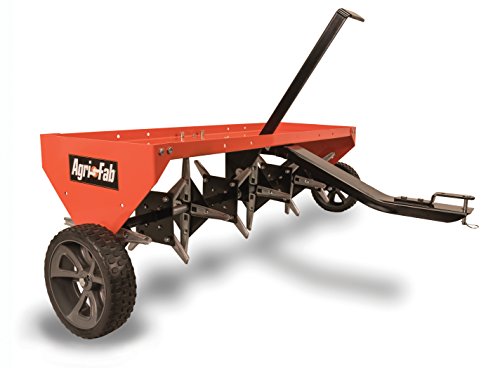
Agri-Fab 48 in Tow-Behind Plug Aerator
$319.98Thirty-two self-sharpening knives pull 3 inch plugs across 48 inches, with a weight tray and flat-free tires.
Best for: compacted play areas on larger lawns
Check price on Amazon
Melnor XT Oscillating Sprinkler, 4,500 sq ft
$32.99Twenty nozzles with width and range controls water a seeded rectangle up to 4,500 sq ft.
Best for: keeping new ryegrass seed moist
Check price on AmazonHow we chose
We did not test these products in person. Picks are researched from manufacturer specifications and owner manuals, engine and safety certifications where they apply, warranty terms, public recall records, and the recurring themes in verified owner reviews. We favor established brands with large review counts and parts support, match each pick to a real yard size or task, and place it in the tier where its price and capability actually belong.
Frequently asked questions
Does perennial ryegrass come back every year?
Yes, where the climate suits it. Perennial ryegrass lives for several years in regions with moderate summers and winters, such as the Pacific Northwest and much of the northern tier. In hot, humid summers or very cold open winters, stands thin out and need reseeding. In the South it is usually grown as a one-season winter overseeding that fades when bermudagrass greens up.
How fast does perennial ryegrass grow from seed?
Perennial ryegrass germinates in about 5 to 10 days when soil is 50 to 65 F and stays moist. The first mowing usually comes three to four weeks after seeding, once seedlings pass about 3 inches, and the lawn is ready for light use in six to eight weeks. Speed is the main reason it is added to seed mixes with slower Kentucky bluegrass.
Can I overseed Kentucky bluegrass with perennial ryegrass?
Yes, and it is a common fix for worn or thin bluegrass because ryegrass establishes quickly and tolerates traffic. Use 3 to 4 pounds per 1,000 square feet after core aeration or dethatching in late summer to early fall. Heavy, repeated ryegrass overseeding can shift the lawn toward ryegrass over time, so keep the rate within the range if you want bluegrass to dominate.
Why do my ryegrass tips look white after mowing?
A dull mower blade tears ryegrass leaves instead of slicing them, and the shredded tips dry out and turn white or tan within a day or two. The fix is a sharp blade, sharpened or replaced at least once or twice a season. Mowing wet grass and mowing off more than a third of the blade at once make the frayed look worse.
Researched, not professional advice. This page is compiled from published specifications, manuals, labels and owner-review consensus, not hands-on testing. Follow the manufacturer's instructions and product label, and consult a qualified professional where safety, chemicals, fuel or structures are involved. As an Amazon Associate we earn from qualifying purchases.