Seasonal Lawn Care
Zone 7 Fall Lawn Care Calendar: What to Do and When
Quick answer
Fall is the most productive season in zone 7. Core aerate and seed tall fescue while soil sits between 50 and 65 F, overseeding at 3 to 4 pounds per 1,000 square feet, and give fescue its main feedings of up to 1 pound of nitrogen. Stop feeding bermuda and zoysia entirely.
If you only do serious lawn work once a year in zone 7, do it in fall. Soil is still warm enough for fast germination while air temperatures have dropped, weed pressure has fallen away, and a cool-season lawn seeded now gets two full growing seasons before it ever faces summer. Warm-season lawns get the opposite instruction: they are winding down, and everything you add now works against them.
Size the seeding first. The grass seed calculator converts square feet into pounds and bags at extension rates, the fertilizer calculator sets the feedings, and the lime calculator estimates lime if a soil test came back below pH 5.5.
On this page
What does a zone 7 fall lawn care schedule look like?
The seeding window opens when soil falls back through 65 F and closes as it drops below 50 F, which in zone 7 is a stretch of roughly six weeks in late summer to early fall. Everything else in the season lines up around it.
| Task | Trigger | Timing cue | Notes |
|---|---|---|---|
| Last nitrogen on bermuda or zoysia | 4 to 6 weeks before first frost | Late summer | Later feeding pushes growth into freeze damage |
| Core aerate cool-season turf | Soil 50 to 65 F | Late summer to early fall | Aerate first, then seed the same day |
| Seed or overseed tall fescue | Soil 50 to 65 F and falling | Late summer to early fall | 6 to 8 lb new, 3 to 4 lb overseeding per 1,000 sq ft |
| Starter fertilizer on new seed | At seeding | Same day as seeding | Scotts Turf Builder Starter Food for New Grass, 15 lb at 24-25-4 |
| Keep seed moist | Until first mow | Two to three weeks after seeding | Light watering once or twice daily, not deep soaking |
| Fall pre-emergent for winter weeds | Soil cooling through 70 F | Early fall | Lesco 0-0-7 with 0.43% Stonewall Pre-Emergent, 50 lb; skip it anywhere you seeded |
| Broadleaf weed control | Weeds growing, air 60 to 80 F | Mid fall | Best window of the year; wait 3 to 4 mows after seeding |
| Main fescue feedings | Soil 50 to 60 F | Mid to late fall | Up to 1 lb N per 1,000 sq ft per application |
| Lime if the soil test calls for it | Ground not frozen | Mid to late fall | Winter freeze and thaw works it in |
| Leaf removal | Leaves shading new grass | Through fall | Mulch light layers with the mower; blow or sweep heavy ones |
Do not apply a fall pre-emergent where you have seeded or plan to seed: it stops grass seed as effectively as it stops annual bluegrass. Labels list the waiting period.
When should I seed tall fescue in zone 7?
When soil at 2 inches has cooled back to the 50 to 65 F band, in late summer to early fall. Seed germinates in 7 to 14 days at those temperatures, and the seedlings get cool fall weather plus the following spring to root before their first summer. Seeding a month late is the single most common reason a zone 7 fescue lawn fails: the grass comes up but has no root depth when heat arrives.
Rates come from the same table the calculator uses: 6 to 8 pounds per 1,000 square feet on bare soil, 3 to 4 pounds to overseed. Jonathan Green Black Beauty Tall Fescue Blend, 25 lb is a pure turf-type blend labeled for 3,750 square feet new or 7,500 overseeded, while Pennington Kentucky 31 Tall Fescue Grass Seed, 40 lb is the economical coarse option for a utility lawn. Coated products such as Scotts Turf Builder Grass Seed Tall Fescue Mix, 16 lb carry their own coverage figure on the bag, which takes priority. The full method is in how to overseed a lawn, and picks are in the best grass seed.
How much fertilizer does a zone 7 lawn need in fall?
Fall carries most of a cool-season lawn's annual nitrogen and none of a warm-season lawn's. The split below assumes clippings are left on the lawn.
| Grass | Fall nitrogen | Applications | Notes |
|---|---|---|---|
| Tall fescue | 1.5 to 2.5 lb per 1,000 sq ft | 2 to 3, up to 1 lb each | The main feedings of the year; 2 to 4 lb annual total |
| Kentucky bluegrass (upper zone 7) | 2 to 3 lb per 1,000 sq ft | 2 to 3 | 3 to 4 lb annual total, mostly now |
| Bermudagrass | None after late summer | 0 | Last feeding 4 to 6 weeks before first frost |
| Zoysiagrass | None after late summer | 0 | Potassium is the only fall nutrient worth considering |
| New seedlings | Starter fertilizer at seeding | 1 at seeding | Phosphorus supports new roots; a soil test may show none is needed |
With a 29-0-3 product such as Jonathan Green Green-Up Lawn Food 29-0-3, 15,000 sq ft, 1 lb of nitrogen is about 3.4 lb of product per 1,000 sq ft. Scotts Turf Builder WinterGuard Fall Lawn Food, 32.3 lb covers 12,000 sq ft a bag.
Should I fertilize bermuda grass in the fall in zone 7?
No. Nitrogen after late summer pushes tender growth just as the grass is trying to move energy into roots and rhizomes for winter, and in a zone that sees 0 to 10 F lows that tender growth is what winterkills. The practical rule from extension guidance is to finish nitrogen 4 to 6 weeks before the average first frost.
Potassium is the exception worth discussing, since it supports stress and cold tolerance, but only apply it if a soil test shows a shortfall. A test such as the MySoil Soil Test Kit settles it for the price of a bag of fertilizer, and Luster Leaf Rapitest Soil Test Kit, 40 Tests is enough for a quick pH check. What warm-season turf does want in fall is a clean surface: keep leaves off it so the crowns get light on warm days, and keep mowing at the normal height until growth stops.
What should I do about leaves on a zone 7 lawn?
Light layers can be mulched back into the lawn with the mower, and extension guidance supports it as long as grass still shows through after the pass. Heavy layers have to come off, especially over new seedlings, which are shaded out within days. On a lawn seeded a few weeks ago, blow or sweep rather than dragging a rake across tender grass.
A handheld blower such as the EGO Power+ LB7654 765 CFM Blower Kit with 5.0Ah Battery at 765 CFM handles a suburban lot, while a backpack like the ECHO PB-580T 58.2cc Backpack Blower or Husqvarna 350BT 50.2cc Backpack Blower suits bigger treed properties. A push sweeper such as Agri-Fab 26 in Push Lawn Sweeper, 7 cu ft collects without a tractor, and the tow-behind Agri-Fab 44 in Tow-Behind Lawn Sweeper, 28 cu ft empties from the seat on large lots. The Rocky Mountain Goods Drawstring Leaf Tarp, 9 x 9 ft drags a pile off in one load. Compare options in the best leaf blowers and the best lawn sweepers.
What gear does a zone 7 fall need?
Aeration and seeding equipment first, then leaf handling. More choices are in the best dethatchers and the best lawn spreaders.
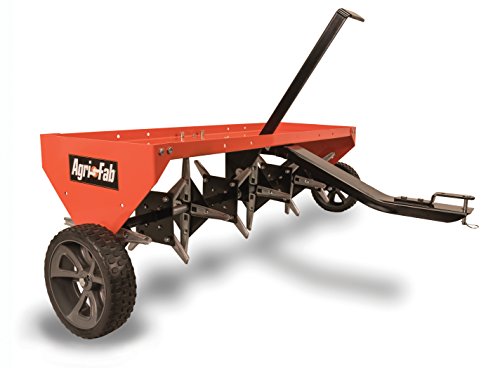
Agri-Fab 48 in Tow-Behind Plug Aerator
$319.98Thirty-two galvanized self-sharpening knives pull plugs up to 3 inches deep across 48 inches, with a 175 lb weight tray for hard clay. Aerating right before overseeding gives seed loose soil to fall into.
Best for: half-acre to one-acre fescue lawns
Check price on Amazon
Jonathan Green Black Beauty Tall Fescue Blend, 25 lb
$106.33A 100 percent turf-type tall fescue blend with a waxy leaf coating for heat tolerance, labeled for 3,750 sq ft new or 7,500 sq ft overseeded, which is a full fall overseeding for most suburban lots.
Best for: thickening an existing fescue lawn
Check price on Amazon
Scotts Turf Builder EdgeGuard DLX Broadcast Spreader
$94.97A pre-calibrated push broadcast spreader that holds up to 15,000 sq ft of product, with an edge shield that keeps seed and fertilizer off drives and out of beds.
Best for: lawns up to about a third of an acre
Check price on Amazon
EGO Power+ LB7654 765 CFM Blower Kit with 5.0Ah Battery
$299.00A 765 CFM battery blower with a 5.0Ah battery included, powerful enough to move wet leaves off new seedlings without raking over tender grass.
Best for: suburban lots with several trees
Check price on Amazon
Scotts Turf Builder Starter Food for New Grass, 15 lb
$34.97A 24-25-4 starter formula labeled for new seed, sod, sprigs or plugs, covering 5,000 sq ft per bag. The high phosphate number is aimed at new roots rather than top growth.
Best for: the day you put seed down
Check price on AmazonHow we chose
We did not test these products in person. Picks are researched from manufacturer specifications and owner manuals, engine and safety certifications where they apply, warranty terms, public recall records, and the recurring themes in verified owner reviews. We favor established brands with large review counts and parts support, match each pick to a real yard size or task, and place it in the tier where its price and capability actually belong.
Frequently asked questions
When is the best time to overseed a lawn in zone 7?
Late summer to early fall, once soil at 2 inches has cooled back into the 50 to 65 F range. Tall fescue germinates in 7 to 14 days at those temperatures and roots through the cool weeks that follow. Overseed at 3 to 4 pounds per 1,000 square feet after core aeration, apply starter fertilizer the same day, and keep the top half inch of soil damp until the first mow.
Should I fertilize my lawn in fall in zone 7?
Tall fescue and bluegrass yes, bermuda and zoysia no. Cool-season lawns take their main feedings now, totaling roughly 1.5 to 2.5 pounds of nitrogen per 1,000 square feet across two or three applications of no more than a pound each. Warm-season lawns should have had their last nitrogen four to six weeks before the average first frost, because late growth is what winterkills.
Can I put down weed killer and grass seed in the fall?
Not at the same time. Fall is the best broadleaf weed window of the year, but selective herbicides injure new seedlings, and most labels call for waiting until the new grass has been mowed three or four times. Plan the order: spray problem areas first and seed a few weeks later, or seed now and handle broadleaf weeds the following season.
How do I know when soil is 50 to 65 F for seeding?
Measure it rather than guess. Push a soil thermometer 2 inches into the ground in the morning, in an open part of the lawn, and take readings over several days. Soil lags air temperature, so it stays in the seeding band for a while after nights turn cool. Many state extension services also publish local soil temperature maps that are updated daily.
Researched, not professional advice. This page is compiled from published specifications, manuals, labels and owner-review consensus, not hands-on testing. Follow the manufacturer's instructions and product label, and consult a qualified professional where safety, chemicals, fuel or structures are involved. As an Amazon Associate we earn from qualifying purchases.